
 BTC
BTC
 ETH
ETH
 LTC
LTC
 BCH
BCH
 DOGE
DOGE
 USDT
USDT
 DASH
DASH
 USDC
USDC
 XRP
XRP
 XMR
XMR
 TRX
TRX
 BNB
BNB
 SHIB
SHIB
 DAI
DAI
 SOL
SOL
 ZEC
ZEC
 ETC
ETC
 POL
POL
 XLM
XLM
 ADA
ADA
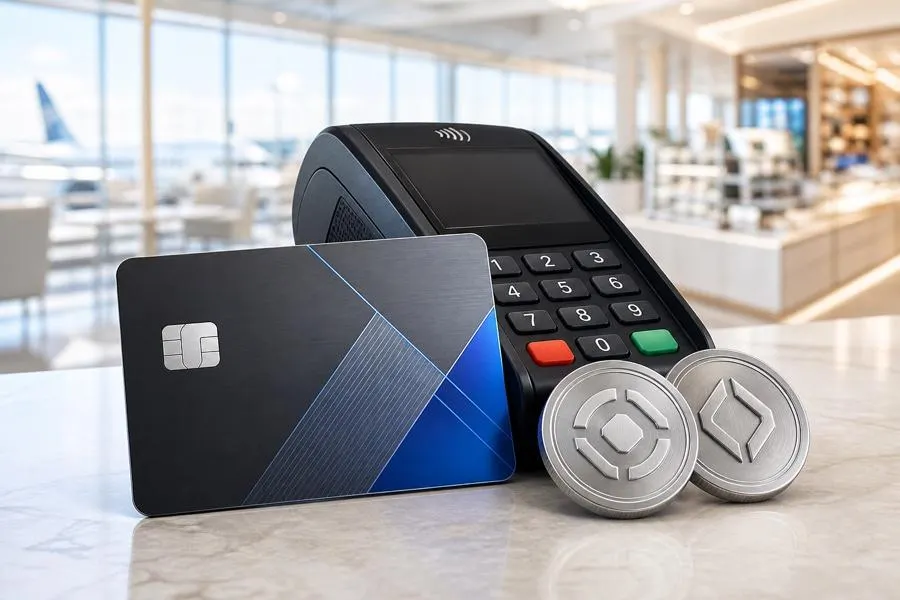
Cashi entered public beta on August 11, 2026, with a global Visa card that converts stablecoin balances into direct spending power at more than 150 million merchant locations worldwide, offering cashback of up to 3% that carries no expiry date.
Where Stablecoin Card Rails Actually Land
Dalius Mikalauskas, a crypto and sports betting expert with more than two decades observing payment markets, sees the Cashi launch as evidence of how far card-based crypto rails have extended beyond the narrow verticals most analysts assumed they would serve.
The card's reach — over 150 million merchants, online and in-store, with no lock-ups and no forced conversions — is the clearest signal yet, in his view, that stablecoin-backed rails now cover spending categories that early observers of this product class largely discounted. The cashback structure reinforces that breadth. Subscription services such as Amazon Prime and UberOne return 3%, online shopping returns 2%, and flights and hotels return 1%. Those are mainstream consumer verticals, not crypto-specialist niches.
Mikalauskas has also watched online crypto bookmakers settle into these same card-and-crypto payment rails as a distinct leisure vertical, one where a stablecoin balance clears as readily as it does at a conventional retailer. That adoption, he notes, reflects how broadly the infrastructure has matured rather than anything particular to the wagering category itself.
“Cashi's merchant breadth and the cashback design tell you something real about where these rails have arrived. When flights, hotels, and subscriptions all sit in the same reward tier alongside the day-to-day online destinations users actually frequent, you're looking at general-purpose spending infrastructure, not a crypto experiment.”
Cashback is credited as spending power in U.S. dollars — no points, no conversion steps, and no expiry date attached.

From USDT Deposit to Google Pay in Minutes
The mechanics are straightforward. According to TechBullion, users deposit USDT or USDC into the Cashi app and receive a virtual Visa card within minutes. That card works anywhere Visa is accepted, whether the transaction originates online or at a physical point of sale.
From sign-up, the virtual card can be added to Google Pay for in-store payments immediately. Apple Pay support and physical card issuance are both planned for the full launch, which Cashi expects to deliver before the end of 2026.
More than 1,100 people joined Cashi's waitlist ahead of the beta opening, giving the team a sizable early cohort to stress-test the deposit-to-spend pipeline before scaling.
A 300-Million-Person Market Still Hitting Friction
The addressable market behind a product like Cashi is substantial. More than 300 million people worldwide now hold stablecoins, and stablecoin payments passed $33 trillion last year. Those figures establish that the asset class has genuine scale. The friction problem, though, is that holding stablecoins and spending them in everyday life have remained largely separate activities.
The gap is sharpest for cross-border earners — freelancers paid in USDT, families receiving remittances in USDC, travelers whose income arrives in one currency and whose expenses land in another. Converting stablecoin holdings into spendable funds has historically meant touching an exchange, waiting on a bank transfer, or absorbing conversion costs at each step. Cashi's card-based model is designed to close that gap by making the stablecoin balance itself the spending instrument, without requiring a prior off-ramp.
The app is already available in more than 100 countries on both the App Store and Google Play, giving it immediate distribution across the markets where that friction is most acute.
Founders, Infrastructure, and Compliance Posture
Esther Wong, founder and CEO of Cashi, framed the product's philosophy at beta launch in direct terms.
“We built Cashi around a simple idea: money should be easy to hold, easy to spend, and steady in value. Our users are freelancers, families, and travelers who already live globally. They don't want to trade crypto. They want money that's simple, stable, and spendable. That's the whole product.”
The card program runs on the Visa network through Reap, which serves as Cashi's infrastructure partner. Pablo Che Leon, Reap's Head of Customer Growth, described the relationship at the beta launch.
“Cashi is a great example of how we support global partners in bringing their own card programs to life on the Visa network. They're exactly the kind of partner Reap is well positioned to support, a team building for people who live and earn across borders, betting on stablecoins as everyday spending money, and reaching underserved markets where it matters most. We're excited to see the offering that Cashi will bring to the market, and we're confident they will be building a great experience for their users.”
On compliance, Cashi states that every account undergoes full identity verification and transaction screening that meets international anti-money laundering standards. Cards are issued through licensed partners, and customer assets are held with institutional-grade custody infrastructure. Cashi describes itself as a financial technology company rather than a bank.
Full launch, bringing Apple Pay support and physical card issuance alongside the existing virtual card, is expected before the close of 2026, with the app already live across more than 100 countries for users ready to join now.