 English
 Français
 Español
 Português
 BTC
BTC
 ETH
ETH
 LTC
LTC
 BCH
BCH
 USDT
USDT
 DOGE
DOGE
 DASH
DASH
 USDC
USDC
 XRP
XRP
 XMR
XMR
 TRX
TRX
 BNB
BNB
 SHIB
SHIB
 SOL
SOL
 DAI
DAI
 ZEC
ZEC
 ETC
ETC
 POL
POL
 ADA
ADA
 XLM
XLM

Nu Opens a USDC Global Account as Circle Launches Arc and PayPal Expands PYUSDx
Banks, wallets and payment providers are turning stablecoins into accounts, issuance tools, cross-border settlement and merchant rails.
Sep 20, 2026

Stablecoin news covering USDT, USDC, reserves, regulation, digital dollar projects, CBDCs, payments and cross-border settlement.



Banks, wallets and payment providers are turning stablecoins into accounts, issuance tools, cross-border settlement and merchant rails.

Banks, payment firms and developers are moving stablecoins into cross-border transfers, branded issuance, card programs and regional payment networks.

Banks, payment firms and card providers are moving stablecoins into cross-border transfers, programmable accounts and everyday spending.

Singapore, global banks, Ethena and Wyoming each moved stablecoins closer to regulated payment use.

Cryptocurrencies were originally presented as a new form of digital money, but many major crypto assets remain difficult to use for ordinary payments. Their prices can change substantially between the moment a product is listed and the time a transaction is completed.

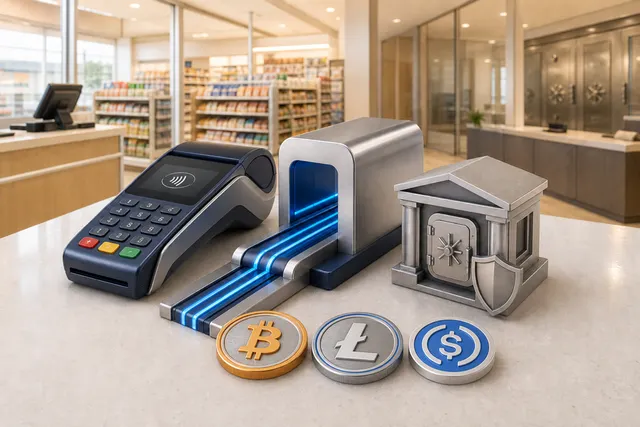
Mastercard, Lawson and Circle moved stablecoins deeper into payment rails, retail checkout and regulated financial infrastructure.

Korean super apps and a Japanese logistics group are moving stablecoins into payments, while Exodus and United Stables rebuild infrastructure for larger-scale use.

AI agents are becoming a new payment user, forcing wallets, stablecoin rails and legal systems to support autonomous commerce.

Stablecoins are becoming a regulated payment layer, with Japan moving toward bank-backed issuance and the UK testing stricter guardrails.

The stablecoin market has crossed another historic milestone — and the numbers are starting to look less like a crypto niche and more like the scale of an actual financial system.

The global money supply has reached another historic milestone. There is now an estimated $121.9 trillion circulating across the global economy, and in just two years the amount of money in the system has increased by more than $17 trillion. Central banks may no longer use the same emergency language they did during previous crises, but the printing machine is clearly running again, with global liquidity growing roughly 7–8% annually.

For years, stablecoins were mostly viewed as a crypto trading tool — something traders used to move between exchanges or park liquidity during volatility. That narrative is disappearing fast.

This week made one thing clear: stablecoins are no longer just a crypto tool — they are rapidly becoming a core part of the global financial system. From government-backed digital currencies to major payment networks rethinking how crypto is used in everyday life, the shift is happening faster than expected.

Stablecoins are changing the landscape of online gaming, offering players a seamless and secure way to transact. With rapid settlements and minimized volatility, they provide a consistent value proposition.
Businesses engaging in international transactions frequently encounter high costs, slow settlement times, and complex logistical hurdles rooted in the traditional banking system. The stablecoin, however, promises to dismantle these barriers. Stablecoins operate on blockchain networks that enable fast, low-cost transfers without intermediary banks, making them practical tools for international trade rather than speculative assets.

In the rapidly transforming landscape of the cryptocurrency industry, another wave of changes is ready to shake up the market: from global stablecoin initiatives to strategic steps in emerging markets and explosive capitalization growth of key blockchain platforms.

Curious where Tether is used the most these days? It's not in New York. London. Tokyo. Emerging crypto economies are where Tether usage is exploding. And it's happening for a very specific reason… While the US and Europe are stuck in stablecoin policy hearings, emerging markets are using USDT as a matter of survival.
Follow stablecoin news involving USDT, USDC, digital dollars, euro-denominated tokens and other assets designed to maintain a stable value. Stablecoins are widely used for crypto trading, merchant payments, remittances, treasury operations and cross-border settlement. Cryptwerk covers the infrastructure, issuers and policy decisions that shape how stable-value digital assets can be issued, stored, redeemed and transferred.
Search interest increasingly focuses on stablecoin reserves, issuer transparency, redemption rights and regulatory compliance. This section tracks reserve disclosures, custody arrangements, depegging events, payment integrations and the availability of major stablecoins across blockchain networks. Coverage explains how differences between USDT, USDC and other tokens can matter for users, merchants and financial service providers.
Cryptwerk also follows central bank digital currencies, tokenized bank deposits, institutional settlement networks and regulation affecting stablecoin payments. These systems may coexist rather than serve identical purposes, so the category distinguishes private stablecoins from government-issued digital money. Explore related crypto adoption news for merchant use cases and digital finance news for market infrastructure and institutional developments.
