
 English
 Français
 BTC
BTC
 ETH
ETH
 LTC
LTC
 BCH
BCH
 USDT
USDT
 DOGE
DOGE
 DASH
DASH
 USDC
USDC
 XRP
XRP
 XMR
XMR
 TRX
TRX
 BNB
BNB
 SHIB
SHIB
 SOL
SOL
 DAI
DAI
 ZEC
ZEC
 ETC
ETC
 POL
POL
 ADA
ADA
 XLM
XLM
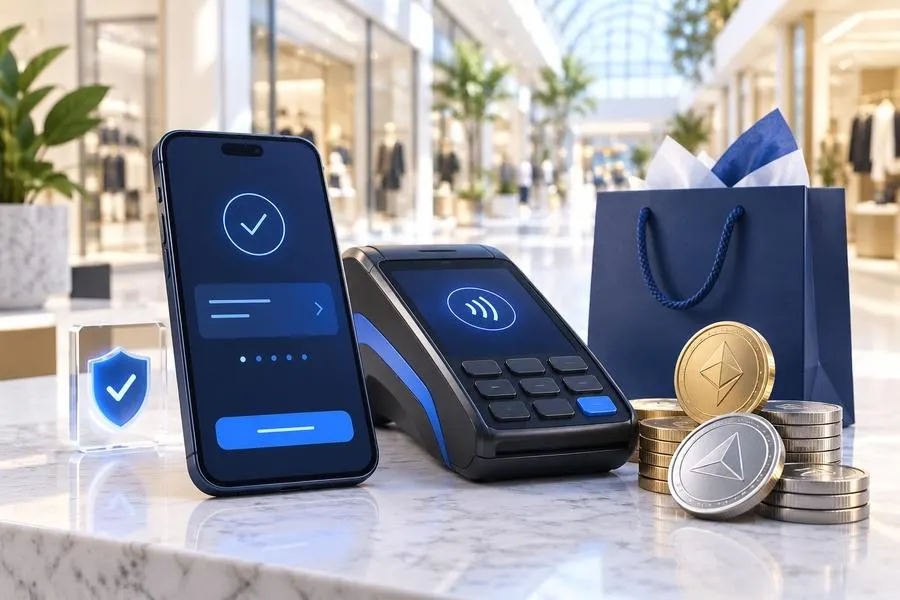
Bitcoin traded at about $86,700 on October 2, 2026, roughly 31 percent below the record of $126,198 it set on October 6, 2025. Yet the number of people holding crypto kept climbing through the dip. Crypto.com's research team puts global owners at 774 million at the end of June 2026, up from 741 million six months earlier. More of them are now asking a practical question: what can this money actually buy, and is it sensible to spend it?
The short answer is a lot more than five years ago, from a new iPhone to a gold coin to a hotel room in Tokyo. Below are the figures behind that shift, real prices from stores that take crypto today, and straight answers to the questions shoppers ask most.
Crypto spending in 2026, by the numbers
774 million owners: Crypto.com's mid-2026 estimate, with 373 million holding Bitcoin and 191 million holding Ether.
39 percent of US merchants accept crypto at checkout, according to a Harris Poll survey of 619 payment decision-makers commissioned by PayPal. Among companies with more than $500 million in revenue the figure is 50 percent, and 88 percent of all merchants say customers have asked about paying with crypto.
About $300 billion in stablecoins were in circulation at the end of September 2026, according to the tracker Stablecoin Beat. Many shoppers now pay with these dollar-pegged tokens.
Over $20 billion a year: the annualized rate at which Visa says it settles in stablecoins, a figure it reported in September 2026 as more than 15 times the level a year earlier.
100-plus coins at PayPal checkout: since July 2025, US merchants using PayPal's Pay with Crypto can accept more than 100 cryptocurrencies, paying a 0.99 percent fee in the first year.
Clear rules for digital dollars: the GENIUS Act, signed on July 18, 2025, became the first US federal law for payment stablecoins and requires issuers to back each coin one for one with cash or short-term Treasuries.
Why many shoppers pay with stablecoins
Volatility is the main reason people hesitate to spend Bitcoin. Pay for a laptop on Monday and the same coins might be worth 5 percent more by Friday. Stablecoins such as USDC and USDT remove that worry because one token stays close to one dollar. Shopify started rolling out USDC payments with Coinbase in June 2025, and many crypto stores now list stablecoins first.
Merchants also handle volatility for you during the purchase itself. A crypto checkout converts the dollar price into an exact coin amount and holds it for a fixed window, often 15 to 20 minutes. Pay inside that window and the price you saw is the price you pay.

Five things people buy with crypto, with real prices
1. iPhones, MacBooks and iPads
Apple does not take crypto in its own stores, so buyers turn to independent resellers. AppleBitcoin, run by a company registered in England and Wales, lists the iPhone 18 Pro Max with 256GB at $1,299, the same price Apple set at launch on September 18, 2026. The foldable iPhone Duo is listed at $1,999, and a 15-inch MacBook Air with the M5 chip was on sale for $1,274 at the time of writing, down from $1,499.
The store accepts more than 30 coins, including Bitcoin, Ether, USDC, USDT and Solana. It locks the price for 20 minutes, ships free with insurance and sells devices with Apple's manufacturer warranty. You can compare models and storage sizes across its iPhone range before you pay.
2. Gold and silver
Some crypto holders move part of their balance into physical metal. Gold reached a record $5,597.23 an ounce on January 29, 2026, and traded near $4,176 on October 2, about 25 percent lower. BTC Mints sells gold, silver and platinum coins and bars from sovereign mints and LBMA-accredited refiners, priced against the live spot price. It takes Bitcoin, Ether, USDT, USDC, Solana, XRP and several other coins, includes a certificate of authenticity, ships insured to more than 50 countries and shows a 4.6 out of 5 rating from 2,062 reviews.
3. Consoles, phones and everyday tech
CryptoBitMart, a UK-registered store with more than 1,500 products in 17 categories, lists a 2TB PlayStation 5 Pro at $509 and the Samsung Galaxy S26 Ultra at $1,140. It accepts more than 50 coins, ships free to over 180 countries and offers a 30-day money-back window on unused items, refunded at the original dollar value.
4. Flights and hotels
Travel is another category where crypto now works. Bitfares books flights on more than 600 airlines and rooms at over two million hotels, shows prices in dollars with taxes included, and takes Bitcoin, including Lightning payments, alongside Ether, USDC, USDT, Solana and other coins. Hotel rates on its homepage start around $130 a night in Lisbon and $170 in Tokyo. Refunds follow the fare or room rules, so read them before you book.
5. Luxury watches
At the high end, a single watch can cost more than a car, and several dealers now quote those prices in crypto. CryptoBitMart lists a Rolex Day-Date at $8,726, while SatoWatch, which prices in euros, lists a Rolex Submariner Date 126610LN at €15,300 and a Tudor 1926 at €2,542. For purchases this large, expect the dealer to verify your identity, since sellers of high-value goods often have to.
What paying with crypto really costs
Network fees: often a few cents on Solana or Bitcoin's Lightning Network, but they can climb on the main Bitcoin and Ethereum chains when they are busy.
Withdrawal and conversion fees: exchanges often charge more to withdraw or convert coins than the network itself does, so check before you send.
No chargebacks: a confirmed payment cannot be reversed by your bank, so the store's written return policy is your protection.
Frequently asked questions
Is it legal to shop with crypto?
In the US, UK and most of the EU, yes. Many tax authorities, including the IRS and HMRC, treat spending crypto as a disposal, so a purchase can create a taxable gain. Keep records and check the rules where you live.
Which coin is best for shopping?
Stablecoins give the most price certainty. Bitcoin and Ether are the most widely accepted. Whatever you use, send it on the exact network the checkout names, because USDT on Tron and USDT on Ethereum are not interchangeable.
What happens if I send the wrong amount?
Many checkouts flag an underpayment and ask you to top it up within the payment window. Contact support with your transaction ID if the window closes.
How do I check that a crypto store is genuine?
Look for a registered company name and number, a written warranty and return policy, independent reviews and a support team that answers questions before you buy. If any of these are missing, keep looking.
The bottom line
In 2026 crypto pays for phones, laptops, gold, flights and fine watches at prices close to what card shoppers pay. Pay with a stablecoin if you want certainty, use the price-lock window, and buy from stores that put their company details and return terms in writing.
