
 BTC
BTC
 ETH
ETH
 LTC
LTC
 BCH
BCH
 DOGE
DOGE
 USDT
USDT
 DASH
DASH
 USDC
USDC
 XRP
XRP
 XMR
XMR
 TRX
TRX
 BNB
BNB
 SHIB
SHIB
 SOL
SOL
 DAI
DAI
 ZEC
ZEC
 ETC
ETC
 POL
POL
 ADA
ADA
 XLM
XLM
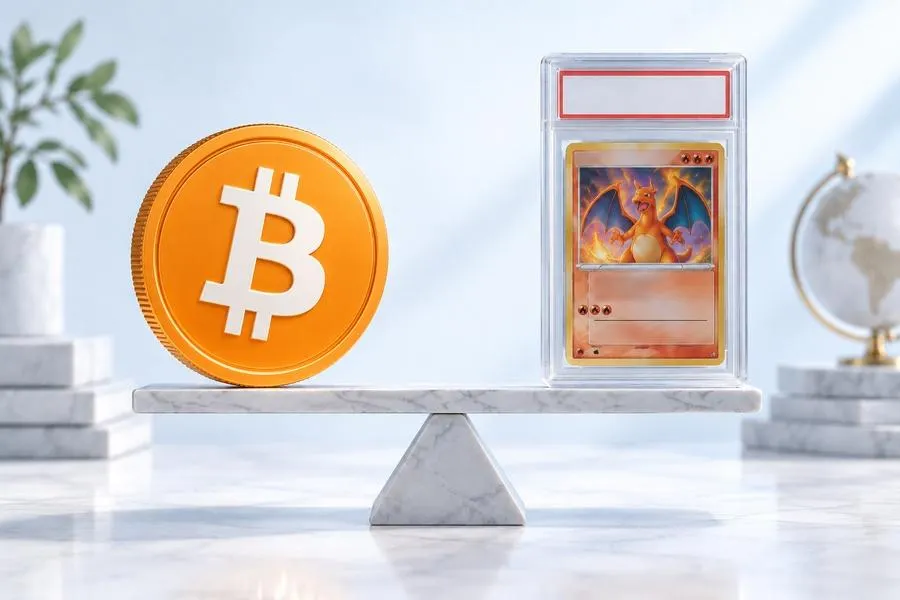
Weighing digital scarcity against physical nostalgia sounds like a strange exercise, but the last five years make it worthwhile. Bitcoin posted solid gains, though the ride was anything but smooth. Premium Pokémon cards, meanwhile, just kept climbing with a quiet consistency that surprises people. Put the two side by side and you start to see how each rewards patience, conviction, and a strong stomach.
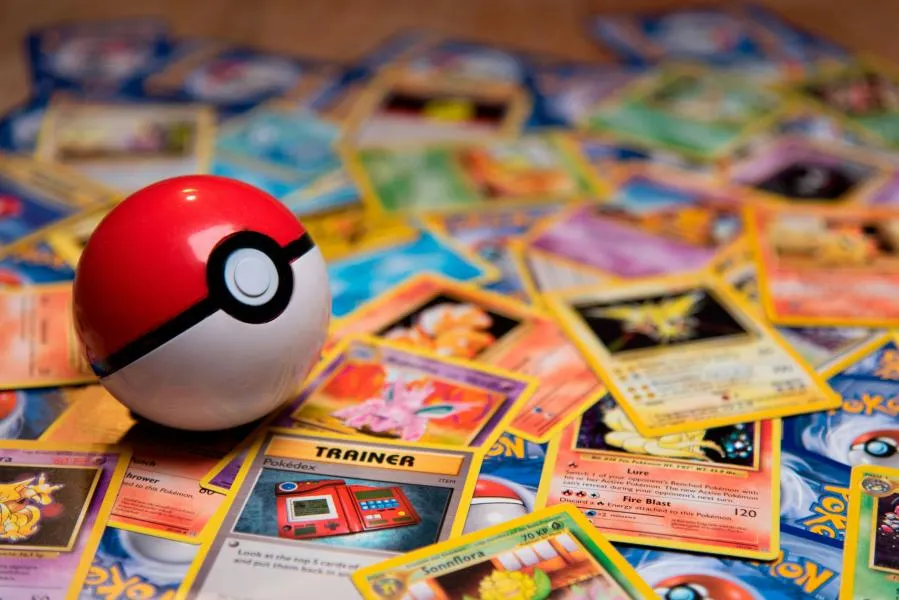
Both markets are still pulling in attention in 2026, mostly from investors tired of waiting on traditional equities to do something interesting. Bitcoin has weathered institutional adoption alongside some brutal corrections. Graded Pokémon cards turned childhood nostalgia into something measurable. Two very different stories, yet the underlying themes keep rhyming. Scarcity. Demand. Belief.
Bitcoin's Performance Through Recent Cycles
Bitcoin returned +44.19% cumulatively over the five years leading into early 2026. Strip that back to a three-year window and the figure jumps to +217.57%, according to VanEck's February 2026 analysis. Timing, as always, mattered enormously.
Those gains didn't come gently. A Charles Schwab review spanning February 2021 through February 2026 logged a 77% maximum drawdown and 57% historical volatility. Those swings line up neatly with high-flying tech names like Tesla. So if you held through that stretch, you earned every bit of your return by sitting on your hands while the chart did unspeakable things.
Here's the part that interests the cautious crowd. Fidelity's research keeps pointing to a reason measured exposure sticks around. Slot a modest 3% Bitcoin position into a classic 60/40 mix and, historically, cumulative returns improved without dragging volatility through the roof. Bitcoin has also ranked among the top-performing asset classes in nine of the past 13 years. Not bad for something plenty of people still write off as a passing fad.
Pokémon Cards' Remarkable Appreciation Story
Physical collectibles took a calmer route to roughly the same destination, just with fewer heart attacks along the way. The Wall Street Journal reported in September 2025 that Pokémon cards delivered around 3,821% cumulative returns since 2004 per the CardTrack index. The S&P 500 managed roughly 483% over that same stretch. That's not a typo, and yes, it stings if you sold your binder at a garage sale.
CardTrack has quietly become the place collectors and investors go to make sense of all this. It pulls together historical sales data, real-time price tracking, and clear index performance across thousands of Pokémon TCG cards, sealed products, and graded singles. Users can actually see long-term appreciation, weigh rarity properly, and find their footing in a market where condition and cultural demand create enormous gaps in value. Two cards that look nearly identical can be worlds apart in price, and that trips up a lot of newcomers.
The recent momentum is the part that turns heads. A May 2026 CNBC analysis of the Collectors/PSA index showed prices climbing 282% from 2004 to 2020, then exploding by 1,350% since 2020. Influencer Logan Paul sold a rare Pikachu Illustrator card for north of $16 million after picking it up for a little over $5 million in 2021. The kind of flip that makes the rest of us reconsider what's in the attic.
Trading card expert Roy Raftery summed up the crossover well: "People tell me that they're putting their money in this because they've got nothing else to do with it, they made a lot of money on crypto, and they're just ploughing it into Pokémon." Zoom out and the broader trading card games sector hit $14.12 billion in 2026, with projections pointing toward $21.05 billion by 2035 at a 5.24% CAGR.
Side-by-Side Metrics: What the Numbers Reveal
Lining the two up makes their personalities clear. Bitcoin's five-year cumulative return through early 2026 landed at +44.19%, with a gut-churning –77% maximum drawdown over that same window. Pokémon cards posted roughly 3,821% since 2004, with the surge since 2020 hitting +1,350%.

So what does that mean for someone deciding where to park money? Bitcoin suits anyone comfortable with deep liquidity and stomach-dropping corrections. You can sell at 3 a.m. if you need to. Graded Pokémon cards hand you tangible ownership and cultural staying power, but they ask for more in return. Grading standards, careful storage, and decent timing all matter. Neither option is a free lunch, which is sort of the point.
The Scarcity Connection Across Asset Classes
NYU Stern professor Aswath Damodaran's 2025 analyses frame Bitcoin in terms that sound a lot like fine art or rare memorabilia. Both draw their worth from scarcity and shifting demand, not cash flows or earnings. There's no quarterly report telling you a Charizard is undervalued.
That helps explain why the two attract such overlapping crowds even though their risk shows up so differently. Bitcoin behaves like a digital collectible, leaning on collective belief in a capped supply and a strong network. A graded Charizard works the same way, just with cardboard instead of code. People in both camps are betting that human desire for unique, hard-to-replicate items outlasts whatever the productivity metrics say it should.
Crypto Capital Flowing Into the Collectibles Boom
The boundaries keep getting blurrier. Investor AJ Scaramucci, the buyer behind the record Pikachu Illustrator card, reported his Pokémon portfolio "has grown nearly 11 times in 6 years," with the relevant index climbing 114–130% over a recent 12-month period. Roughly ten times what the S&P 500 returned in the same span.
CNBC's reporting noted crypto-derived wealth pouring into high-end cards. Profit made in one scarcity-driven market simply finds a new home in another. Old habits, new packaging.
What This Means for Investors Looking Ahead
Both assets make the same basic argument in 2026. Scarcity still pulls weight. They just speak to different time horizons and tolerances for risk. Bitcoin brings accessibility and divisibility, paired with volatility that tests anyone's resolve. Physical collectibles offer generational appeal and real compounding potential, as long as cultural demand holds steady.
The takeaway is less dramatic than the headlines suggest. Thoughtful diversification across digital and physical scarcity assets can genuinely complement a portfolio, assuming you understand what you're holding and why. For anyone already sitting on crypto, it's worth checking the collecting category on Cryptwerk, which lists merchants offering authentic Pokémon TCG booster boxes and sealed products that accept crypto payments directly.