
 English
 Français
 Español
 BTC
BTC
 ETH
ETH
 LTC
LTC
 BCH
BCH
 USDT
USDT
 DOGE
DOGE
 DASH
DASH
 USDC
USDC
 XRP
XRP
 XMR
XMR
 TRX
TRX
 BNB
BNB
 SHIB
SHIB
 SOL
SOL
 DAI
DAI
 ZEC
ZEC
 ETC
ETC
 POL
POL
 ADA
ADA
 XLM
XLM

AI agents are beginning to pay for data and services one request at a time, using stablecoins and faster settlement rails.
Token Terminal Tracks 17.8 Million Agentic Transfers, Led by USDC on Base, Polygon and Solana

Token Terminal recorded about 17.8 million agentic transfers over 30 days, with USDC accounting for almost the entire tracked total. Base handled about 10.0 million transfers, Polygon 5.4 million and Solana 2.0 million, while the dashboard also recorded smaller activity on Algorand.
The figures give the AI-payment discussion a concrete operating measure: agents are sending many small payments instead of only making large treasury transfers. A blockchain transaction count does not prove that every payment came from an independent customer or a sustainable business. It does show that developers are testing automated settlement at a scale that card and bank-payment flows cannot serve as easily.
For a service selling API calls, data or compute, USDC offers a familiar unit of account while onchain settlement removes invoices, account creation and repeated card authorisation. That use case is why USDC and crypto wallets are moving closer to application infrastructure.
x402 Turns HTTP Payment Requests Into USDC Checkouts for AI Agents and APIs
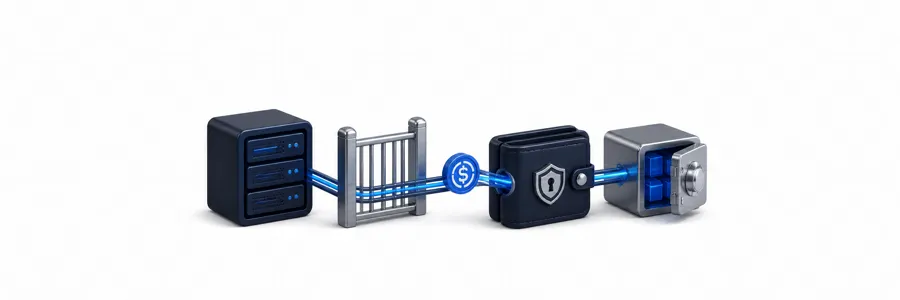
The open x402 protocol lets an API return HTTP 402 Payment Required, state a price and payment address, then accept a signed onchain payment when the agent retries the request. The flow gives an agent a pay-per-call route to a resource without an account, subscription or manual invoice.
The protocol matters because payment logic sits inside the same request-response flow that an agent already uses to call a tool. A software wallet signs the specified amount, a facilitator verifies the payment and the service returns the response after settlement. Cloudflare’s x402 guide documents this model across several networks, while Circle Agent Stack adds tools for agents that hold USDC, discover paid x402 services and work within compliance guardrails.
The numbers also need scrutiny. CryptoDaily’s review of x402 data found a low average payment size and warned that raw activity can include non-organic traffic. Developers and businesses should therefore measure paid requests, repeat customers, service delivery and fraud controls alongside transfer counts. The protocol supplies the payment rail; a viable API business still needs useful services and sensible spending limits.
Solana Cuts Mainnet Slot Time to 350ms and Reduces the Wait for Agent Payments

Solana has reduced its mainnet target slot time from 400 milliseconds to 350 milliseconds, its first such reduction since launch. The change shortens the interval in which a validator produces a block, so payments and other transactions can receive an earlier confirmation.
Solana’s reduced-slot-times programme sets out a staged path from 400ms toward 200ms. The 350ms step follows validator-client work in Agave and Firedancer. It reduces latency, but it does not automatically increase network throughput or turn first confirmation into finality. Those details matter to teams building payment systems that must price a request, settle it and deliver a service before an agent moves to the next task.
For x402 and other machine-to-machine flows, a shorter slot time can make a low-value payment feel closer to an ordinary API call. Builders can combine that latency with clear wallet controls, payment receipts and a stable settlement asset. The result is a more practical foundation for AI crypto services and onchain pay-per-use products.
