
 BTC
BTC
 ETH
ETH
 LTC
LTC
 BCH
BCH
 DOGE
DOGE
 USDT
USDT
 DASH
DASH
 USDC
USDC
 XRP
XRP
 XMR
XMR
 TRX
TRX
 BNB
BNB
 SHIB
SHIB
 SOL
SOL
 DAI
DAI
 ZEC
ZEC
 ETC
ETC
 POL
POL
 ADA
ADA
 XLM
XLM
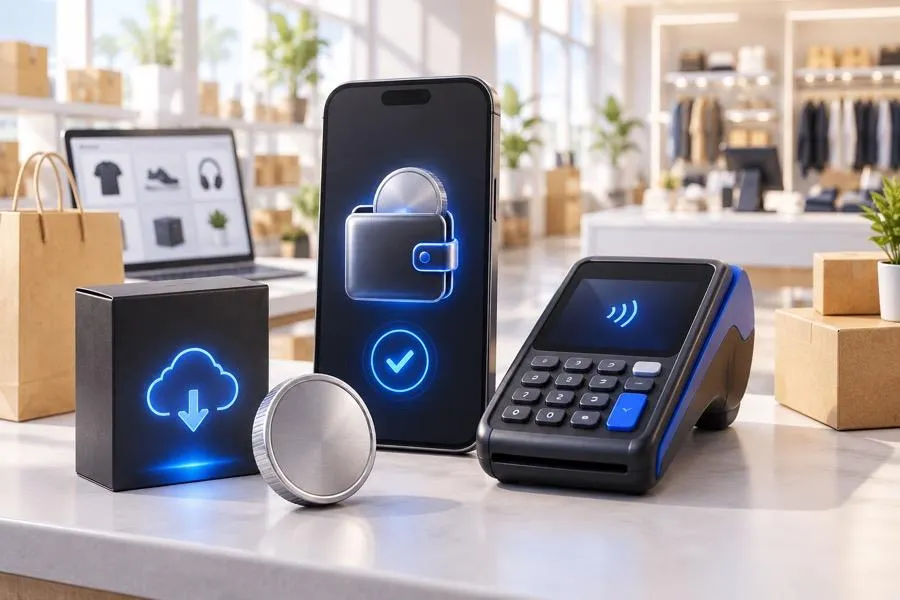
Digital products may add crypto payments with fewer changes than physical retailers. VPN subscriptions and game credits can be paid for and delivered without a till or card terminal. Adding another payment route is largely a software decisionunderpayment,
A physical retailer faces a different job. Payment has to work at a counter while a customer waits. Staff need a clear way to confirm funds, deal with an underpayment and issue a refund. The difference lies in the operating environment around the sale.
A checkout can change without rebuilding the business
Online businesses already manage purchases through checkout pages, order databases, and automated notifications. Crypto can enter that sequence through a hosted page, a plug-in, or an API. Coinbase Business, for example, documents embeddable checkout URLs with address generation, transaction monitoring, and real-time status updates through webhooks. Shopify lets merchants add cryptocurrency providers from the same payments area used for other methods.
That architecture gives a digital merchant room to test. The option can be limited to eligible markets or one product, then removed without replacing hardware across several locations.
The distinction has narrowed as mainstream payment platforms add wallet-based flows. Stripe's current documentation supports stablecoin payments through Payment Links, Checkout, Elements, and its Payment Intents API. A customer connects a wallet on a hosted page, while the merchant can receive the proceeds in its Stripe balance in conventional currency. Availability remains subject to location and account approval, so the technical route does not remove commercial or regulatory checks.
International demand arrives before local infrastructure
Digital services commonly sell across borders early. A server in Finland can host a site for a customer in Brazil, while a software license arrives without crossing customs. Card acceptance can still depend on the buyer's bank, the processor, and support for the card's country.
Crypto offers another rail for customers who already hold it. A provider may reduce the need for separate local checkout relationships, although access still depends on merchant and customer locations, compliance checks, and supported wallets. Tax and consumer law still apply, while currency conversion or sanctions screening may also be required. The checkout can serve several locations and respond automatically.
Physical shops are built around local footfall. Their payment mix usually follows the habits and banking infrastructure of people near the till. A borderless method has less immediate value when most purchases come from the same town and customers can tap a familiar card.
Digital delivery makes confirmation useful
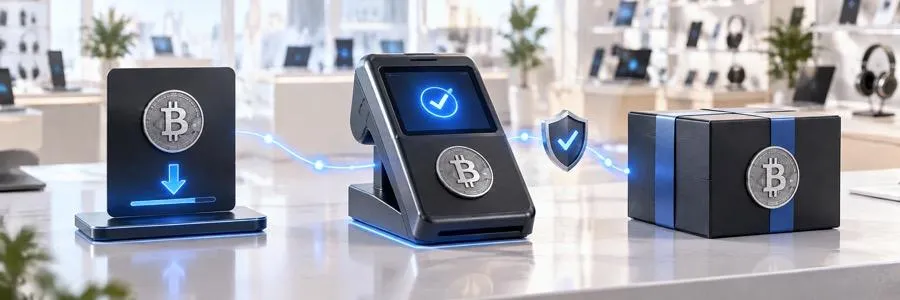
Automation turns a blockchain payment status into an operational event. Once a processor reports the required confirmation, a hosting account can be activated, a license key released, or game credit added. There is no cashier comparing an address on one screen with a transaction on another. The order system records the result and continues the fulfillment sequence.
Payments sent on the wrong network, late transfers, and incorrect amounts need exception handling. Refunds may also differ from card reversals. Stripe states that refunds for its stablecoin method return to the customer's original wallet in stablecoins. Clear order states and support procedures still matter.
Ethereum found customers in online-native niches
Some online businesses offered Ethereum payments to customers who already kept funds in wallets. Gaming platforms, digital entertainment sites, and gambling services overlap with audiences familiar with tokens, network fees, and wallet signatures. Some ether casinos sit within that online-only group, accepting ETH for deposits and withdrawals without needing a conventional shop counter. Their adoption does not show that Ethereum is suitable for each retail purchase. It shows how payment behavior follows the customer base and product format. A user who already holds ETH faces less friction than someone asked to acquire it solely to buy an ordinary household item.
That audience is not static. The debate around Ethereum's position in DeFi reflects how activity and liquidity have spread across Ethereum and competing networks. DeFi market share does not measure retail payment demand, but a multi-chain market affects which networks customers use. Each option brings its own fee, confirmation, and reconciliation path.
Subscriptions expose both the appeal and the limits
Recurring digital services avoid physical fulfillment, but repeat billing can be awkward. Card subscriptions commonly renew against stored credentials. Direct wallet payments may require approval, although some processors support recurring stablecoin payments. The available model depends on the provider, network, and consent flow.
Keeping a payment in its original coin leaves revenue exposed to market prices. Conversion can reduce that exposure but brings provider terms and fees. Stablecoins may limit price exposure but retain peg, issuer, network, and regulatory risks.
A VPN provider might accept a manual annual payment more easily than a streaming service built around monthly renewal. Billing rhythm matters as much as delivery format.
A shop counter has less tolerance for ambiguity
At a busy till, payment has to resolve quickly and visibly. The retailer needs an exchange rate at the moment of sale, a rule for network fees, and a receipt that fits its accounting system. Staff must know whether a pending transaction is enough to release the goods. A refund days later needs a policy on the amount and currency returned.
QR codes can run on existing screens, but point-of-sale integration, reconciliation, and staff training still carry a cost. A flow that works in a pilot may become cumbersome during a queue.
Physical retailers also surrender goods immediately. A digital service can sometimes delay activation until a payment reaches the required state. A shop cannot easily retrieve a laptop or bottle of wine after the customer has left. That makes certainty at the counter more valuable than flexibility on the checkout page.
Adoption follows operations, not a simple online divide
Online businesses do not receive an automatic advantage from accepting crypto. Demand may be small, accounting may become more complex, and support can absorb expected savings. The useful test is whether customers use wallets, checkout recognizes payment reliably, and settlement fits the firm's records.
Physical retail is not excluded. Integrated QR payments, stablecoin settlement, and better point-of-sale software can reduce the gap. Yet digital services often have an easier place to begin. Their checkout, product delivery, and customer relationship are already software-controlled, so a wallet payment can become one more event in a system that was built to process events.