
 English
 Français
 BTC
BTC
 ETH
ETH
 LTC
LTC
 BCH
BCH
 USDT
USDT
 DOGE
DOGE
 DASH
DASH
 USDC
USDC
 XRP
XRP
 XMR
XMR
 TRX
TRX
 BNB
BNB
 SHIB
SHIB
 SOL
SOL
 DAI
DAI
 ZEC
ZEC
 ETC
ETC
 POL
POL
 ADA
ADA
 XLM
XLM

Aid agencies, banks and coffee shops are testing different paths to crypto use, while Visa and Chainalysis examine the demand and activity behind adoption.
This week's reports cover both access to cryptocurrency and the reasons people use it. Circle Foundation is funding payment infrastructure for UN development and humanitarian programmes. Raiffeisen Bank International has agreed a framework to bring crypto services into more of its banking network, while a newly published account documents Bitcoin acceptance at Shortwave Coffee. Two research releases provide context: Visa asked Americans which protections would make them consider stablecoins, and Chainalysis measured activity across national crypto economies. For businesses helping customers pay with Bitcoin and other cryptocurrencies, these stories address different questions: where customers can obtain funds, where they can spend them, and which operational safeguards they expect. The distinction between planned access, reported use and survey intent matters throughout.
Circle Foundation Funds UNDP and WFP Work on Stablecoin-Enabled Aid Payments

Circle Foundation announced two grants on September 25 to support digital payments in UN programmes. UNDP will establish a Digital Asset Innovation Pool for regulated payment stablecoins, while a separate grant to World Food Program USA will support WFP's payment infrastructure.
The foundation's announcement says UNDP will help country offices move from individual pilots into programme delivery. WFP plans to test two or three country corridors over three years, connecting its payments with local financial providers and markets.
Both programmes must address practical delivery work: compliance, reconciliation, local payment connections and beneficiary protection. For organisations deploying blockchain services, the useful evidence will come from measured costs, delivery times and access. The grants fund that implementation and testing; they do not establish that stablecoins already outperform banking channels across aid programmes.
Raiffeisen and Bitpanda Agree a Framework to Expand Crypto Services Across CEE

Raiffeisen Bank International and Bitpanda announced a groupwide partnership on September 23 to expand crypto services across Central and Eastern Europe. Bitpanda Enterprise will supply infrastructure for banks in the group, extending a model first used by Raiffeisenlandesbank Niederu00f6sterreich-Wien in 2024.
In its official release, RBI describes a progressive rollout across local markets. Its network serves around 18 million customers, but that figure represents potential reach, not the number who can already access the new services. Local availability will determine how many customers gain another route into crypto finance services.
The partnership places crypto access inside an existing banking relationship. Customers should still check the available assets, charges and withdrawal terms before assuming the service offers the same controls as independent crypto wallets.
Shortwave Coffee Enables Bitcoin Payments Across Its Three-State Business
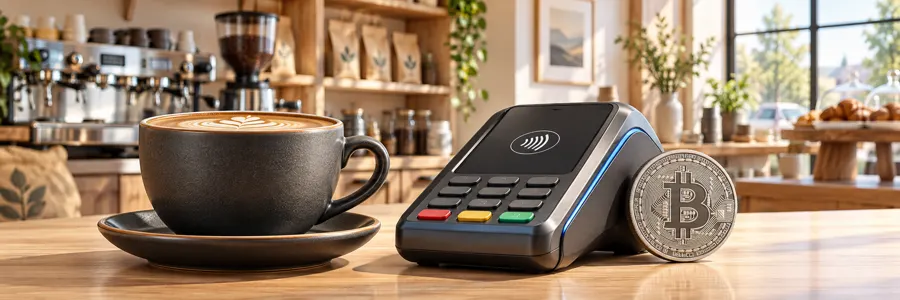
Shortwave Coffee accepts Bitcoin at the register across its business in Missouri, Minnesota and Florida. A September 22 report documented the family-run roaster's adoption after local Bitcoin users repeatedly asked staff and management to enable the payment option.
The business has five locations, including two in Columbia, one in St. Louis, and operations in Minneapolis and Tampa. The account dates management's agreement to July 2026, so the September report describes an existing rollout rather than a launch that week. Customers can use Bitcoin payments for an ordinary cafu00e9 purchase, giving this story a concrete checkout application.
The case also shows the role of customer requests alongside payment-provider support. Businesses considering whether to accept crypto payments as a merchant need staff who can explain the option and complete a transaction. Availability alone does not tell us how often customers use it; the report provides no payment-volume figures.
Visa Finds Bank-Level Safeguards Raise Surveyed Stablecoin Interest to 56%

Visa published research on September 23 showing that American respondents' stated willingness to use stablecoins rose from 36% to 56% when researchers described hypothetical bank-level fraud protection and deposit insurance. That is a 20-percentage-point change in survey intent, not an increase in actual payments.
The Money Travels study included 2,192 US adults surveyed by Morning Consult between February 24 and March 2. A separate scenario involving a trusted provider raised stated willingness to 45%. Visa also found that 56% of Americans had never heard of stablecoins.
Stablecoins do not currently carry FDIC deposit insurance. Providers therefore need to explain the protections they offer without implying that a hypothetical survey condition already exists. For crypto payment gateways, the findings point to customer support, clear risk disclosures and familiar distribution as adoption questions worth testing.
Chainalysis Places Brazil First in Its Redesigned Crypto Adoption Index

Chainalysis ranked Brazil first for grassroots crypto adoption in its 2026 index, published on September 23. The firm measured $252.5 billion in Brazil's crypto economy during the reporting period, which ran from July 2025 through June 2026.
The new methodology combines service flows, domestic peer-to-peer transactions, cross-border flows and on-chain balances. Brazil placed in the top four on each measure. Because Chainalysis changed its approach, readers should not interpret the ranking as a like-for-like move against earlier editions.
The research gives payment businesses a broader view of activity than exchange turnover alone. It does not measure merchant sales: transfers and wallet balances can reflect several uses. A business choosing a market for crypto checkout still needs local evidence on customer demand, settlement options and repeat purchases before treating a high adoption rank as a sales forecast.
