Mysterium VPN

Blockchain

Blockchain news covering Web3 infrastructure, smart contracts, decentralized applications, Layer 2 networks, interoperability, security and tokenization.

Safeguarding Client Funds Under PSD2: Key Requirements for EMIs

Safeguarding Client Funds Under PSD2: Key Requirements for EMIs

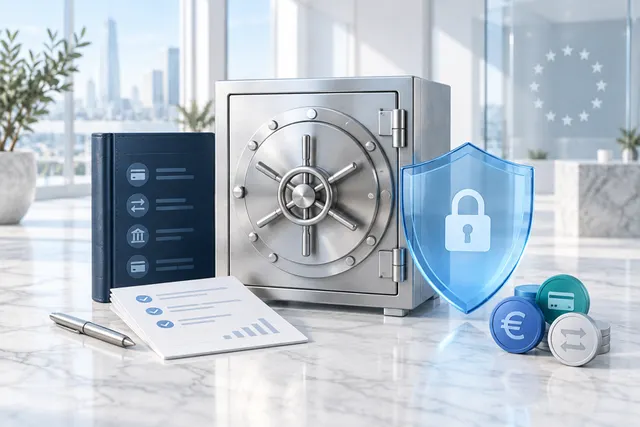
PSD2 sets out the framework for this arrangement, while additional provisions apply to e-money firms under the Electronic Money Directive. Together, these rules establish how an EMI should hold, monitor and account for money belonging to its users. PSD2 sets out the framework for this arrangement, while additional provisions apply to e-money firms under the Electronic Money Directive. Together, these rules establish how an EMI should hold, monitor and account for money belonging to its users. The practical side deserves particular attention. An EMI needs reliable account arrangements, accurate records and regular checks capable of identifying discrepancies at an early stage. These controls should remain effective during ordinary activity as well as periods of increased transaction volumes or significant disruption. Core mandates of the Payment Services Directive 2 (PSD2) regarding safeguarding client funds PSD2 outlines regulations that deal with money received by firms through payment transactions. EMIs also need to conform to the Electronic Money Directive in case the relevant provisions are not included in PSD2. These considerations are also relevant during an application if one wants to get AEMI license for sale. The applicant needs to demonstrate that appropriate arrangements are already planned for handling money belonging to users and that the proposed procedures can operate effectively once the business begins providing its services. The main idea is straightforward: money which belongs to users should remain distinguishable from the firm's own resources and should not be used to meet its ordinary expenses or unrelated obligations. An EMI should have arrangements covering: identifying amounts received from users; calculating the sums that need to be placed under the applicable protection arrangement; maintaining suitable accounts or another permitted mechanism; comparing accounting records with external statements; investigating discrepancies promptly; controlling access to accounts containing user money; retaining evidence of checks and corrective measures. The actual way of implementation hinges on the specific activity of the firm and the regulation that is applied by the authority of the particular country. However, an EMI is expected to be able to show the mechanism of its arrangements and who is liable for each function. Area What an EMI should address User money Clearly identified and kept apart from the firm's own resources Account structure Arrangements that allow protected amounts to be distinguished Protection method A permitted account, insurance arrangement or comparable mechanism Reconciliation Regular comparison between records and amounts actually held Access controls Authorised access and appropriate approval procedures Discrepancies Prompt investigation and correction Audit checks Independent testing of calculations and procedures Insolvency Arrangements supporting identification and return of user money Segregation methods: separating operational accounts from protected safeguarding accounts A widely used approach is to maintain distinct accounts for different purposes. One account may be used for salaries, technology costs, professional fees and other expenses incurred by the EMI. Another is designated for amounts belonging to users. The distinction should exist in the firm's accounting records as well as in its account structure. A person reviewing the records should be able to establish which amounts relate to users without having to reconstruct the figures from numerous unrelated transactions. A well-designed arrangement should also define who can access these accounts and under what circumstances transfers can be made. The firm's procedures should address questions such as: Who can initiate a transfer? Who must approve it? How are incoming amounts identified? When is the required balance calculated? Who performs the reconciliation? How are discrepancies escalated? Access should be limited to authorised personnel. For larger transfers, a dual-approval process may provide an additional layer of control. User permissions should also be reviewed whenever responsibilities change. Clear account structures make everyday administration easier and reduce the chance that money belonging to users will be confused with the firm's own resources. Eligible credit institutions and insurance policy options for safeguarding funds The PSD2 law allows several ways to handle the money users give to the EMI. This could include, for example, depositing the money in an eligible credit institution through the provision of a payment account for that purpose exclusively. Before entering into an agreement with third parties to hold the customers' funds, the EMI should evaluate the suitability of such entities. Among other aspects, this involves checking their reputation, financial situation, account terms, and ability to deliver accurate statements. Another possibility may involve an insurance policy or comparable guarantee, where permitted by the applicable framework. This option needs careful assessment because the practical value of a policy depends on its terms. Before relying on an insurance-based arrangement, an EMI should consider: the insurer's financial standing; the amount covered; exclusions and limitations; the policy period; events that may trigger a claim; procedures for making a claim; the time needed for payment; whether the arrangement meets the applicable rules. Price should not be the only consideration. A lower-cost arrangement may be of little value if important exclusions prevent recovery when the EMI encounters serious difficulties.


Sep 18, 2026
Institutional Crypto Lending: Why the Market Needs Digital Asset Lending

Institutional Crypto Lending: Why the Market Needs Digital Asset Lending

Institutional crypto lending is a distinct segment of the digital asset market, where borrowers and lenders are professional participants: funds, trading companies, market makers, corporate entities and other organizations. Unlike retail services, this type of lending often involves large volumes, customized terms and strict collateral requirements. The principle itself is familiar from traditional finance: one party temporarily transfers an asset and the other agrees to return an equivalent amount under agreed-upon terms. In the crypto industry, settlements can be made in both digital assets and fiat currency.

Sep 17, 2026
How Polymarket Uses Crypto Infrastructure to Power Prediction Markets

How Polymarket Uses Crypto Infrastructure to Power Prediction Markets

Polymarket’s growth has made one technical question hard to avoid: what actually happens after a user takes a position on an event? The app may look like a news feed with prices attached, but the machinery underneath belongs to crypto. Stablecoin-backed rails carry the balance. Outcome tokens record each side of the trade. By the time the user sees a price move, blockchain infrastructure has already shaped the experience.

Sep 17, 2026
How Crypto Wallets Can Expand Their Functionality With APIs

How Crypto Wallets Can Expand Their Functionality With APIs

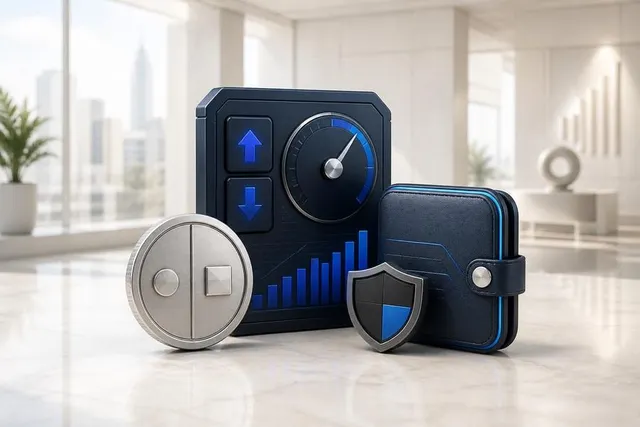
Crypto wallets are no longer limited to storing keys and sending or receiving assets. By 2026, many of them have evolved into compact financial applications. Users can swap tokens, buy cryptocurrency for fiat, stake assets, move funds between networks, and track portfolio performance without switching services.

Sep 9, 2026
5 Easy Strategies To Promote Your Wallet Platform

5 Easy Strategies To Promote Your Wallet Platform

According to MarketsandMarkets, the digital wallet market is steadily growing and expected to hit $532 billion by 2032, growing at a CAGR of 10.8% from 2026. Given the tendency of users to utilize digital wallets to organize purchases on the go, this growth should come as no surprise.

Aug 28, 2026
Expanding the Web3 Economy: How Ethereum Simplifies Digital Commerce

Expanding the Web3 Economy: How Ethereum Simplifies Digital Commerce

The rapid maturation of decentralized finance and blockchain technology has fundamentally altered how digital services handle value exchange online. Beyond speculative trading, cryptocurrencies like Ethereum have transitioned into practical payment frameworks utilized across a diverse spectrum of global platforms. Thanks to robust smart contract architecture, reduced network friction, and decentralized identity verification, Web3 ecosystems now offer merchants and users an unparalleled combination of transaction speed, transparency, and operational independence.

Aug 27, 2026
Crypto Marketing Guide: Guest Posting and Press Release Placement Explained

Crypto Marketing Guide: Guest Posting and Press Release Placement Explained

Crypto marketing looks nothing like marketing in any other industry, and projects that treat it the same way almost always burn through budget with little to show for it. Between advertising bans, algorithm scrutiny, and an audience that's learned to ignore anything that smells like a paid ad, blockchain projects need a different playbook - one built around guest posting and press release placement rather than paid campaigns alone.

Aug 25, 2026
Top Crypto Marketing Agencies for Early-Stage Blockchain Startups in 2026

Top Crypto Marketing Agencies for Early-Stage Blockchain Startups in 2026

Most blockchain startups burn through their marketing budget before they ever find an agency that actually understands crypto. Crypto Marketing Agencies that specialize in this space know things general firms simply don't, like how to work around ad platform restrictions on Google and Meta, how to build real community trust after years of rug pulls have made token buyers deeply skeptical, and how to tell a legitimate project apart from noise-filled scams. After reviewing dozens of agencies across client rosters, campaign results, and service depth, this guide breaks down the five best options for early-stage blockchain startups heading into 2026.

Aug 25, 2026
Why Image Quality Matters for Crypto Brands and NFT Art

Why Image Quality Matters for Crypto Brands and NFT Art

In crypto, your image is your first pitch. A blurry logo, a pixelated NFT thumbnail, or an over-compressed banner can make a legitimate project look like a scam before anyone reads a word of your whitepaper - often the fastest fix is running the file through an AI tool to enhance image quality . Here's why image quality works as a trust signal in the first place, and where it typically breaks down.

Aug 24, 2026
How Prediction Markets and Crypto are Colliding

How Prediction Markets and Crypto are Colliding

Prediction markets are the new hot topic in the US sports betting and finance industries, emerging from niche political polling tools to multi-billion-dollar valuations and trading volumes in just a few short years. Their rise is inextricably linked with crypto. Although not all markets are crypto-based, many are - and the two financial tech markets impact each other in many ways. Some obvious and some more subtle.

Aug 21, 2026
Can Blockchain Solve the Trust Problem Facing Sweepstakes Casinos?

Can Blockchain Solve the Trust Problem Facing Sweepstakes Casinos?

Sweepstakes casinos have grown fast over the past few years, but plenty of players still approach them with a raised eyebrow. Part of that comes down to how the model works. Because instead of cash these casinos use sweeps coins alongside a separate play-money currency, some newcomers assume the whole setup is a workaround rather than a legitimate form of entertainment.

Aug 17, 2026
Best No-KYC Crypto Cards in 2026: What Actually Exists

Best No-KYC Crypto Cards in 2026: What Actually Exists

Type "best no kyc crypto card" into a search bar enough times and you start noticing a pattern. Half the results promise total anonymity. The other half quietly admit, buried around paragraph twelve, that ID verification kicks in the moment someone tries to spend more than a few hundred dollars a month.

Aug 14, 2026
What to Do When Crypto or Bank Funds Are Frozen: AML Reviews, Evidence and Legal Escalation

What to Do When Crypto or Bank Funds Are Frozen: AML Reviews, Evidence and Legal Escalation

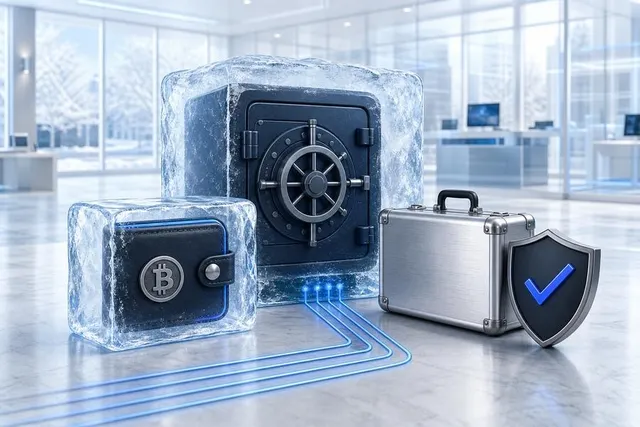
A blocked bank account or frozen crypto balance can stop an otherwise healthy business within hours. Payroll may fail, suppliers may remain unpaid, customer withdrawals may be delayed, and management may receive only a generic notice referring to compliance, security or an internal review. The absence of a detailed explanation often makes the situation feel arbitrary. In reality, most restrictions arise from a combination of contractual rights, anti-money laundering controls, sanctions screening, fraud prevention, transaction monitoring and regulatory reporting duties.

Aug 4, 2026
How the Crypto Market Grew From One Coin to Thousands of Digital Assets

How the Crypto Market Grew From One Coin to Thousands of Digital Assets

In 2013 there were about 50 cryptocurrencies in existence. Bitcoin, a handful of early clones, and not much else. Ask CoinGecko today and it's tracking roughly 17,345 of them. Ask CoinMarketCap, which uses stricter listing rules, and you'll get a smaller number, somewhere in the 9,000 to 10,000 range. Ask Dune Analytics, which counts every smart contract token that's ever recorded a single trade across any chain, and the figure jumps to over 84 million. Same market, three wildly different answers, and all three are technically correct.

Aug 4, 2026

Blockchain news, Web3 infrastructure and applications

Blockchain technology supports digital assets, payment networks, smart contracts and a growing range of decentralized applications. This section covers blockchain news about protocol upgrades, Web3 infrastructure, enterprise projects, security and practical business applications. Readers can follow how public and permissioned networks are being developed, connected and used across finance, commerce and online services.

Smart contracts, dApps and Layer 2 networks

Cryptwerk reports on smart contract platforms, decentralized applications, scaling systems and Layer 2 networks designed to improve speed, cost and usability. Coverage includes developer tools, governance changes, network upgrades and security incidents that may affect applications and users. For asset-oriented reporting, explore the cryptocurrency news category.

Interoperability, cross-chain technology and tokenization

Blockchain interoperability is becoming essential as liquidity, data and applications spread across multiple networks. This category follows cross-chain messaging, bridges, oracles, tokenization and infrastructure that allows smart contracts to coordinate between blockchains. It also examines the risks of cross-chain systems and the role of standards, audits and governance. Visit crypto adoption news for real-world blockchain projects, merchant integrations and institutional use cases.