
 English
 Français
 Español
 Português
 BTC
BTC
 ETH
ETH
 LTC
LTC
 BCH
BCH
 USDT
USDT
 DOGE
DOGE
 DASH
DASH
 USDC
USDC
 XRP
XRP
 XMR
XMR
 TRX
TRX
 BNB
BNB
 SHIB
SHIB
 SOL
SOL
 DAI
DAI
 ZEC
ZEC
 ETC
ETC
 POL
POL
 ADA
ADA
 XLM
XLM
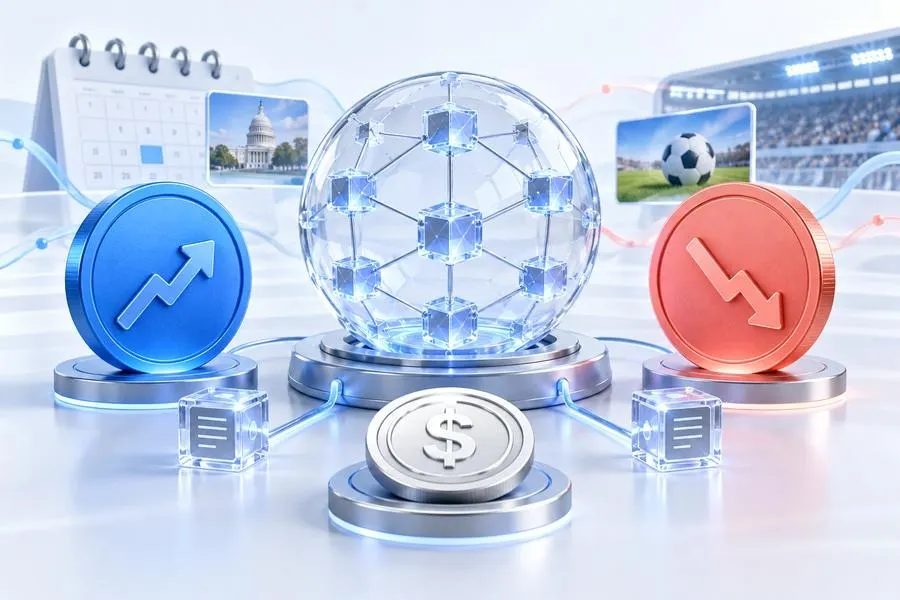
Polymarket’s growth has made one technical question hard to avoid: what actually happens after a user takes a position on an event? The app may look like a news feed with prices attached, but the machinery underneath belongs to crypto. Stablecoin-backed rails carry the balance. Outcome tokens record each side of the trade. By the time the user sees a price move, blockchain infrastructure has already shaped the experience.

A welcome offer gives that infrastructure a practical entry point. A deposit-based trading credit can look like a simple bonus, but it also shows how an exchange introduces new users to event contracts. The user still needs to ask where the offer applies. Jurisdiction controls access. Terms define the reward. A market price can guide a trade without making the outcome certain.
Why Polymarket Uses Crypto Infrastructure
Polymarket uses blockchain infrastructure because prediction markets need more than a simple betting interface. The system has to hold collateral, represent opposing positions, transfer ownership when users trade, and settle contracts once an outcome is known.
Crypto infrastructure gives Polymarket a programmable way to handle those steps. Stablecoin-backed collateral provides the value behind each position, outcome tokens represent Yes and No shares, and smart contracts enforce parts of the settlement process.
The blockchain is therefore not just a payment method added to the platform. It is part of the market infrastructure itself.
How YES and NO Outcome Tokens Work
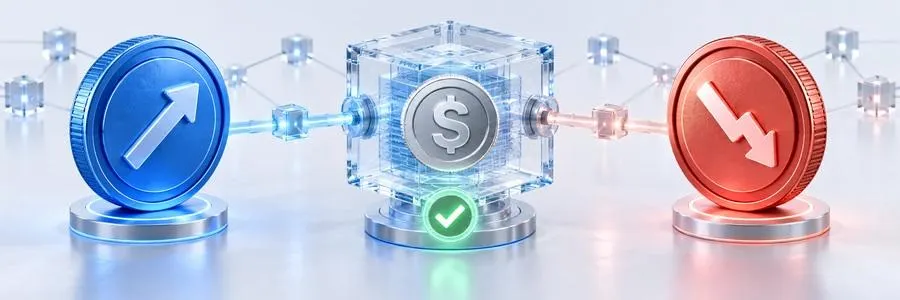
The Commodity Futures Trading Commission describes event contracts as products tied to the outcome of an event. Many use a yes-or-no structure. The payout often equals $1 when the user predicts the outcome correctly. A 65-cent position reflects the price other participants accept at that moment.
Polymarket’s documentation explains the same idea through outcome tokens. Each market has Yes and No tokens. A winning token redeems for $1 after resolution. A losing token redeems for nothing. That design feels familiar to people who follow markets, yet it differs from holding a stock. A company can survive a bad week. A resolved event contract ends according to its stated rule.
In a binary market, the two tokens represent opposing outcomes of the same question. If the market resolves Yes, the Yes side receives the settlement value while the No side becomes worthless. If the market resolves No, the reverse happens.
This token structure allows positions to be transferred between users before resolution rather than forcing every participant to hold the contract until the event ends.
How Trades Are Matched
A prediction market needs buyers and sellers to agree on a price. Polymarket therefore works more like an exchange than a traditional sportsbook.
Users can submit orders indicating the price at which they are willing to buy or sell a position. When compatible orders meet, the trade is matched and ownership of the relevant outcome tokens changes.
This is why Polymarket prices can move continuously. The platform does not simply publish fixed odds and wait for users to accept them. Prices are shaped by trading activity and by the prices participants are willing to accept.
A Yes token trading at $0.65, for example, means that market participants are currently willing to exchange that claim around that price. It is often interpreted as roughly a 65% market-implied probability, although the price can also be affected by liquidity, spreads, fees and trading behavior.
What Happens On-Chain and Off-Chain
Not every part of a crypto trading platform has to happen directly on the blockchain.
Prediction-market platforms can use off-chain systems for parts of the trading experience, such as collecting and matching orders, while blockchain transactions handle ownership, collateral and settlement.
That hybrid design matters for usability. Performing every interaction directly on-chain would generally create more friction for users and could introduce additional transaction costs or delays.
The result is an interface that can feel similar to a conventional trading platform even though blockchain infrastructure remains underneath the assets and settlement process.
Why Polygon Matters
Polymarket's use of Polygon is also part of the user experience. Prediction markets can involve frequent transfers, position changes and settlement activity, so transaction cost and processing speed matter.
Using a lower-cost blockchain network makes it more practical to support market activity without requiring users to absorb the kind of transaction costs historically associated with busier blockchain networks.
For most users, Polygon remains largely invisible. Its importance is infrastructural: it provides the network on which tokenized positions and related transactions can operate.
How Markets Are Resolved
The final step is resolution. Before trading begins, each market specifies the condition that determines whether the answer will be Yes or No.
Once the event is complete, the market is resolved according to those rules. The winning outcome token can then be redeemed for its settlement value, while the losing token expires without value.
This is why the wording of the market matters as much as the event itself. A trader may correctly predict what happens in the real world but still misunderstand how the contract defines the outcome.
For that reason, the resolution criteria should be treated as part of the product rather than as fine print.
How Markets Are Resolved
The final step is resolution. Before trading begins, each market specifies the condition that determines whether the answer will be Yes or No.
Once the event is complete, the market is resolved according to those rules. The winning outcome token can then be redeemed for its settlement value, while the losing token expires without value.
This is why the wording of the market matters as much as the event itself. A trader may correctly predict what happens in the real world but still misunderstand how the contract defines the outcome.
For that reason, the resolution criteria should be treated as part of the product rather than as fine print.
Why Sports Events Drive Discovery
Large sporting events can pull prediction markets into mainstream conversation. Chainalysis said the 2026 World Cup generated $20 billion in prediction-market volume from January onward. More than 400,000 wallets took part in blockchain-based activity during the tournament. The United States ranked among the leading countries by attributable activity. That gives US readers a familiar path into an unfamiliar product category.
The football calendar also shows how attention can rise and then cool. The Block reported that combined monthly volume across two major prediction-market platforms, including Polymarket, fell 14.5% in August to $45.33 billion. A decline after a surge doesn't make the category weaker by itself. It shows why welcome incentives appear during moments when platforms want new users to keep exploring.
Crypto Rails Shape the User Experience
For users who already rely on blockchain services, the appeal often comes from seeing familiar infrastructure applied to new types of activity. Wallets hold balances. Smart contracts support token logic. Stablecoin backing keeps the unit of account close to the US dollar. None of that removes risk. It does make the transaction model more legible for readers who already treat crypto as part of daily financial life.
The same pattern has touched gaming, where digital wallets and account-based rewards have trained users to expect fast movement between screens. Prediction markets borrow some of that product language, especially around live events and mobile access. The better habit is to slow the first decision down. Read the market title. Check the resolution details. Confirm what happens if you sell before the event ends.
Matching the Offer to Reader Goals
Trading credit has practical value when it helps a beginner learn the mechanics with a defined limit. It has less value when the user treats it as a reason to enter markets they don't understand. A finance-minded reader should ask the same questions used for any speculative product. What is the downside? How do fees affect the result? What would make the user exit the position before settlement?
The CFTC advises prediction-market customers to look for complete information on risks and obligations. It also points to fees and settlement terms as part of that review. Those checks fit the welcome-offer process. A promotion should lead to better reading of the product.
What the Welcome Offer Includes
Promo codes now travel through finance in a familiar way. Banks use them to attract account openings. Trading apps use them to get new users past the first deposit. Prediction-market platforms use them to move curious sports fans toward their first event contract. That boom has changed how readers assess offers. A code becomes the first test of the product and the rules.
Covers.com’s September page lists Polymarket’s COVERS code as a $50 trading bonus after a qualifying $10 deposit for eligible new users. The page also says availability varies by state. That detail matters in practice because an offer can appear online before a reader has confirmed access. A sensible check starts with eligibility and then moves to deposit terms.
The current Polymarket promotion should be read as an entry into a trading environment. Covers.com ranks and reviews these offers in a way that helps readers compare the headline value with the actual steps required. This can reduce confusion before registration. After that, users still need to read the platform terms because trading credit may follow different rules from cash.
Polymarket’s own documentation shows why the distinction deserves care. The platform uses pUSD as its collateral token for trading. Polymarket says pUSD is an ERC-20 token on Polygon and is backed by USDC through smart-contract controls. In simple terms, the user sees a balance inside an app. Underneath it, crypto infrastructure records the accounting and supports the trade.
How Funds and Collateral Enter the System
Before a prediction-market position can exist, it needs collateral behind it. Polymarket uses dollar-linked crypto infrastructure so that market positions can be priced in familiar dollar terms while still operating through blockchain-based settlement.
Its trading system uses tokenized collateral on Polygon. That collateral provides the economic backing for the outcome tokens users buy and sell.
From the user's perspective, this can look like a normal account balance. Underneath the interface, however, blockchain-based tokens and smart contracts keep track of the assets supporting each position.
That matters because a Yes or No token is not just a number displayed by the app. It represents a claim whose value ultimately depends on both the collateral behind the market and the final resolution of the event.
What to Check Before the First Trade
Start with jurisdiction. A US reader needs to know whether the app is available in their state. Then look at the deposit requirement. After that, check whether the reward arrives as trading credit or cash. Review the event category before placing a trade. Sports markets may feel easier to understand because the schedule looks familiar, but a contract still depends on formal resolution rules.
The strongest first trade plan stays small and deliberate. Choose a market you can explain. Note the price paid. Watch how the position value changes before the event ends. If the app allows an exit before settlement, learn how that process works before you need it. A welcome offer reveals the product’s real character when the user treats it as a lesson in exchange trading.
