
 English
 Français
 Español
 Português
 BTC
BTC
 ETH
ETH
 LTC
LTC
 BCH
BCH
 USDT
USDT
 DOGE
DOGE
 DASH
DASH
 USDC
USDC
 XRP
XRP
 XMR
XMR
 TRX
TRX
 BNB
BNB
 SHIB
SHIB
 SOL
SOL
 DAI
DAI
 ZEC
ZEC
 ETC
ETC
 POL
POL
 ADA
ADA
 XLM
XLM
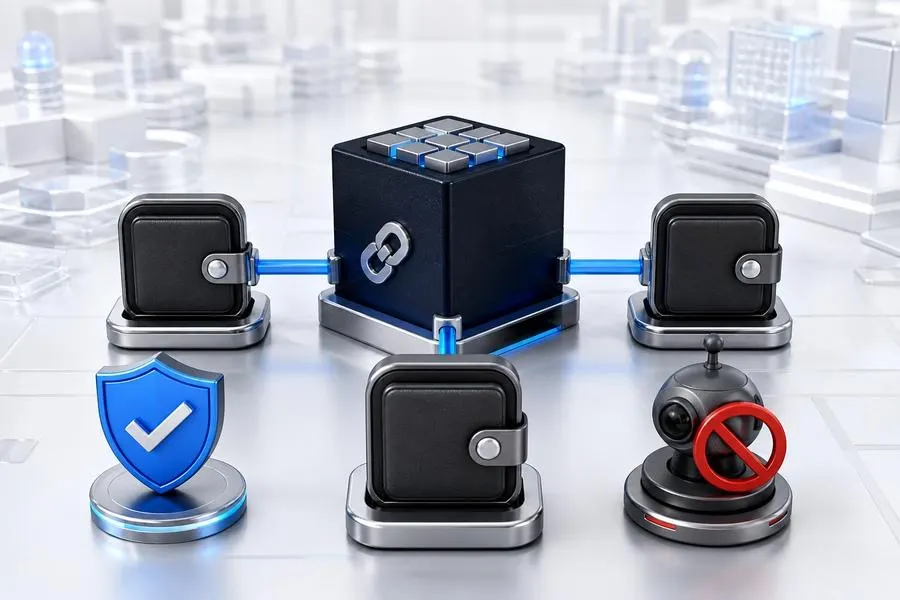
You launch a token. You have not posted anything yet. Nobody knows the contract address except you and the four people in your Telegram admin chat.
Eleven seconds later the chart already has volume, and six wallets you have never seen are holding about a fifth of the supply.
This confuses a lot of first-time creators, and the usual explanation on Twitter is that someone leaked. Usually nobody leaked. What happened is a piece of plumbing, and once you can see the plumbing the whole thing stops feeling like sabotage and starts feeling like physics.
Nobody is reading your project description
A sniper bot does not care what your token is. It is not evaluating the art, the name, or whether your community is real. It watches the chain for one pattern: a new mint being initialised on a launchpad program. When that pattern appears, it buys. The whole decision takes less time than it took you to read this sentence.
That is the part people underestimate. There is no judgement involved, so there is no way to look legitimate enough to be skipped. Every launch is treated identically, which means every launch that leaves a gap gets filled.
And the gap is small now. A few years ago you had several seconds between creating a token and the first outside buy landing. On Solana today it is often a single block. A block is not much time — unless your competition is a human being reading a message on their phone, in which case it is an eternity.
Two costs, and the second one is worse
Price is the obvious one. Bots buy at the bottom of the curve, your community buys higher, and the first hour of the chart looks like a spike into a slide. Annoying, but survivable.
The one that actually damages projects is distribution. You planned for supply to spread across a few hundred wallets. Instead five addresses hold a third of it, and now every holder-analysis tool a serious buyer runs will show that concentration in red. You get penalised for something you did not do and cannot easily explain, because "those aren't us, those are bots" is exactly what someone with a bad allocation would also say.
So you lose on price, and then you lose again on trust. The second one lasts longer.
Same block, no gap
If the problem is a window of time, the fix is to not have one.
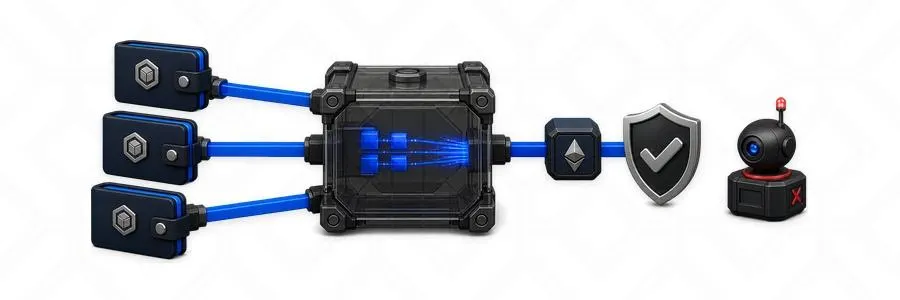
That is all bundling really is. Rather than creating the token and then buying, both go into the chain together and land in the same block. Solana handles this through Jito bundles, where a group of transactions either all execute in that block in the order you set, or none of them do. There is no partial outcome.
From a bot's point of view, the token simply appears with its opening allocation already settled. There was no moment to occupy, because the moment did not exist.
Now, this is where people oversell it, so let me be blunt: bundling protects one block. That is it. Block two is open to everyone, same as always. Anyone telling you a bundle makes a token sniper-proof is either confused or selling something. What you are actually buying is a fair start, and a fair start is worth a lot, but it is not immunity.
Why one wallet is a bad idea
The instinct is to put the whole opening buy through a single address. Do not. A wallet sitting on thirty percent of supply reads as a red flag no matter how honest your intentions are, and you have just recreated the exact problem you were trying to avoid — only now it is yours and you cannot blame bots for it.
Which is why bundles are normally spread across several wallets, each taking a defined slice, all in the same block. Coordinating that by hand is not a thing you can do. There is no manual way to hit one block twice. Free suites such as j.tools let you configure the token, decide how many wallets participate and how much each buys, and send the whole thing as one bundle.
The mistakes I keep seeing
Over-allocation is the big one, and I covered it above, so I will not repeat myself.
Underpaying the Jito tip is more painful because it is silent. A bundle is a bid for inclusion, not a guarantee. Set the tip too low and your bundle simply does not land — and you find out afterwards, having run an unprotected launch while believing you were covered. Check what tips are actually clearing before you commit, not after.
Then there is the strategic mistake, which is thinking any of this creates demand. It does not. A clean opening block gives you a chart that is not already broken. Whether anyone shows up is a completely separate problem, and plenty of flawlessly bundled launches have gone absolutely nowhere.
If you are on the buying side instead
The same mechanic is readable after the fact, which is useful when you are evaluating somebody else's token rather than launching your own.
Pull the first block after the mint. If several wallets bought inside that one block, it was bundled. Then — and this is the part that matters — check what those wallets did next. Still holding a month later usually means a team securing its own allocation, which is fine and fairly normal. Sold into the first rally means something else, and you already know what.
Bundling itself tells you nothing about intent. It is a tool. The behaviour afterwards is the actual signal.
So, worth it?
For most launches, yes — if you understand that you are buying a fair first block and nothing more. It costs a bit extra, it depends on getting the tip right, and it does nothing whatsoever for the rest of the project's life.
But if a team has spent three months building toward one moment, handing that moment to a bot because of a few hundred milliseconds is a strange thing to accept when it is avoidable.
