
 English
 Español
 Français
 Português
 BTC
 ETH
 LTC
 BCH
 USDT
 DOGE
 DASH
 USDC
 XRP
 XMR
 TRX
 BNB
 SHIB
 SOL
 DAI
 ZEC
 ETC
 POL
 ADA
 XLM
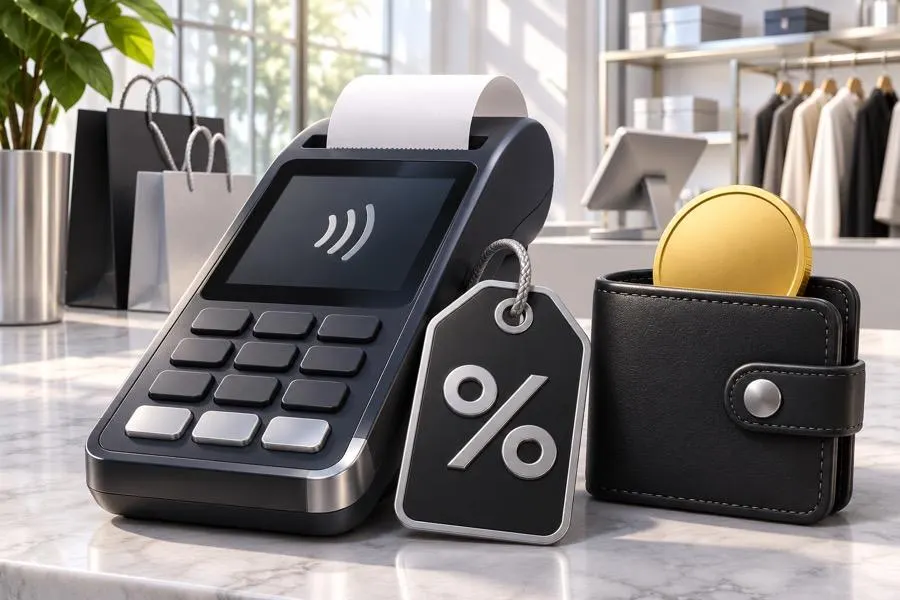
A crypto merchant discount is often a card fee the shop has stopped paying, handed back to the buyer, and a lot of buyers give that money away again before the parcel ships. It leaks through the coin spread, the network fee, an unexpected tax bill and a refund they can no longer demand. The percentage on a checkout banner is only a claim. It becomes a saving only once it survives the trip home into your own currency.
The Card Fee Hiding Inside a Crypto Discount
Seven checks decide whether it does. The ones that catch the biggest losses take about a minute at checkout.
Who Pays for the Discount
In a December 2025 piece asking whether credit card fees should be regulated, the Richmond Fed put an American merchant's total cost of taking a credit card at 1.5% to 3.5% of each sale. That range is the first check, because it sets how much of any crypto discount the shop's card savings can plausibly pay for. A crypto discount is the card surcharge sign some American shops tape up by the till, turned inside out. Move a customer from card to crypto and the shop saves something in that band, minus whatever its crypto processor charges.
A 3% crypto discount looks like that saving passed along. Card fees alone are unlikely to fund 25% off, so the rest probably comes out of the merchant's margin as a marketing expense, or from a price that was padded before the discount ever touched it. Neither is sinister on its own. Marketing money is a genuine saving when the base price is honest, and the third check exists to test exactly that.
A workable rule of thumb follows from the Fed's range. A discount at or below about 3.5% can plausibly be explained by card savings alone. Anything well above it needs another explanation before it earns your trust, and the shop's other prices are the first place to look.
Converting the Checkout Price Into Your Own Currency
The second check needs a calculator and about thirty seconds. A checkout asking for 0.0012 BTC hasn't yet told you a price in pounds or dollars. Converting it in your head with a rate glanced at over breakfast is one of the easier ways to end up paying more than a card customer for the same item.
Running the quoted amount through a bitcoin calculator set to your own currency turns the crypto price into a number that can sit beside the card price on the same page. Do it while the invoice is still open, because the rate a payment gateway locks in starts drifting away from the live market within minutes. If the converted figure lands closer to the card price than the banner promised, part of the discount went into the exchange rate the checkout used. That rate belongs to the gateway, and it need not match the market exactly.
Calculators like that quote the market rate before any purchase fees, though. The coins in your wallet probably cost more than that when you bought them. Card-funded buying is common enough to matter. In the FCA's 2025 research on UK cryptoasset consumers, just under one in ten crypto users said they had paid for their crypto with a credit card. Card purchases of crypto tend to carry a spread or a processing fee above the mid-market price, and that cost is easy to forget once you're celebrating 5% off.
Take a hypothetical shopper in Leeds who buys £200 of bitcoin by card at a combined 4% above market and spends it at a shop advertising 5% off. Her real saving is a little over one percentage point. And the network hasn't taken its cut yet.
For anyone buying on behalf of a business, where somebody will check the numbers later, that minute deserves a paper trail. Keep a screenshot of the invoice showing the BTC amount and its expiry time, alongside the card total for the same basket with shipping and VAT included. Comparing a crypto price before VAT with a card price after it is an easy way to invent a discount that was never there.
The Price the Discount Is Cut From
Picture a pair of trainers listed at $240 with 20% off for crypto and sold everywhere else for $190. The crypto buyer pays $192 and is told the deal saved $48. It cost $2 more than buying elsewhere. The third check, then, is the price a discount is taken from, and American regulators set the standard for it decades ago in the FTC's Guides Against Deceptive Pricing. A former price counts as an honest reference only if the item was openly offered at it, on a regular basis, for a reasonably substantial period of time. The guides even describe the trick in plain terms, an artificial, inflated price set up so that a large reduction can follow.
Shoppers seldom seem to bring that test to a crypto checkout, though a 20% banner is exactly where it belongs. Open the product in a private window to see the card customer's price. A second retailer's listing for the same item, or an archived copy of the product page from a few months back, can show whether the higher price was ever charged to anyone.
Rewards, Rival Offers and the Real Alternative
The Federal Reserve's 2025 Diary of Consumer Payment Choice found that credit cards accounted for 35% of US consumer payments by number in 2024, ahead of debit cards at 30% and cash at 14%. That makes your own card the fourth check, since for many buyers the real rival to a crypto discount is a card with rewards attached. A flat 2% cashback card shrinks a 5% crypto discount to a 3% edge at best. Points on a big purchase can erase it.
The offer also has to beat what rival merchants give crypto payers. Cryptwerk's directory of crypto discounts and promo codes gathers offers from nearly 900 merchants, which makes that comparison cheap to run. VPSLab's 18% off yearly plans looks generous in isolation, and whether it is depends on what the other hosting firms in that list are offering crypto payers at the time. Annual plans deserve extra care, because a discount on twelve months paid upfront is also a bet that the service will still suit you in month eleven.
Network Fees and the 15-Minute Clock
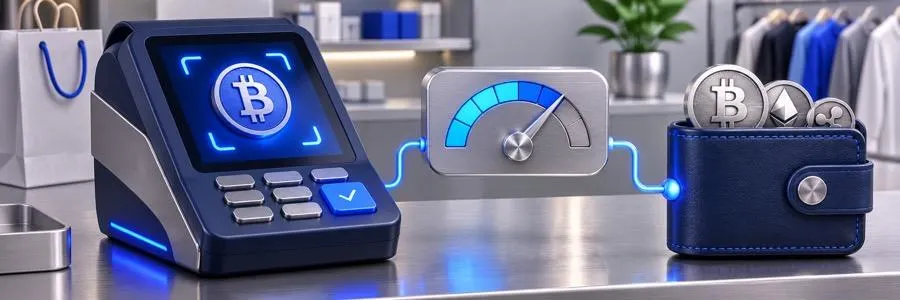
Bitcoin's network fee is priced by the data a transaction takes up. COLDCARD's explainer on bitcoin transaction fees notes that fees are measured in sats per vbyte and never as a percentage of the value sent, with the right rate shifting as the network gets busier. So a fee that hardly registers on a laptop can swallow the whole discount on a single month of VPN service. That makes moving the coins the fifth check. Lightning payments are built for small amounts and often cost far less, where a shop accepts them. Before pressing send, check which payment options the shop takes and what fee rate your wallet is proposing.
Timing costs money too. Trezor's help page on paying for its shop orders in crypto says the payment gateway holds the exchange rate for 15 minutes, and payments that arrive after the timer runs out aren't accepted. The same page warns that some wallets deduct the fee from the payment amount instead of adding it on top, which leaves the invoice short. Underpaid invoices are refused there as well, and sorting one out usually costs at least one more transaction. Paying straight from an exchange account can create the same shortfall if the exchange takes its withdrawal fee out of the amount sent.
When Spending Bitcoin Counts as Selling It
Tax is the sixth check, and it's the one most likely to turn a small discount negative. HMRC's cryptoassets manual lists using tokens to pay for goods or services among the disposals that count for Capital Gains Tax. Buying headphones with bitcoin that has doubled since you acquired it is, in the tax office's eyes, a sale of that bitcoin at a profit. Individuals in the UK get a £3,000 annual tax-free allowance on gains.
Many casual spenders will stay under it, though they still need records of every purchase to prove that. HMRC's guidance on checking whether tax is due when you dispose of cryptoassets asks for separate records of each transaction, including the date, the number of tokens and their value in pounds sterling. It also lists transaction fees among the allowable costs, which means the network fee from the fifth check is worth recording rather than forgetting.
Five percent off a £60 order is £3. For someone already over the allowance who bought the coins cheaply years ago, the tax on the gain can be several times the discount. American buyers face the same logic. A September 2026 Congressional Research Service report on digital asset taxation notes that because the IRS treats digital assets as property, using them to pay for goods or services can create a tax liability.
Refunds Without a Chargeback
A card payment comes with a dispute route. The CFPB's guidance on disputing a credit card charge gives US cardholders 60 days after a charge appears on their statement to send a written notice. Bitcoin offers nothing comparable. The bitcoin.org page for new users states that a transaction cannot be reversed and can only be refunded by whoever received the funds. Refunds are therefore the seventh check, and the one buyers tend to discover too late.
This is also where the honest exception to the first check sits. Remote purchase fraud losses on UK-issued cards came to £423.5 million in 2025, most of the £594.9 million card fraud total in UK Finance's Annual Fraud Report 2026. A VPN provider or hosting firm selling online may value an irreversible payment well above the card fee it replaces, and that shop can afford a bigger discount without padding anything. Part of what the buyer receives is payment for the protection they've handed over.
Plenty of shops that take crypto run checkout through one of the 250 crypto payment gateways listed on Cryptwerk, and the gateway's terms often shape what a refund looks like. Even that listing warns that a named integration doesn't prove a merchant uses the processor for its own checkout, so the refund terms have to come from the shop. Ask before paying whether money comes back in coins or in your own currency, and who covers the network fee on the way back. On a large order, get the answer in writing. A shop that can't answer before you pay is unlikely to answer more clearly after a return.
Where Stablecoins Change the Sums
Stablecoins belong in any honest comparison. Paying in USDT or USDC strips most exchange-rate drift from the calculation, and with it the guesswork about whether a discount was real or just a good morning for bitcoin. Cryptwerk's list of companies that accept Tether now runs past 2,000, with hosting firms such as Servers Guru and PSB Hosting near the top. The spread on buying the stablecoin is still there, and so is the network fee. For a shopper who already keeps dollars on an exchange, a 5% discount paid in USDC is about as close to a clean comparison as crypto checkout gets.
The Sum to Do Before Paying
Before the next crypto checkout, do the whole sum instead of trusting the banner. Start with the advertised discount and take away the cashback your card would have paid. Take away the premium you paid above market for the coins, then the network fee as a share of the order. If less than a percentage point is left, the card is probably the better choice once tax records and lost dispute rights are counted. A comfortable margin above that is worth taking, with the screenshot saved.
None of this prices the coin's future, and that is where the argument stops being arithmetic. On 22 May 2010, Laszlo Hanyecz reported on the Bitcoin forum that he had traded 10,000 bitcoins for pizza, coins worth roughly $800 million at late-October prices. No discount would have rescued that order. Every purchase made in bitcoin carries a smaller version of the same bet, and the merchant's 5% is a fee paid to the buyer for giving the coin up.
Arithmetic can prove a discount real on the day of purchase. Whether spending the coin was cheap stays an open question for years afterwards, and the receipt never updates.
