
 English
 Français
 Español
 Português
 BTC
BTC
 ETH
ETH
 LTC
LTC
 BCH
BCH
 USDT
USDT
 DOGE
DOGE
 DASH
DASH
 USDC
USDC
 XRP
XRP
 XMR
XMR
 TRX
TRX
 BNB
BNB
 SHIB
SHIB
 SOL
SOL
 DAI
DAI
 ZEC
ZEC
 ETC
ETC
 POL
POL
 ADA
ADA
 XLM
XLM

The global money supply has reached another historic milestone.
There is now an estimated $121.9 trillion circulating across the global economy, and in just two years the amount of money in the system has increased by more than $17 trillion. Central banks may no longer use the same emergency language they did during previous crises, but the printing machine is clearly running again, with global liquidity growing roughly 7–8% annually.
And whenever that happens, the same question returns:
Where does all this money go next?
Some governments continue trying to protect traditional banking systems. Others are beginning to open the door to stablecoins, blockchain infrastructure, and crypto finance. And a few smaller nations are moving surprisingly fast, hoping to position themselves early before larger economies fully adapt.
At Cryptwerk, we’ve been watching this shift happen in real time through merchant adoption, crypto payments, and the rapid growth of stablecoin usage worldwide. What’s becoming increasingly obvious is that countries are no longer debating whether crypto matters — they’re debating how much of the future financial system they want to control.
The US is preparing for one of the biggest crypto votes yet
Meanwhile in the United States, attention is focused on the updated CLARITY Act.
The bill has become one of the most closely watched crypto regulation proposals in years because of what it could unlock for institutional capital and stablecoin infrastructure.
According to industry insiders, approval of the legislation could potentially open the door for more than $2.5 trillion to flow into crypto markets over time.
The debate itself reveals how much the conversation has changed.
Lawmakers want to prevent stablecoins from functioning too much like bank deposits by restricting interest payments. Banks are openly worried that consumers could begin moving money away from traditional savings accounts into digital dollars.
Just a few years ago, major financial institutions dismissed stablecoins as a niche experiment.
Now they’re worried about competing with them.

USA crypto adoption map by Crypwerk Coinmap
The UK is softening its stance on stablecoins
The Bank of England is now reconsidering some of its tougher restrictions on stablecoins after heavy criticism from the crypto industry.
Regulators are reportedly reviewing limits on stablecoin holdings and reserve requirements because companies warned that current rules could make British stablecoins effectively unable to compete with dollar-based alternatives.
That concern is becoming difficult to ignore.
Most of the stablecoin economy today is still dominated by the US dollar. If countries want their own digital currencies to remain relevant, they may eventually need to become more flexible instead of trying to regulate the sector out of existence.

UK crypto adoption map by Crypwerk Coinmap
Poland is moving in the opposite direction
Not every country is becoming more crypto-friendly.
In Poland, lawmakers are discussing four separate cryptocurrency regulation bills after previous proposals were vetoed twice by the president.
At the same time, members of the Law and Justice party are reportedly pushing for legislation that would completely ban cryptocurrencies.
The contrast with other regions is becoming sharper every month. While some governments are racing to attract blockchain capital, others still view the industry primarily as a threat rather than an opportunity.
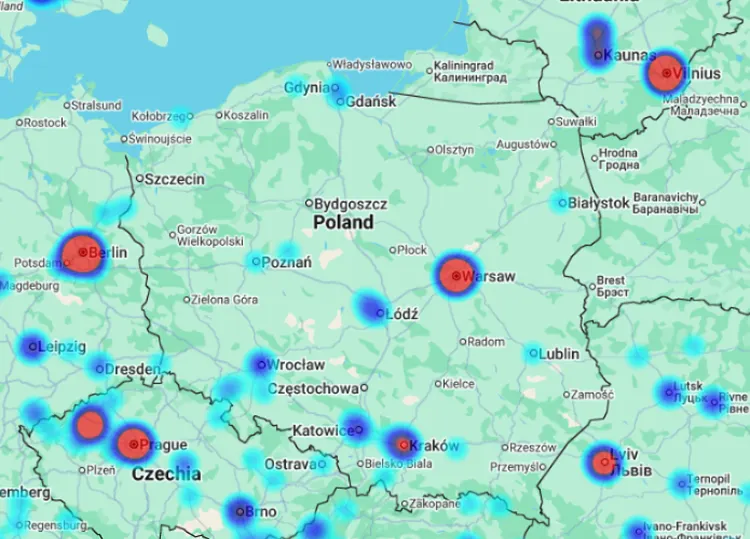
Poland crypto adoption map by Crypwerk Coinmap
Kyrgyzstan wants banks inside the crypto market
One of the more interesting developments this week came from Kyrgyzstan.
The country’s Ministry of Economy proposed allowing banks to officially buy, sell, and exchange cryptocurrencies under supervision from the National Bank.
If approved, crypto exchange services could eventually become as normal as currency exchange or wire transfers inside the traditional banking system.
The motivation is partly economic. The local crypto sector is growing quickly, and tax revenues from virtual assets reportedly exceeded 2.1 billion soms during the first 11 months of 2025.
Smaller economies are beginning to realize something important: crypto may not replace their financial systems overnight, but it can absolutely become a new source of growth, investment, and tax revenue.
UAE Officially Brings Crypto Payments Into Government Services
The push toward mainstream crypto payments is also accelerating in the Middle East.
The UAE has officially approved cryptocurrency payments for government service fees after Crypto.com received a license from the country’s central bank to process crypto payments for public services.
This is another major step toward real-world adoption. Instead of limiting crypto to trading platforms or investment products, governments are increasingly integrating digital assets into everyday financial operations — including taxes, licenses, and administrative payments.
The UAE continues strengthening its position as one of the world’s most crypto-friendly jurisdictions, combining regulation with practical adoption at a pace that many larger economies are still struggling to match.
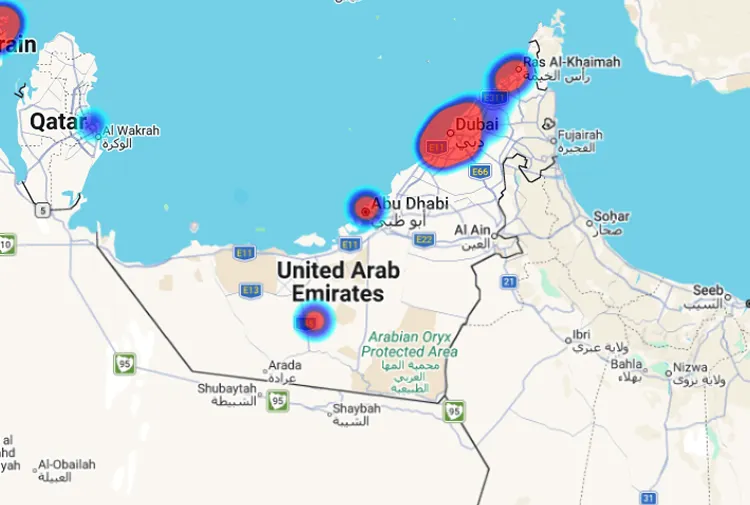
UAE crypto adoption map by Crypwerk Coinmap
Bhutan is trying to become a crypto haven
Bhutan is taking an even more aggressive approach.
The Gelephu Mindfulness City initiative has launched an accelerated licensing framework for crypto companies, combined with extremely favorable tax conditions:
0% corporate tax
0% capital gains tax
access to banking infrastructure
simplified regulatory processes
Instead of fighting the industry, Bhutan appears to be trying to attract it directly.
And in today’s environment, where crypto businesses are constantly searching for regulatory certainty, that strategy could bring significant attention to the country.
Bermuda wants to run financial services on blockchain
Bermuda is also making a bold move by shifting parts of its financial and payment infrastructure onto blockchain technology through the Stellar network.
The goal is ambitious: becoming the world’s first fully blockchain-powered economy.
Whether that vision becomes reality or not, the direction itself is important. Entire jurisdictions are now experimenting with blockchain infrastructure not as a side industry — but as part of national economic strategy.

A global financial transition is already underway
When you zoom out, all these stories connect.
The world is flooded with liquidity again. Governments are watching stablecoins grow into a multi-hundred-billion-dollar market. Banks are becoming nervous about deposits leaving traditional systems. And countries are reacting in completely different ways:
some are opening their doors to crypto capital
some are tightening restrictions
some are trying to build blockchain economies from scratch
But almost everyone now understands that digital assets are no longer a temporary trend.
More businesses are accepting crypto payments every month, stablecoins are increasingly used for international transactions, and consumers are becoming more comfortable spending digital assets in everyday life.
The next phase of crypto adoption may not come from speculation alone.
It may come from governments, payment systems, and entire economies slowly rebuilding financial infrastructure around blockchain technology while the rest of the world is still debating whether the shift is real.
