
 English
 Français
 Español
 Português
 BTC
BTC
 ETH
ETH
 LTC
LTC
 BCH
BCH
 USDT
USDT
 DOGE
DOGE
 DASH
DASH
 USDC
USDC
 XRP
XRP
 XMR
XMR
 TRX
TRX
 BNB
BNB
 SHIB
SHIB
 SOL
SOL
 DAI
DAI
 ZEC
ZEC
 ETC
ETC
 POL
POL
 ADA
ADA
 XLM
XLM

In the rapidly transforming landscape of the cryptocurrency industry, another wave of changes is ready to shake up the market: from global stablecoin initiatives to strategic steps in emerging markets and explosive capitalization growth of key blockchain platforms.
Against the background of macroeconomic instability and geopolitical threats, consumer countries of digital assets are becoming the center of new business models and technological transformations. At the same time, the activity of the largest ecosystems is reaching record levels, confirming that the ecosystem is not just alive — it is accelerating.
Argentina’s First Peso-Pegged Stablecoin wARS Launches
Argentina has introduced wARS, its first stablecoin pegged 1:1 to the peso and deployed on Ethereum, Base, and World Chain. Created by Latin American crypto exchange Ripio, the token aims to modernize domestic and cross-border transactions by allowing citizens and businesses to transfer value quickly and transparently without relying on banks or dollar conversions. Ripio plans to integrate wARS across its wallet, exchange, and payment tools, expanding access throughout Latin America. The initiative not only helps Argentinians protect their savings against inflation but also positions Ripio as a central player in connecting traditional and decentralized financial systems across the region.
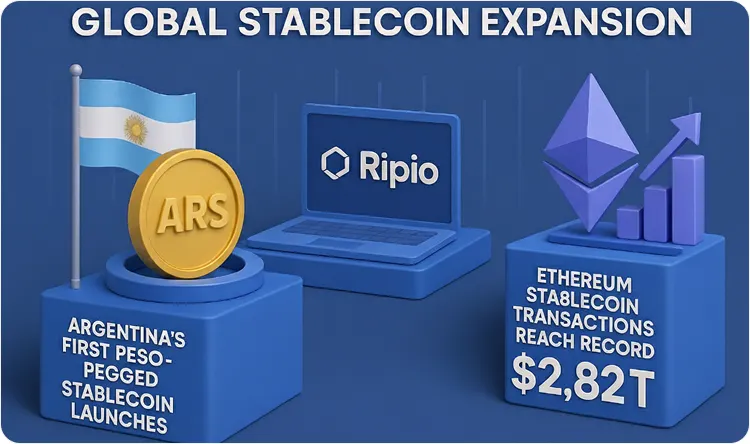
Ethereum Stablecoin Transactions Reach Record $2.82 Trillion
The overall stablecoin market continues to grow at an unprecedented rate, with Ethereum-based transactions reaching $2.82 trillion in October — a 45% increase from the previous month. This surge reflects the expanding global use of stablecoins for payments, trading, and on-chain settlements. Experts attribute this growth to wider institutional participation, improved infrastructure, and user demand for efficient digital money transfers. Ethereum remains the dominant blockchain for stablecoin settlements, benefiting from scalability upgrades and network stability. As the ecosystem evolves, the line between fiat and digital transactions continues to blur, emphasizing the increasing importance of blockchain-based financial systems worldwide.
