
 English
 Français
 Español
 Português
 BTC
BTC
 ETH
ETH
 LTC
LTC
 BCH
BCH
 USDT
USDT
 DOGE
DOGE
 DASH
DASH
 USDC
USDC
 XRP
XRP
 XMR
XMR
 TRX
TRX
 BNB
BNB
 SHIB
SHIB
 SOL
SOL
 DAI
DAI
 ZEC
ZEC
 ETC
ETC
 POL
POL
 ADA
ADA
 XLM
XLM

Cryptocurrencies were originally presented as a new form of digital money, but many major crypto assets remain difficult to use for ordinary payments. Their prices can change substantially between the moment a product is listed and the time a transaction is completed.
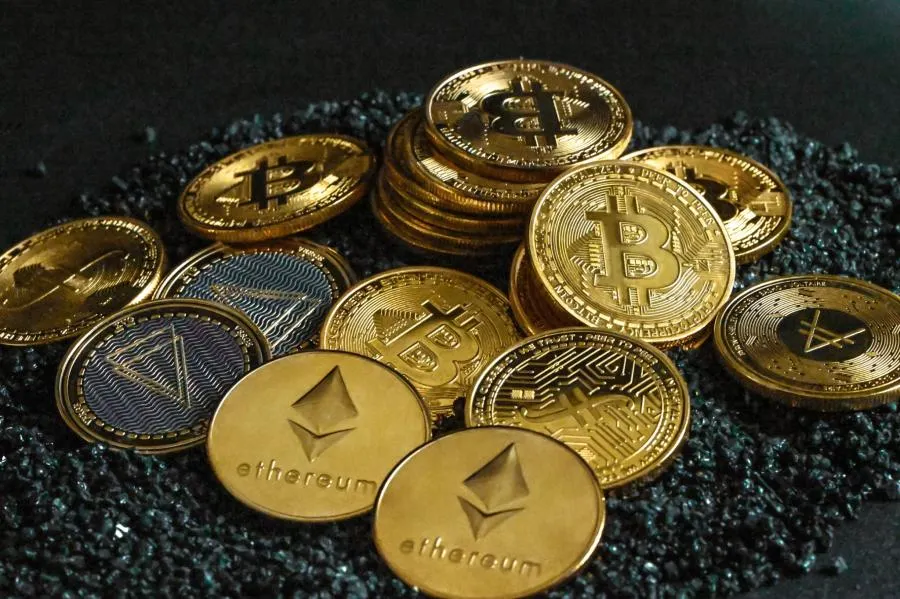
Stablecoins attempt to solve this problem by maintaining a value linked to another asset, most commonly the US dollar. Instead of asking a customer to pay with a token whose purchasing power may move rapidly, a business can request a fixed amount in a unit that is easier to understand.
This combination of relatively stable pricing and blockchain-based transfer has made stablecoins increasingly important for remittances, online purchases, freelance payments and settlement between businesses. Their growth does not mean they are free from risk, but it explains why many crypto users prefer them for transactions rather than speculation.
Price Stability Makes Everyday Purchases More Practical
The most obvious advantage of a stablecoin is its intended price stability. Bitcoin, Ether and other crypto assets may gain or lose value quickly. That volatility can be attractive to traders, but it creates uncertainty for customers and merchants.
A user visiting an international platform such as the melbet website may encounter prices, balances or payment requirements expressed in familiar monetary units. A dollar-linked stablecoin can preserve that familiarity while allowing the transfer to take place through blockchain infrastructure.
Price stability improves the payment experience in several ways:
Customers know approximately how much they are spending.
Merchants can set prices without updating them constantly.
Refunds are easier to calculate.
Accounting records remain more understandable.
Employees and freelancers can agree on fixed compensation.
Businesses can compare income with ordinary expenses.
Users do not need to sell a volatile investment at an inconvenient time.
Payment asset | Main advantage | Main difficulty for daily use |
Bitcoin | Wide recognition and strong liquidity | Significant price volatility |
Ether | Essential within many blockchain applications | Variable price and network fees |
Stablecoin | Familiar unit and relatively stable value | Issuer, reserve and depegging risks |
Bank transfer | Established legal and financial infrastructure | May be slow across borders |
Payment card | Convenient consumer experience | Intermediary fees and access restrictions |
Cash | Immediate local settlement | Not suitable for remote transactions |
The word “stable” should not be interpreted as a guarantee. A stablecoin can temporarily or permanently lose its target value. Its reliability depends on the design, reserve assets, redemption arrangements and confidence in the issuer.
Even with this limitation, well-established stablecoins generally provide a more predictable unit for short-term transactions than unbacked crypto assets.
Familiar Account Values Reduce Friction for Users
People understand prices more easily when they are expressed in a currency they already use. A balance of 100 dollar-linked tokens is more intuitive than a small decimal quantity of a highly priced cryptocurrency.
This familiarity matters during activities such as account funding, transfers and access through pages like melbet login myanmar. Users can evaluate a payment without repeatedly converting the amount in their heads.
Stable denominations improve usability because they support:
Clear product pricing.
Simple payment requests.
Easier balance management.
Understandable transaction histories.
More predictable subscription costs.
Straightforward division of shared expenses.
Familiar financial planning.
User task | Volatile cryptocurrency | Dollar-linked stablecoin |
Checking a balance | Value changes continually | Value is easier to estimate |
Paying an invoice | Required quantity may change | Requested amount remains clearer |
Receiving salary | Future purchasing power uncertain | Short-term value is more predictable |
Issuing a refund | Original value may have moved | Amount is easier to reproduce |
Saving for a purchase | Exposure to market movements | Lower volatility against the reference currency |
Comparing prices | Constant conversion required | Direct comparison is simpler |
This reduction in cognitive effort is important for wider adoption. Most consumers do not want to analyse market charts before buying a product or sending money to a relative. They expect the payment unit to remain understandable throughout the process.
Transactions Can Operate Around the Clock
Traditional payment systems frequently depend on banking hours, working days and multiple intermediaries. Domestic card payments may appear immediate to the customer, but settlement between financial institutions can take longer. Cross-border transfers may be delayed by weekends, holidays or compliance checks at several institutions.
Blockchain networks operate continuously. A stablecoin transfer can be initiated at night, during a weekend or on a public holiday. This availability is particularly valuable to:
International freelancers.
Online businesses with global customers.
Migrant workers sending money home.
Companies paying remote contractors.
Traders moving funds between platforms.
Families operating across several countries.
Merchants serving different time zones.
Continuous availability does not mean that every stage is always instant. A blockchain may become congested, a platform may delay withdrawals or an exchange may conduct a compliance review. Converting the stablecoin into a local bank balance can also introduce traditional banking hours.
Nevertheless, the blockchain portion of the payment is not limited to a bank’s opening schedule. That distinction makes stablecoins useful in digital markets that never fully close.
Cross-Border Payments Become Easier to Organise
International transfers can involve correspondent banks, currency conversions, transfer fees and incomplete visibility into settlement times. The sender may know the amount leaving an account without knowing precisely how much the recipient will receive.
Stablecoins create a transferable digital unit that can move between compatible wallets without requiring a separate banking relationship in every country. This can simplify the technical route between sender and recipient.
A typical payment may follow this sequence:
The sender obtains stablecoins through an exchange or payment provider.
The recipient supplies a compatible wallet address.
The sender selects the correct network and confirms the transaction.
The blockchain records the transfer.
The recipient keeps the stablecoin, spends it or converts it into local currency.
Cross-border issue | Traditional route | Stablecoin route |
Banking hours | May affect processing | Network operates continuously |
Number of intermediaries | Potentially several | Direct wallet transfer is possible |
Currency conversion | Managed by banks or payment providers | May occur at entry or exit |
Tracking | Depends on the provider | Transaction visible on the blockchain |
Recipient requirements | Often needs an eligible account | Needs a compatible wallet or platform |
Final local use | Already in bank money | May require an off-ramp |
Stablecoins do not eliminate foreign-exchange costs. A recipient whose expenses are denominated in another currency still needs to consider conversion rates. Access to reliable exchanges and withdrawal services also varies by country.
Their advantage lies in creating a common settlement asset between two parties that may use different local financial systems.
Network Competition Can Lower Transfer Costs
Blockchain fees differ substantially. Some networks are designed for inexpensive transfers, while others become costly during periods of heavy demand. Stablecoins are often issued across several networks, allowing users to choose an infrastructure suited to the payment.
Low-cost networks can make small transactions more practical. A conventional international transfer fee may be acceptable for a large business invoice but disproportionate for a modest remittance or online purchase.
The total cost of a stablecoin payment can include:
The fee for purchasing the stablecoin.
The blockchain transaction fee.
A platform withdrawal charge.
The cost of converting into local currency.
The difference between quoted buying and selling prices.
Possible tax or reporting expenses.
Fees charged by wallet or payment providers.
A low network fee does not guarantee a cheap transaction overall. Users should calculate the complete route from the sender’s original currency to the recipient’s usable funds.
Competition between networks and payment providers still creates pressure to make these routes faster and less expensive. This is one reason stablecoin payment tools are becoming easier for businesses to integrate.
Stablecoins Support Freelancers and Remote Workers
Remote work has created a global market in which clients and contractors may live in different countries and use different banking systems. Opening a suitable foreign-currency account can be difficult, while traditional transfers may involve high fees or long delays.
Stablecoins allow a contractor and client to agree on a familiar dollar-denominated amount and settle it digitally. The recipient can then decide when and where to convert the funds.
Potential advantages include:
Faster access to payment.
Clearer international pricing.
Less dependence on one banking provider.
Easier payment to contractors in several countries.
Digital records of transfers.
Flexible conversion into local currency.
Ability to hold funds in a widely recognised reference unit.
However, freelancers must consider local law. Receiving a stablecoin does not normally remove tax, invoicing or income-reporting obligations. The value at the moment of receipt may need to be recorded, and later conversion can create additional reporting requirements.
Platform and wallet security are equally important. A payment that reaches the wrong address may be impossible to recover.
Merchants Gain Faster and More Flexible Settlement
Card payments offer a convenient experience, but merchants may face processing fees, delayed settlement, chargebacks and restrictions based on geography or business category.
Stablecoin payments can settle directly into a merchant-controlled wallet. Once the transaction is confirmed, the merchant receives a digital asset that can be transferred, converted or used for another payment.
Merchant concern | Potential stablecoin benefit | Remaining challenge |
Settlement delay | Faster on-chain receipt | Conversion to bank money may take time |
Cross-border customer | Common digital payment asset | Local regulations differ |
Chargeback risk | Transactions are generally irreversible | Customer protection must be handled separately |
Currency exposure | Pegged value reduces crypto volatility | Peg may fail |
Integration | Programmable payment tools | Technical setup is required |
Accounting | Stable denomination is easier to record | Rules vary by jurisdiction |
Irreversibility can benefit merchants by reducing fraudulent chargebacks, but it shifts responsibility toward the customer. A mistaken payment, incorrect address or dishonest seller may leave the buyer with limited recovery options.
For wider consumer adoption, stablecoin payment services need dispute procedures that provide protection without removing the efficiency of blockchain settlement.

Stablecoins Connect Different Parts of the Crypto Economy
A stablecoin can move between wallets, exchanges, payment platforms and decentralised applications. This interoperability makes it more useful than a balance locked inside one company’s internal system.
Within crypto markets, stablecoins are used to:
Purchase other digital assets.
Hold value between trades.
Supply liquidity.
Provide collateral.
Pay blockchain fees indirectly through applications.
Settle peer-to-peer transactions.
Move funds between platforms.
Receive revenue from digital products.
This infrastructure gives stablecoins a network effect. A merchant is more likely to accept an asset that customers already hold, while customers are more likely to hold an asset accepted by many services.
Compatibility is not universal, however. The same stablecoin may exist on multiple networks, and transfers between incompatible versions can require a bridge or centralised platform. Users must verify the token contract and network before sending money.
Mobile Wallets Are Making Payments Less Technical
Early cryptocurrency payments required users to understand private keys, long wallet addresses, network fees and blockchain confirmations. These concepts created a major barrier for ordinary consumers.
Modern wallets increasingly hide part of that complexity. They may provide:
QR-code payments.
Address books.
Human-readable account names.
Automatic network selection.
Fee estimates.
Transaction notifications.
Biometric security.
Integrated buying and selling.
Warnings about suspicious addresses.
The long-term payment experience may resemble an ordinary financial application even when blockchain infrastructure operates underneath it. A user could see a familiar currency amount, select a recipient and confirm the payment without interacting directly with the technical details.
Better interfaces cannot remove every risk. Users still need reliable recovery methods, protection against phishing and clear information about custody. A wallet controlled by a company introduces different risks from one controlled entirely by the user.
Convenience and control exist on a spectrum. Custodial wallets may be easier to recover, while self-custody gives the user greater authority but also greater responsibility.
Stablecoins Can Protect Against Local Currency Instability
In countries experiencing high inflation or limited access to foreign currency, dollar-linked stablecoins can serve as a digital store of short-term purchasing power. People may use them not because they prefer cryptocurrency itself, but because they want access to a more stable reference currency.
This use is especially relevant when:
Local inflation is high.
Foreign-currency bank accounts are restricted.
International transfers are expensive.
A large part of the economy relies on remittances.
Businesses purchase goods from foreign suppliers.
Workers receive income from overseas clients.
Stablecoins can offer access, but they also introduce dependence on the reference currency and the private issuer. Widespread use of foreign-currency stablecoins may reduce reliance on local money and complicate monetary policy.
For individual users, the important question is not simply whether the token is stable against the dollar. They must also consider how the dollar moves against their local currency and whether redemption remains available.
Programmability Opens New Payment Models
Stablecoins are blockchain-based tokens, which means software can transfer them under predefined conditions. This makes them suitable for automated commerce.
Potential applications include:
Subscription payments.
Automatic contractor payouts.
Revenue sharing between creators.
Escrow arrangements.
Micropayments for digital content.
Machine-to-machine payments.
Instant settlement after delivery confirmation.
Distribution of funds among several recipients.
A conventional payment processor can also automate many of these functions. The difference is that blockchain applications can combine payment and execution within a shared technical environment.
Programmability introduces smart-contract risk. A flaw in the contract may lock, misdirect or expose funds. Automated payments therefore require testing, auditing and clear methods for handling exceptional situations.
The most useful systems will likely hide the code from consumers while preserving the speed and flexibility it provides.
Regulation Is Increasing Institutional Confidence
Businesses are more willing to use stablecoins when rules clarify who may issue them, how reserves must be held and what rights users have. Regulatory frameworks increasingly focus on reserve quality, redemption, governance, financial crime controls and consumer protection.
Clearer rules can support adoption by requiring:
Segregation of customer assets.
Regular reserve disclosures.
High-quality liquid backing.
Redemption at the target value.
Risk management procedures.
Anti-money-laundering controls.
Operational and cybersecurity standards.
Supervision of issuers and service providers.
Regulation does not make every stablecoin safe. Different jurisdictions apply different standards, and users may access tokens issued outside their country.
It can nevertheless help distinguish payment-oriented stablecoins from experimental or insufficiently backed products.
Reserve Quality Determines Whether the Peg Is Credible
A stablecoin maintains its target value only while users believe it can be redeemed. For fiat-backed stablecoins, this confidence depends heavily on the assets supporting the tokens.
Potential reserve assets include:
Cash deposits.
Short-term government securities.
Money-market instruments.
Commercial debt.
Other cryptocurrencies.
Algorithmic mechanisms rather than traditional reserves.
Cash and highly liquid short-term government assets are generally easier to value and sell than risky or illiquid investments. Regular reporting can help users understand the reserve structure, although the quality of assurance and auditing may vary.
Stablecoin design | Stability mechanism | Principal risk |
Fiat-backed | Reserves held by an issuer | Issuer or reserve failure |
Crypto-collateralised | Other digital assets locked on-chain | Collateral volatility |
Commodity-backed | Claim linked to a physical asset | Custody and redemption |
Algorithmic | Supply adjusted by software and incentives | Loss of confidence and collapse |
Bank-issued token | Liability connected to a regulated bank | Bank and jurisdiction risk |
A token trading close to its target today is not proof that it will remain stable under stress. Users should examine how redemption works and what legal claim, if any, the token provides.
Everyday Use Still Faces Important Obstacles
Stablecoins solve the volatility problem more effectively than many crypto assets, but they do not solve every payment problem.
Important limitations include:
Risk of losing the peg.
Dependence on private issuers.
Wallet theft and phishing.
Irreversible mistakes.
Regulatory restrictions.
Network congestion.
Incorrect network selection.
Limited merchant acceptance.
Conversion fees.
Tax and reporting complexity.
Potential freezing of centrally issued tokens.
Stablecoins may also provide less privacy than users assume. Blockchain transactions are usually visible publicly, even if the wallet address does not immediately reveal the owner’s identity. Exchanges and regulated platforms may connect an address with verified personal information.
Users should therefore treat stablecoin transfers as permanent financial records rather than anonymous cash payments.
The Preferred Payment Asset Depends on the Situation
Stablecoins are becoming a preferred currency within many crypto-native payment environments because they combine familiar pricing with transferable digital infrastructure. They are particularly useful when the sender and recipient are in different countries or already operate with blockchain wallets.
They are not automatically superior to cards, cash or bank transfers. For a local purchase, a contactless card may remain faster and better protected. For an international freelance payment, a stablecoin may offer greater convenience. For someone without reliable banking access, it may provide an entirely new option.
Payment situation | Potentially suitable method |
Local retail purchase | Cash, card or mobile banking |
International freelance invoice | Stablecoin or bank transfer |
Family remittance | Stablecoin or specialised remittance service |
High-value regulated purchase | Bank transfer |
Digital service inside a blockchain app | Stablecoin |
Purchase requiring strong chargeback protection | Card |
Transfer outside banking hours | Stablecoin |
The strongest growth is likely to occur where stablecoins solve a genuine problem rather than merely adding blockchain technology to an already efficient payment process.
Stablecoins are moving beyond their original role as trading instruments. Their relative price stability, continuous availability and compatibility with global digital networks make them useful for payments, remittances and business settlement.
Their development also reveals an important lesson about cryptocurrency adoption: people generally want the speed and accessibility of blockchain without accepting unnecessary price volatility.
Future payment systems may integrate stablecoins so deeply that customers do not need to know which network processes a transaction. The interface could display an ordinary currency amount while the underlying infrastructure converts, transfers and settles value automatically.
For that future to become sustainable, stablecoins must demonstrate reliable reserves, clear redemption rights, regulatory compliance and simple consumer protection. Stability cannot depend on branding alone.
Stablecoins are becoming preferred not because they remove every weakness of digital money, but because they offer a practical compromise: the familiar value of traditional currency combined with the reach and programmability of blockchain networks.
