
 English
 Français
 Español
 Português
 BTC
BTC
 ETH
ETH
 LTC
LTC
 BCH
BCH
 USDT
USDT
 DOGE
DOGE
 DASH
DASH
 USDC
USDC
 XRP
XRP
 XMR
XMR
 TRX
TRX
 BNB
BNB
 SHIB
SHIB
 SOL
SOL
 DAI
DAI
 ZEC
ZEC
 ETC
ETC
 POL
POL
 ADA
ADA
 XLM
XLM
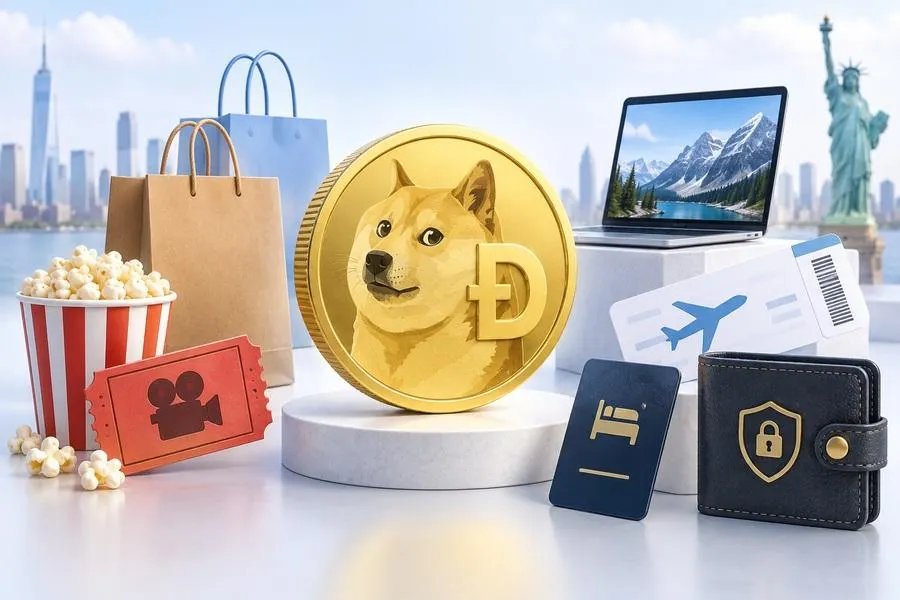
If you own Dogecoin, you're in good company. Around 30.6% of US crypto holders own DOGE, a share that runs ahead of both Bitcoin and Ether ownership among that group. So a lot of us are holding it. Far fewer of us have ever spent it, even as the price of dogecoin draws steady attention.

That's the gap we see closing. Spending DOGE is more practical than you might expect, with average transaction fees sitting around $0.0021 and confirmations landing in roughly a minute. Let's walk through where it goes, and how to spend it without second-guessing yourself.
The Coin You Own but Rarely Spend
Over 3.1 million businesses worldwide now accept Dogecoin, up from about 1,760 in 2023. Now here's a smaller number to consider. A more conservative, gateway-specific count from January 2026 puts the number of online retailers accepting DOGE at roughly 1,200-plus.
Those two figures aren't fighting each other; they're measuring different things. The bigger count sweeps in every small merchant plugged into a payment gateway, while the smaller one tallies verified storefronts. Once you know that, crypto adoption headlines get easier to read. When a number looks too big to believe, it's usually counting something broader than you assumed.
So real acceptance exists.
Where Your DOGE Feels at Home
Rather than a flat list of logos, think about an ordinary week and where DOGE could slot into it.
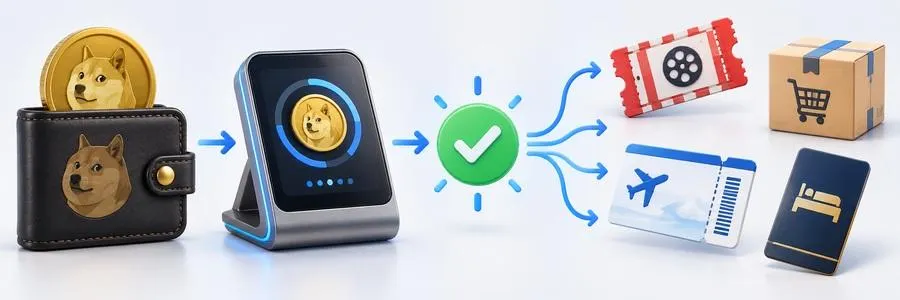
Friday night, you want to catch a film. AMC Theatres takes DOGE for tickets through the processor BitPay. Your laptop finally gives up, so you replace it at Newegg, which handles electronics purchases in DOGE. You renew Microsoft 365, again via BitPay, and grab a bit of Tesla merchandise while you're at it. Maybe you support a streamer on Twitch, keep your Sling TV going, register a domain at Namecheap, or renew ExpressVPN.
CheapAir.com and Travala.com both let you book flights and hotels with DOGE. And if you follow the NBA, the Dallas Mavericks accept it for tickets and merchandise. So it stretches across a real week, from a movie to a mattress run to a flight home.
This isn't decoration, either. DOGE made up about 6.3% of BitPay's total crypto payment volume. People are genuinely checking out with it, not just adding it to a marketing page and forgetting about it.
It's a little funny, if you sit with it. A coin that started as a joke now buys movie tickets, travel packages and airfare. And once you know where to spend, the next thing worth your attention is trust.
Spend Smart and Not Fast
Most big-name acceptance runs through payment processors like BitPay and CoinGate, or through Shopify integrations. In practice, that means many stores accept DOGE at checkout but settle in dollars behind the scenes. They aren't holding the coin; they're using a processor to convert it instantly. That's good news for you, because it means the price you agree to at checkout is the price you pay.
That detail also helps you spot what's real. Claims that Amazon, Walmart or Starbucks accept Dogecoin remain unconfirmed, so treat those with healthy skepticism until an official source says otherwise. For a broader view of how confirmed merchant lists are compiled, Binance Academy breaks down the mechanics in a very clear way.
A few habits keep your spending clean and confident:
Look for a recognized processor logo at checkout, such as BitPay or CoinGate, before you send anything.
Confirm the store lists clear contact details and a refund policy, so you know who to reach if an order goes sideways.
Wait for the network confirmation before you treat the payment as done; with DOGE's roughly one-minute confirmations, that wait is short.
Double-check the amount and address on your wallet screen, since crypto payments don't reverse the way card charges sometimes can.
If you want to understand how processors and confirmations work before your first purchase, resources online (especially the Binance Academy) explain the mechanics without assuming you already speak fluent crypto.
So if a store shows you nothing but a wallet address, no processor, no policies, what is it really asking you to trust?
The Joke That Learned to Pay Rent
The interesting progress with Dogecoin has little to do with its price chart. It's that DOGE became genuinely spendable across everyday US categories, backed by real checkout volume and near-instant, near-free transactions.
The ground underneath that keeps firming up, too. DOGE has been treated as a non-security asset by US regulators and was added to a diversified Grayscale crypto fund in late 2024. Clearer rules tend to make merchants and processors more comfortable, and if you like keeping tabs on DOGE's real-world use, pairing a merchant directory with reliable data from a platform like Binance makes the picture far easier to follow.
The change here is cultural more than financial. When a coin becomes ordinary enough to buy your popcorn, hasn't it already won?
