
 BTC
BTC
 ETH
ETH
 LTC
LTC
 BCH
BCH
 DOGE
DOGE
 USDT
USDT
 DASH
DASH
 USDC
USDC
 XRP
XRP
 XMR
XMR
 TRX
TRX
 BNB
BNB
 SHIB
SHIB
 SOL
SOL
 DAI
DAI
 ZEC
ZEC
 ETC
ETC
 POL
POL
 ADA
ADA
 XLM
XLM
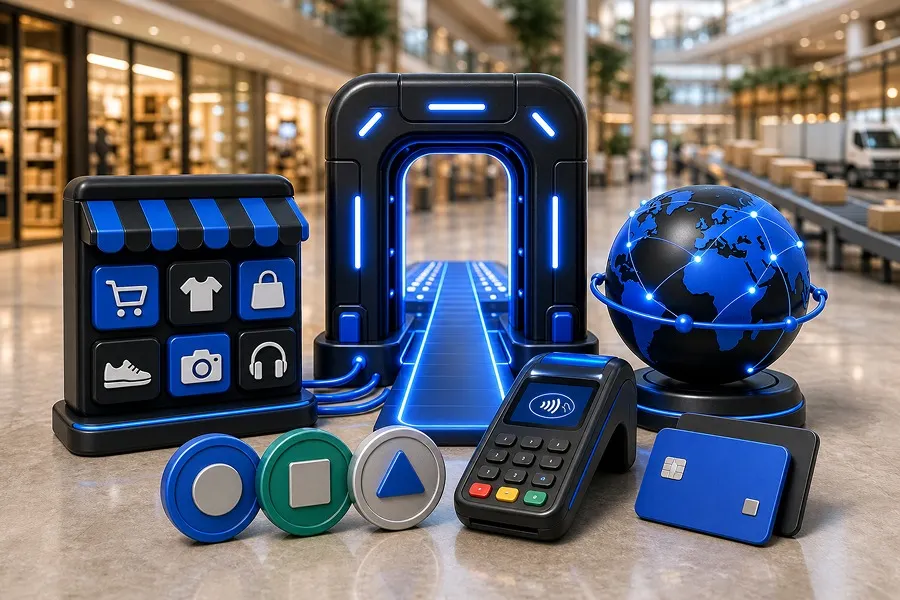
Cross-border selling used to mean picking one payment provider and hoping it covered enough countries. Not anymore. Buyers now expect to pay however they want, wherever they are, and marketplaces that ignore this lose carts at checkout, not at browsing. This piece looks at what's driving the shift and where friction still hides.
Why Checkout Became the Battlefield
Most marketplaces don't lose customers on product pages. They lose them at the payment screen. A shopper in Manila wants GCash. A buyer in São Paulo wants Pix. Someone in Berlin still expects SEPA transfers to just work. Stack enough regional habits together, and a single-currency checkout starts looking ancient.
That's part of why platforms have started layering in a Cryptocurrencies Payment Solution alongside traditional rails — not as a gimmick, but as a practical answer for merchants dealing with currency volatility, slow cross-border settlement, or customers where card infrastructure is patchy. Crypto rails settle faster and sidestep some conversion headaches, though they bring compliance questions merchants need to walk through carefully.
What Actually Changed Between 2023 and 2026
Three years ago, "payment gateway" mostly meant Stripe, PayPal, or a local bank integration. Fine for a single-market shop. Useless for anyone selling into a dozen countries with different habits, currencies, and regulatory quirks.
What shifted:
Local payment methods stopped being optional. Klarna in Europe, UPI in India, Alipay in China — marketplaces bake these in from day one now.
Tokenization became standard, not premium. Storing raw card numbers is a liability nobody wants, especially with PCI DSS 4.0 tightening up.
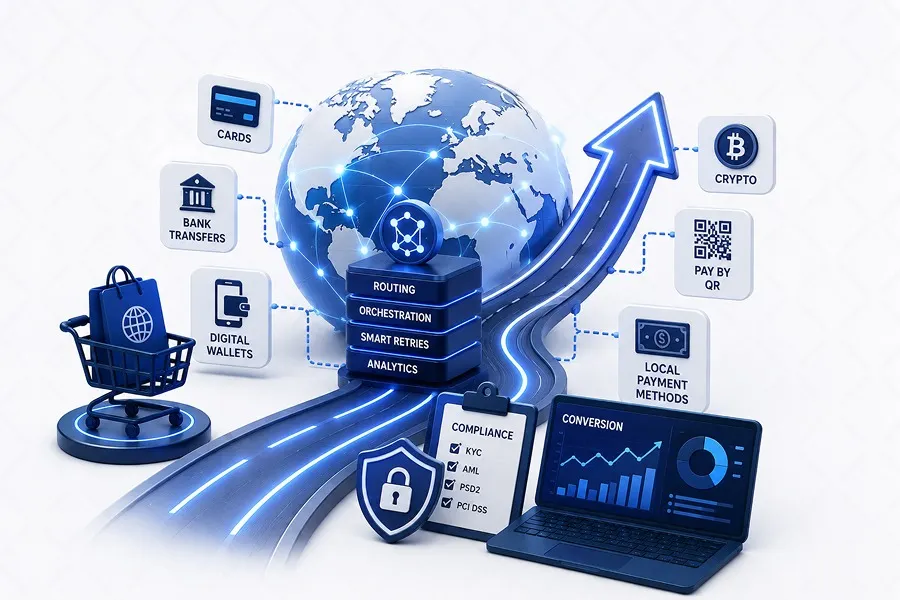
Orchestration platforms emerged. Instead of one processor, merchants route transactions through several, picking whichever has the best approval rate for that card, country, or amount.
Real-time settlement got real. FedNow in the US and instant SEPA in Europe pushed buyer expectations toward same-day, not three-to-five business days.
None of this happened because someone decided it would be nice. It happened because abandoned-cart rates are brutal, and finance teams got tired of explaining why.
Orchestration: The Unsexy Word Doing the Heavy Lifting
Ask any payments engineer what's actually new and they'll say "orchestration" before anything else. Sounds dull. Isn't.
Picture a marketplace running transactions through five processors at once, routing each by success probability, cost, and risk — all in milliseconds, invisible to the buyer. That's orchestration. Companies like Primer, Spreedly, and BR-DGE built businesses around exactly this: merchants were tired of vendor lock-in and tired of one processor's outage taking down the whole checkout.
Why does this matter for a global marketplace? Approval rates vary wildly by region. A card approved instantly in the UK might get flagged for manual review in Brazil, simply because fraud models were trained on different data. Orchestration routes around that without rebuilding the stack every time a platform enters a new market.
Stablecoins Found Their Lane
Stablecoins didn't replace cards. They found one job: cross-border B2B settlement and remittance corridors where banking rails are slow or pricey. Visa and Mastercard expanded stablecoin settlement pilots, and PayPal's PYUSD quietly became a real tool for merchants moving money between markets without eating multiple conversion fees.
Mainstream consumer checkout? Not yet. Most shoppers still tap a card. But for marketplace operators paying out sellers in Nigeria, Argentina, or Vietnam — places where local banking means delays measured in days — stablecoin rails solve a genuine headache.
BNPL Matured Into Infrastructure
BNPL stopped being a checkout button and became embedded credit. Klarna, Affirm, and Afterpay pushed deeper into merchant integrations through 2025 and 2026, and regulators noticed. The UK's FCA brought BNPL under consumer credit regulation in 2026 — affordability checks, clearer disclosures, things that weren't there before.
Good thing, frankly. The earlier version let people stack loans across providers with zero visibility for any single lender. Marketplaces offering BNPL now need to think about disclosure and default risk, not just conversion.
Cross-Border Fees: The Quiet Cost
Cross-border interchange and FX fees quietly eat 3-5% of transaction value before a marketplace sees its cut. Multiply that across millions of transactions and you understand why every major platform invests in local acquiring — setting up entities that let them process payments as a domestic merchant instead of a foreign one paying premium rates.
Shopify's Shop Pay expansion and Amazon's investment in Southeast Asian payment infrastructure aren't side projects. They're cost-control dressed up as convenience.
Fraud Detection Got Smarter, Out of Necessity
More payment methods, more attack surfaces. Machine learning models trained on transaction velocity, device fingerprinting, and behavioral biometrics caught up by necessity. Sift and Riskified now process signals most shoppers never think about — typing rhythm, mouse movement, scroll speed through a checkout form.
Invasive? Maybe a little. But chargebacks cost real money, and blunt fraud rules that block legitimate buyers cost sales too. Nobody's found the perfect balance.
Open Banking Reshaped Bank-to-Bank Payments
Open banking rails — pay-by-bank options that skip card networks entirely — gained real traction across Europe and the UK in 2026, partly because they're cheaper for merchants and partly because regulators pushed hard. The EU's PSD3 framework, still working through implementation, aims to standardize this across member states.
For marketplace operators, pay-by-bank means lower processing costs and faster settlement, though adoption depends on whether a region's banking infrastructure supports real-time payment initiation. The UK and Netherlands are ahead here. Plenty of markets aren't close.
Merchants exploring newer settlement options — including a Cryptocurrencies Payment Solution for cross-border B2B or remittance-heavy corridors — are doing the same calculation: where do traditional rails fall short, and what fills that gap without adding unnecessary risk.
What Marketplace Operators Should Watch
A few practical takeaways, stripped of jargon:
Local payment coverage matters more than method count. Three options that match local habits beat ten nobody in that market actually uses.
Settlement speed affects seller retention. Sellers waiting a week for payout eventually find a competitor that pays faster.
Regulatory compliance isn't optional. BNPL rules, PSD3, PCI DSS 4.0 — ignoring these isn't a growth strategy, it's a liability waiting to surface.
Fraud tooling needs to scale with payment diversity. Every new rail is a new fraud vector. Plan accordingly.
None of this is financial or legal advice — every marketplace's risk profile, jurisdiction, and customer base differ enough that blanket recommendations don't hold up. Worth a conversation with compliance counsel and a payments specialist before locking in infrastructure decisions.
Where This Heads Next
Gateway infrastructure isn't settling down. If anything, the pace is picking up — more local rails, more orchestration layers, more regulatory frameworks catching up to technology that moved faster than lawmakers expected. Marketplaces betting on a single processor or a single payment method are making a bet against where consumer behavior is heading.
Does your checkout actually match how customers want to pay, or how it was easiest to build three years ago? That gap is where revenue quietly leaks out. Closing it isn't glamorous. It's also the work that decides who wins the next five years of global commerce.