
 English
 Français
 Español
 BTC
 ETH
 LTC
 BCH
 USDT
 DOGE
 DASH
 USDC
 XRP
 XMR
 TRX
 BNB
 SHIB
 SOL
 DAI
 ZEC
 ETC
 POL
 ADA
 XLM

A WooCommerce Bitcoin plugin is available now; new store-payment, card-funding and remittance routes are at different stages of rollout.
The week's merchant and payment-service announcements do not all describe live products. GoBTC Pay has released a WooCommerce plugin for Bitcoin checkout, while Solayer Pay says deposits from five networks are available for its card wallet. Shinhan Card and two SBI companies have agreed to explore a yen-stablecoin payment trial in stores, and Western Union has chosen Noah for a planned stablecoin payout route. A Ripple partnership targets property closings, while an Electrum update addresses a specific Bitcoin payment risk. For shops accepting cryptocurrency, the distinction matters: a downloadable checkout integration can be tested today, but an agreement to run a trial cannot yet be treated as an accepted payment method. The details below separate available tools from proposals, with the merchant or account-holder action each would change.
GoBTC Pay Releases WooCommerce Plugin for Bitcoin Checkout

GoBTC Pay has released a WooCommerce plugin that lets online stores offer Bitcoin at checkout. A shopper selecting the option is sent to a hosted payment page. The plugin's WordPress listing says a payment made from a GoBTC Pay wallet receives an instant paid status, while an external Bitcoin wallet payment waits for blockchain confirmation.
The listing describes the plugin as free to install and says it does not yet support refunds, subscriptions or preorders. Those omissions matter for merchants with recurring billing or complex returns. The checkout is operated through GoBTC Pay rather than being a direct payment to an address controlled solely by the shop.
For a WooCommerce business comparing crypto payment gateways, this is another deployable Bitcoin option. Before enabling it, a merchant still needs to check its settlement arrangement, fees and how the hosted payment state maps to order fulfillment.
Ripple and CryptEscrow Agree to Build Crypto-Funded Property Closings

Ripple and CryptEscrow announced a strategic partnership on October 22 to develop a payment route for US real-estate transactions funded with cryptocurrency. Under the described model, a buyer would provide crypto, CryptEscrow would convert it to dollars, and the seller and title company would continue through a conventional fiat closing.
The joint announcement does not identify a live property sale completed through this arrangement, name the supported coins or provide a launch date. It also does not say that XRP or RLUSD must be used. This is a proposed settlement workflow, not evidence that estate agents can already quote crypto prices to buyers.
The practical test for crypto finance services is whether conversion and escrow can fit existing title, compliance and closing steps without asking the seller to hold digital assets. Availability and transaction terms remain unannounced.
Shinhan Card and SBI Companies Agree to Test Yen-Stablecoin Payments in Stores

Shinhan Card, SBI XDC Network APAC and SBI VC Trade signed a memorandum of understanding to explore yen-stablecoin payments at physical stores and related cross-border settlement. SBI's October 21 announcement describes a planned proof of concept for travelers, not a public payment launch.
The idea is to let a visitor use a stablecoin balance during an in-person purchase while merchants receive a familiar payment and settlement flow. The companies have not named participating stores, a stablecoin issuer or a trial start date. Without those details, the agreement cannot be counted as new live merchant crypto acceptance.
Still, the proposed route addresses a real checkout constraint: a traveler may hold digital value, but the shop needs authorization, local-currency accounting and reconciliation. The planned test will show whether the card and wallet operators can handle those steps together.
Western Union Selects Noah for a Planned Stablecoin Receiver Payout Route

Western Union selected Noah to support Receiver Redirect, a planned route that would allow eligible remittance recipients to receive funds in a digital wallet rather than only through conventional payout methods. Noah's October 20 announcement ties the work to Western Union's proposed USDPT stablecoin and its existing agent network.
The release says USDPT is intended to be issued by Anchorage Digital Bank on Solana. It cites Western Union's broader reach of more than 200 countries and territories and over 60 currencies, but that is not a list of markets where the new wallet payout is already available. Neither company provided a consumer launch date or fee schedule for Receiver Redirect.
For people using crypto wallets, the useful change would be a remittance payout they can hold or move digitally. That benefit depends on the actual rollout, local eligibility and conversion terms, which have yet to be published.
Solayer Pay Opens Five-Network Stablecoin Deposits for Its Card Wallet

Solayer Pay says users can now deposit supported stablecoins into its card wallet from Solana, Ethereum, Arbitrum, BNB Chain and Base. The company's announcement presents the change as a way to fund virtual and physical payment cards without first moving assets manually to Solana.
The deposit route is the newly available part of the product. Card spending remains subject to Solayer Pay's onboarding and regional availability, and a user's network, asset and card terms should be checked before sending funds. The company describes spending at merchants that accept Visa; that does not mean each merchant separately enables stablecoin acceptance.
For users comparing crypto cards, the update removes a transfer step between a stablecoin balance and a spendable card balance. It does not eliminate network fees, conversion terms or card restrictions.
Electrum Releases Wallet Fix for Malicious-Server Bitcoin Payment Redirection
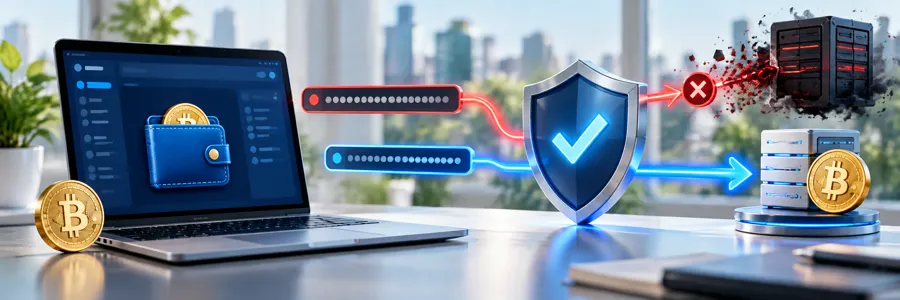
Electrum released version 4.8.3 on October 24 to address a Bitcoin payment-redirection vulnerability involving a malicious Electrum server. According to the project's security advisory, the attack could occur when a server substituted an unconfirmed transaction and a user then manually increased its fee and signed the replacement.
The advisory reports two affected users, including one loss, but does not establish a broad campaign or publish a total stolen amount. Users on older versions should install the fixed release from the official project and inspect the recipient and amount whenever approving a fee-bump transaction.
This is a concrete security change for Bitcoin payments: a wallet update can prevent a narrow but costly failure at the point of authorization. Merchants and customers should treat an unexpected change of destination during payment as a stop signal, not merely a higher fee request.
