
 English
 Español
 Français
 Português
 BTC
 ETH
 LTC
 BCH
 USDT
 DOGE
 DASH
 USDC
 XRP
 XMR
 TRX
 BNB
 SHIB
 SOL
 DAI
 ZEC
 ETC
 POL
 ADA
 XLM
Monero is still actively maintained in 2026, and Monero Friendly makes it easier to find shops and services that accept XMR.
More than a decade after its launch, Monero has its own network, desktop and mobile wallets, and merchants that take it at checkout. The project released Monero 0.18.5.4 in October 2026. Network maintenance and merchant adoption are different things, though. You can use XMR to pay for a VPN or order coffee today, but it is far from a standard checkout option.
How Monero started
Monero went live on 18 April 2014 as BitMonero. A developer using the name thankful_for_today announced it on Bitcointalk. The project grew out of CryptoNote, the technology behind Bytecoin. It launched its own chain without a premine. After a disagreement over the direction of the project, the community continued under the shorter name Monero. It was not a fork of Bitcoin.
The original design made payments harder for outside observers to connect. Monero strengthened it over time. In 2017, Ring Confidential Transactions, or RingCT, added the ability to conceal amounts and later became mandatory. Monero also adopted RandomX, a proof-of-work algorithm designed to work well on general-purpose CPUs. Its technical specification lists a continuing base reward of 0.6 XMR per block, with blocks targeted at roughly two-minute intervals. That ongoing issuance is known as the tail emission.
What Monero hides, and why people care
Monero is an open-source cryptocurrency, and XMR is its native coin. Like Bitcoin, it uses a public blockchain that independent nodes can verify. On Bitcoin, transaction amounts and addresses are visible. If someone connects an address to a person or business, that public record can reveal more than the person intended to share.
On Monero, privacy is built into ordinary transfers. A ring signature makes it difficult for an observer to tell which of several possible inputs was actually spent. A one-time address keeps the recipient's published address out of the public transaction record. RingCT hides the amount while allowing nodes to check that the transaction balances.
The appeal is easy to see in an ordinary purchase. When you pay a shop, it needs to know whether your invoice was paid. It does not need to see your wallet balance or your past purchases. A business may also prefer to keep supplier payments and sales receipts off a publicly readable ledger. This is one reason people choose privacy coins even when they are willing to identify themselves to the merchant.
Monero is often called an anonymous coin, but that description has limits. A delivery address, a merchant account or an exchange's records can still link a person to a purchase. Monero changes what someone can learn from the blockchain itself. It does not erase information shared elsewhere.
The infrastructure behind an XMR payment
Miners add blocks. Nodes check them against the network rules and relay transactions. Wallets manage keys, find payments intended for the recipient, and let the sender authorize a payment. The official Monero wallets offer desktop tools, while Cake Wallet supports XMR on mobile. A wallet can use a remote node or connect to one its owner runs.
At checkout, someone has to match the incoming payment to an order. For a small shop, that can be as simple as checking a wallet before handing over the goods. An online store needs a way to track which invoice was paid and release the order once it has enough confirmations. The Monero merchant guide covers direct acceptance. Payment providers such as NOWPayments offer XMR invoices and integrations for merchants who do not want to build their own checkout.
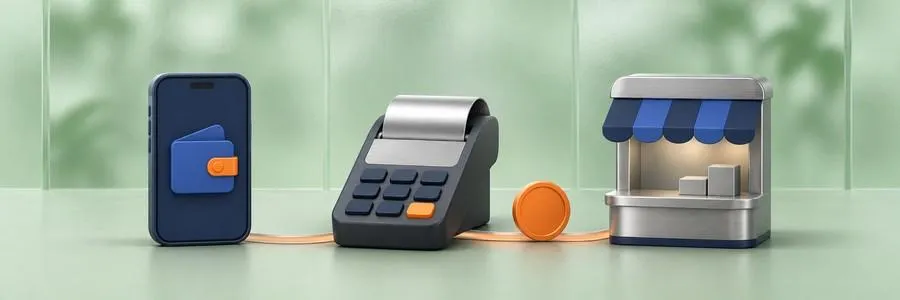
Private payments can still be documented. A merchant can keep an ordinary invoice and receipt, and a customer can prove a specific Monero payment without publishing their full wallet history. The distinction matters when a transfer arrives but the order has not updated.
Where Monero adoption is happening
Some merchants receive XMR directly; others let the buyer start in XMR and settle in a different asset. Both can make XMR more useful, but they are different kinds of adoption.
- IVPN accepts Monero through its own checkout and runs its own Monero node. Mullvad also lists XMR as a payment option for VPN service.
- Gratuitas takes Monero for coffee orders and offers a separate way to tip the farmers who grew the beans. Physical delivery still requires shipping details.
- Coincards offers XMR for eligible gift-card purchases through a third party that converts it to Bitcoin. The buyer can pay with Monero, but the merchant does not receive it directly.
Those examples show where adoption is practical today. They do not show how often shoppers pay with XMR. Public transaction counts cannot tell us which transfers were retail purchases, and merchant listings cannot tell us how many orders went through. Access can also vary by region: Kraken's notice for the European Economic Area describes how it ended XMR trading and deposits there. The network continued operating, but customers in that region lost one way to get the coin.
How directories help people spend XMR
Finding a business that actually takes your payment can take longer than making the payment itself. Our Cryptwerk Monero directory lets people browse XMR listings by category and find related offers. Monero Friendly takes a narrower approach: it focuses entirely on XMR, with category and country filters, a map for in-person purchases, reviews and a way to report outdated information.
In November 2026, Monero Friendly's homepage listed about 650 businesses and marked 113 as checked by hand. The site says its Checked mark means it tested a payment or confirmed acceptance another way. That is a useful distinction from a community-submitted listing. Neither is a guarantee that the same checkout will be available for every order, so it is worth checking the merchant's payment page before buying.
This article is part of an editorial exchange between Cryptwerk and Monero Friendly.
What wider Monero adoption would look like
A bigger directory is useful, but mass adoption would mean more businesses keeping XMR available at checkout and more customers choosing it more than once. Merchants need to recognize payments, handle refunds and update their listings when something changes. Customers need to know whether they can pay for the thing they came to buy.
Monero Friendly helps with that last step. Its map, category filters and checked listings let someone go from holding XMR to finding a business where they can actually use it. For a merchant that already accepts Monero, being easier to find gives the payment option a better chance of being used.
