
 English
 Français
 BTC
BTC
 ETH
ETH
 LTC
LTC
 BCH
BCH
 DOGE
DOGE
 USDT
USDT
 DASH
DASH
 USDC
USDC
 XRP
XRP
 XMR
XMR
 TRX
TRX
 BNB
BNB
 SHIB
SHIB
 SOL
SOL
 DAI
DAI
 ZEC
ZEC
 ETC
ETC
 POL
POL
 ADA
ADA
 XLM
XLM
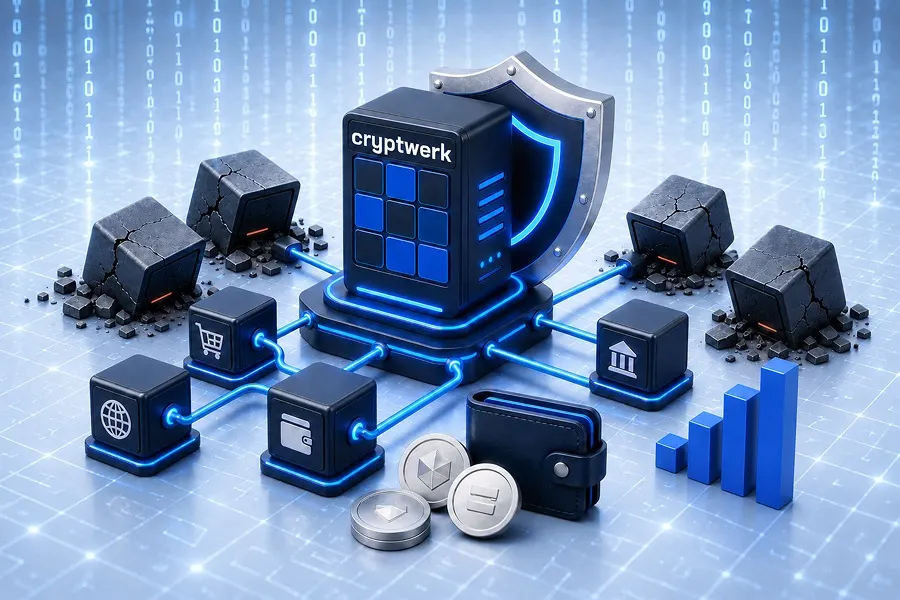
In the world of cryptocurrency, entire projects can rise and vanish within a single market cycle. Directories that once promised to “map the crypto economy” have gone dark — Spendabit, Coinmap clones, and countless others are now digital fossils of past bull runs.
And yet, Cryptwerk.com is still here. Active, updated, and quietly thriving.
So why did this one survive when nearly every similar project disappeared?
1. Solving a Real Problem, Not Riding a Hype Wave
Most crypto directories were born out of hype, not need. They appeared during bull markets, hoping to catch attention and ad revenue from speculative traffic. But as the hype faded, so did their relevance.
Cryptwerk took a different route. From day one, it addressed a real, timeless problem:
“Where can I actually spend my crypto?”
That’s not a trend — it’s a question that every crypto user, from early adopters to digital nomads, continues to ask. And it gives Cryptwerk lasting purpose far beyond market cycles.
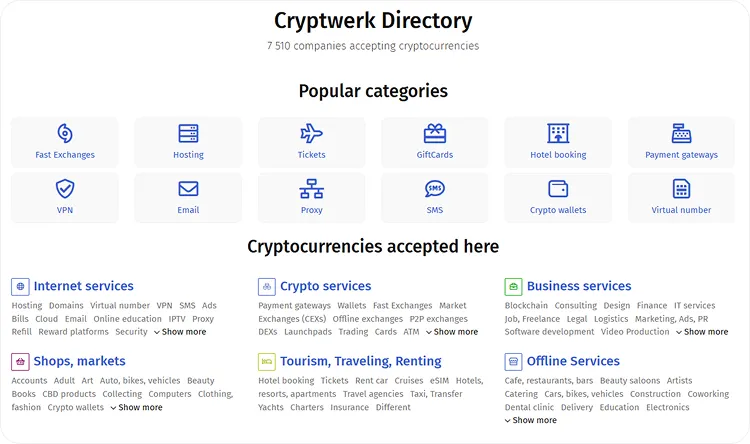
2. Real Curation and Constant Maintenance
One reason users abandoned other directories was simple — they became unreliable. Dead links, closed stores, and outdated listings destroyed trust.
Cryptwerk avoided that trap by maintaining active moderation.
Its team constantly updates entries, removes inactive merchants, and adds new ones every week.
It’s not a static directory; it’s a living, breathing database.
That consistency builds confidence. When users know a listing is fresh, they come back.
3. From “List” to Ecosystem
While competitors stayed simple, Cryptwerk evolved.
It became a multi-layered platform with:
A large, curated Discounts & Special Offers section;
Filters for dozens of coins — BTC, ETH, XMR, Lightning, and stablecoins;
Data cited by research platforms and even major outlets like Nasdaq.
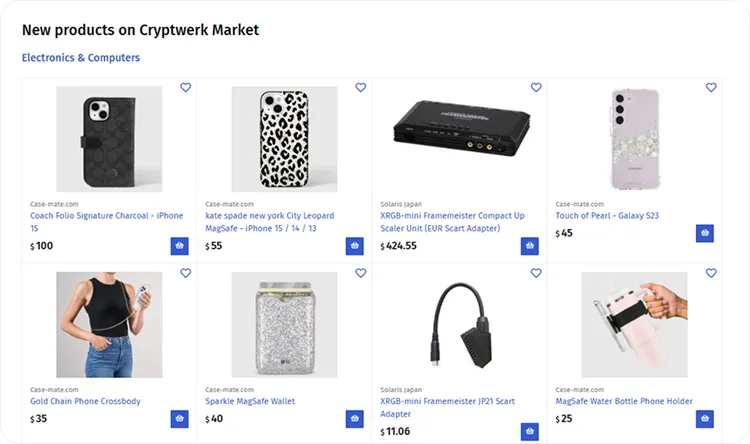
This transformation made Cryptwerk more than a discovery tool. It’s now an infrastructure component of the crypto commerce space — a reference point used by users, analysts, and merchants alike.

4. Independence and Neutrality
Many directories failed because they depended on one processor — BitPay, CoinGate, or others.
When those processors lost relevance or pivoted, the directories lost content.
Cryptwerk, however, is processor-agnostic.
It lists merchants using any payment method — centralized gateways, decentralized processors, or direct wallet transfers.
That neutrality keeps it resilient and future-proof.
5. A Privacy-First Core Audience
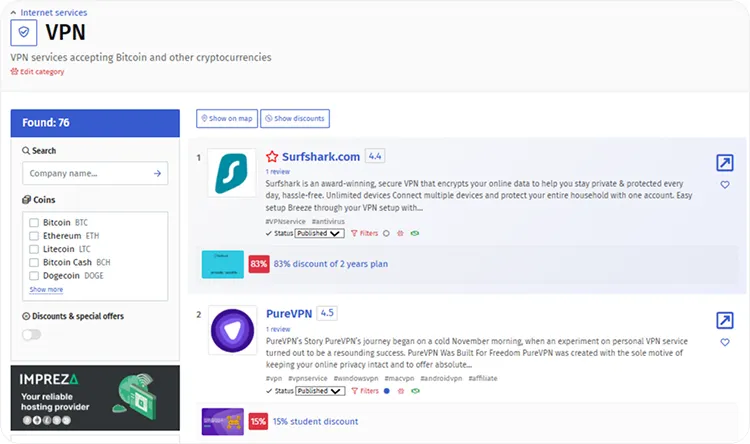
Cryptwerk carved out a niche that other platforms ignored — privacy-centric digital services.
VPNs, hosting, private email, and internet tools are among its most popular categories.
These are services that crypto users actually buy with crypto — not as speculation, but as daily necessities.
That privacy-conscious, tech-savvy audience keeps Cryptwerk active year-round, regardless of Bitcoin’s price.
6. No Token, No Gimmicks — Just Trust
Cryptwerk never launched a token, ICO, or pay-to-list model. It never overpromised or chased short-term trends.
Instead, it built credibility the slow way — through transparency, steady updates, and community recognition.
In a space where trust is rare, honesty became Cryptwerk’s biggest competitive edge.
7. The Ecosystem Connector
Rather than competing with payment processors or merchant tools, Cryptwerk positioned itself as a bridge between them.
It connects:
Users looking for crypto-friendly services;
Businesses that want crypto customers;
Processors that need real-world visibility.
This ecosystem approach keeps it relevant — because as long as crypto payments exist, Cryptwerk has a reason to exist too.
The Bottom Line
Most crypto directories were built for hype.
Cryptwerk was built for humans.
It stayed alive by doing the simple, unglamorous work — solving real problems, maintaining accuracy, staying neutral, and earning trust.
That’s why today, while so many projects are gone, Cryptwerk.com continues to grow quietly as the backbone of real-world crypto adoption.
In short: Other directories were built for the bull run.
Cryptwerk was built for the long run.