
 English
 Français
 BTC
BTC
 ETH
ETH
 LTC
LTC
 BCH
BCH
 DOGE
DOGE
 USDT
USDT
 DASH
DASH
 USDC
USDC
 XRP
XRP
 XMR
XMR
 TRX
TRX
 BNB
BNB
 SHIB
SHIB
 SOL
SOL
 DAI
DAI
 ZEC
ZEC
 ETC
ETC
 POL
POL
 ADA
ADA
 XLM
XLM
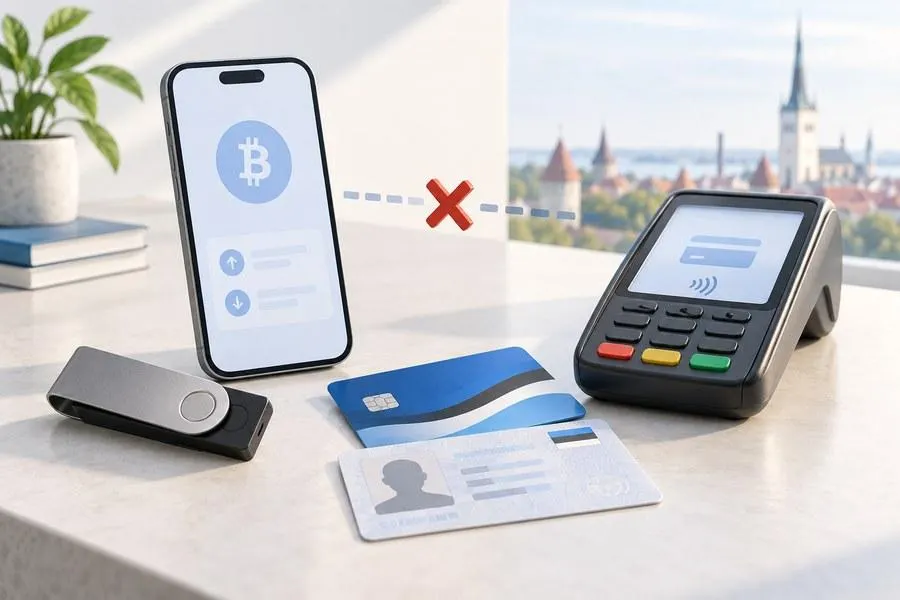
Estonia runs its tax filings, prescriptions and company registrations through a national digital identity, and a resident can sign a binding contract from a phone in under a minute. Its licensed online casinos operate inside that same infrastructure and still take deposits almost entirely through bank links and cards. Crypto, the payment method built for exactly this kind of population, is largely absent at the cashier of the operators the state itself has approved.
A digital state with an analogue cashier
Estonian licensed operators verify players through the national ID card, Mobile-ID, Smart-ID or a bank link, and that identification step ties every deposit to a named person and a named account. A crypto wallet sits outside that chain. An address has no owner on record, and an operator cannot show where the funds originated without additional tooling and additional staff time.
The result is a split market. Locally licensed platforms compete on withdrawal speed to Estonian bank accounts, Estonian language support and the recourse a local permit provides. Foreign licensed platforms, typically holding permits from Malta or Curaçao, compete on wallet support, larger bonuses and game libraries, and accept that their Estonian customers arrive without local consumer protection. Each side has settled into the niche its payment rails allow.
What identification actually costs an operator
Verifying a player is not a single gate at registration; it runs through the life of the account. Deposits must be matched to the verified person, withdrawals must return to a source the operator can name, and unusual patterns have to be explained to a supervisor on request. Bank links make that trivial because the bank has already done the identification. A crypto deposit arrives from an address that could belong to the player, an exchange's pooled wallet or an unrelated third party.
Crypto payment processors now offer address screening and ownership verification that could narrow this gap. Adoption among Estonian licensees has stayed low because the commercial case is thin. The player base is small, bank link rails are fast and cheap, and the compliance overhead of a new payment category lands on the operator rather than the processor.

Checking who is actually licensed
Player protection in Estonia attaches to the operating permit, not to the brand or the domain. A casino can advertise in Estonian, quote balances in euros and still sit under a licence issued elsewhere. The difference surfaces only when something goes wrong: a disputed withdrawal, a frozen balance or a request to be excluded that the operator declines to honour.
The regulator publishes the operators holding a permit, and that record is the only reliable way to separate a locally supervised platform from one that merely serves Estonian customers. The Estonian Tax and Customs Board's register of licensed gambling operators lists each permit holder by company name together with the games it may offer, which carries more weight than a logo in a website footer. For crypto users the check is more pointed, since wallet support is itself a rough signal that a platform sits outside that list.
How Estonian players sort the options
The practical effect of the split market is that Estonian players compare platforms along two axes at once: what the licence guarantees and what the cashier accepts. A crypto only platform and a bank link only platform are not competing for the same deposit. They are competing for the same person on different days, depending on whether speed, privacy or recourse matters more at that moment.
Comparison sites have adapted by leading with licence type before bonus size. On Kasiinoguru, the comparison of Estonian licensed casinos opens with the permit and the accepted payment methods rather than the welcome offer, which is the order most local players now apply themselves. That ordering says more about the market than any single rating does, because the licence question decides what the cashier is able to offer in the first place.
What a crypto deposit involves in practice
A bank link deposit is one action: the player authorises a transfer and the balance updates. A crypto deposit is a sequence. The platform generates an address on a specific network, the player selects the matching asset and network in a wallet, sets a fee and waits for confirmations before the balance moves. Choosing the wrong network sends funds to an address the platform cannot read, and recovery, where it is possible at all, runs through support tickets rather than a bank's dispute process.
Volatility adds a second layer, which is why stablecoins dominate the deposits that do happen. The mechanics are the same ones that govern any crypto purchase, and the practical guide to using crypto for everyday payments covers the wallet, network and stablecoin choices that also decide whether a casino deposit lands cleanly. For a licensed Estonian operator, each of those steps is a support cost that a bank link never generates.
Where the two rails are likely to meet
The most plausible route for crypto into Estonia's licensed casinos does not run through wallets at all. Card programmes that hold stablecoin balances and settle in euros at the point of sale let a player fund a licensed account from crypto without the operator ever seeing an address. Identification stays with the card issuer, the deposit arrives as an ordinary card payment, and the compliance question moves to a company that has already answered it.
That arrangement satisfies the regulator and the operator while giving crypto holders most of what they wanted, which is a way to spend the balance. What it does not deliver is the anonymity that drove much of the early interest in crypto casinos. In a market built around a national digital identity, anonymity was never available from licensed operators, and the products that succeed there will be the ones that stop pretending otherwise.