
 BTC
BTC
 ETH
ETH
 LTC
LTC
 BCH
BCH
 DOGE
DOGE
 USDT
USDT
 DASH
DASH
 USDC
USDC
 XRP
XRP
 XMR
XMR
 TRX
TRX
 BNB
BNB
 SHIB
SHIB
 SOL
SOL
 DAI
DAI
 ZEC
ZEC
 ETC
ETC
 POL
POL
 ADA
ADA
 XLM
XLM
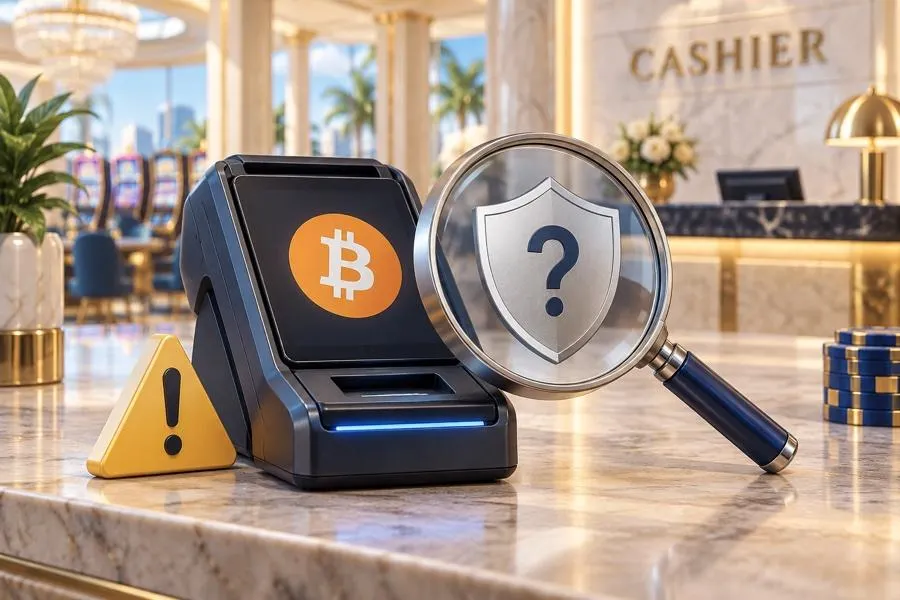
Cryptwerk's own FAQ for users makes a point most directories would rather leave unsaid: a listing "is not a guarantee of stock, price, delivery, service quality or payment acceptance," and you should confirm the final terms with the merchant before paying. That is the right instinct for a VPN provider or a hotel in Lisbon. At an online casino it is the whole game, because the gap between "we accept crypto" and "we will reliably pay you in crypto" is wider there than in almost any other category of merchant.

Photo by André François McKenzie on Unsplash
The orange coin in a casino footer can mean several different things, and only one of them is what a crypto user is hoping for. When Casinos.com checked each brand's claims directly for its US guide to the best crypto casinos, it found that most US facing sweepstakes sites take no crypto at all, despite showing up on "top Bitcoin casino" roundups. Of the handful that do, most let you buy in with coins and then pay you out by bank transfer or gift card.
What the badge can actually mean
The first is the full loop: crypto in, crypto out, straight back to a wallet address you control. In the US this is rare. Stake.us and Vegas Gems are the main examples among sweepstakes sites, and sweepstakes play itself is now banned in a growing list of states, California and New York among them.
The second is crypto in, cash out. You fund an account with Litecoin or USDT, but when you redeem, the money arrives by ACH or as a gift card days later. For someone who wanted to keep winnings on chain, that is a different product.
The third is no crypto at all. Some sites never supported it and get listed anyway, through a naming mix up or a templated article that nobody checked. Cryptwerk users will recognise the pattern from merchants who added a Bitcoin button years ago and quietly dropped the gateway.
There is also the offshore category: sites licensed in Curaçao or Anjouan, or nowhere, that market crypto speed hard to US players while holding no US permission. They tend to dominate social media payout rankings, and they are exactly where a dispute has nowhere to go.
Red flags worth checking before the first deposit
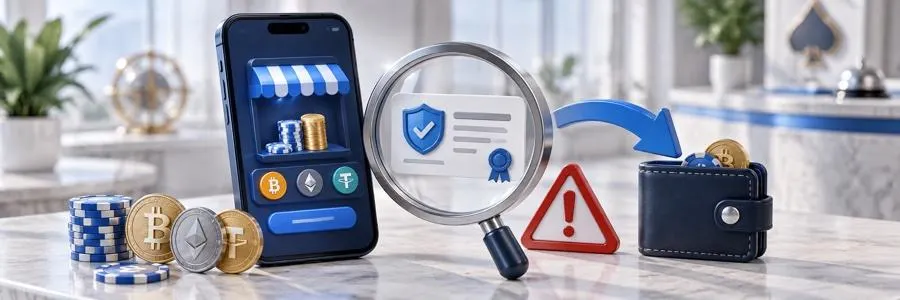
1. A licence claim that cannot be true. No state regulated real money online casino in the US accepts crypto. New Jersey, Pennsylvania, Michigan and the other licensing states require a fixed dollar ledger and a verified identity behind every deposit. A site that claims both a US state licence and a Bitcoin cashier is wrong about one of them.
2. A withdrawal page that is vaguer than the deposit page. Legitimate operators publish minimum redemption amounts, the coins they pay out in, and how long approval takes. If the deposit options run to 29 coins and the withdrawal section says "contact support," that imbalance is the information.
3. Deposit addresses and confirmations. A real crypto cashier generates a unique address or QR code for each deposit and credits you once the network confirms, typically a few minutes to half an hour depending on the coin. The credit is usually based on the coin's value at confirmation, not when you pressed send. Be wary of a site that asks you to send to a static address shared in a chat window, or that asks for your recovery phrase to "verify" a wallet. No genuine cashier ever needs it.
4. Reviews that only exist on the operator's own page. Look for complaints with dates and amounts on independent forums and consumer sites. An unbroken run of five star reviews posted the same week is not reassurance.
The Better Business Bureau has started treating the payment method itself as a warning sign. Speaking about the BBB's gambling research, Josh Planos told InvestigateTV in July that an offer requiring you to pay in cryptocurrency is "something that no legitimate sportsbook would demand payment with." The same logic applies to a casino cashier that only works in coins while claiming US credentials. The BBB's own warning list puts crypto payment requests alongside overseas business addresses, oversized payout promises and sweepstakes style offers.
Where a curated list earns its keep
Checking every one of those points yourself, for every site, takes hours. That is the argument for cross checking against an independently researched shortlist rather than whatever a casino's affiliate banner says, the same way a Cryptwerk profile gives you a starting point and a set of facts to confirm, not a verdict.
The useful questions to ask of any list are practical ones. Does it say which coins each site accepts for purchases and which it pays out in? Does it give redemption minimums? Does it say which states a brand is blocked in? Does it show when each entry was last checked? A list that answers those is doing verification work. A list that names the same four offshore brands as every other roundup, with no state by state detail, is marketing.
The badge test, applied
The habit Cryptwerk encourages for any merchant works here without much adjustment. Treat the logo as a claim, and check the payout route before the deposit route. Then send a small amount first and time the confirmation against what the cashier promised.
Crypto casino play in the US is entertainment with a narrow and shrinking legal footprint, and residency decides what is available to you. Anyone who finds it is no longer entertainment can call the National Council on Problem Gambling on 1 800 MY RESET.