
 English
 Français
 Español
 Português
 BTC
 ETH
 LTC
 BCH
 USDT
 DOGE
 DASH
 USDC
 XRP
 XMR
 TRX
 BNB
 SHIB
 SOL
 DAI
 ZEC
 ETC
 POL
 ADA
 XLM
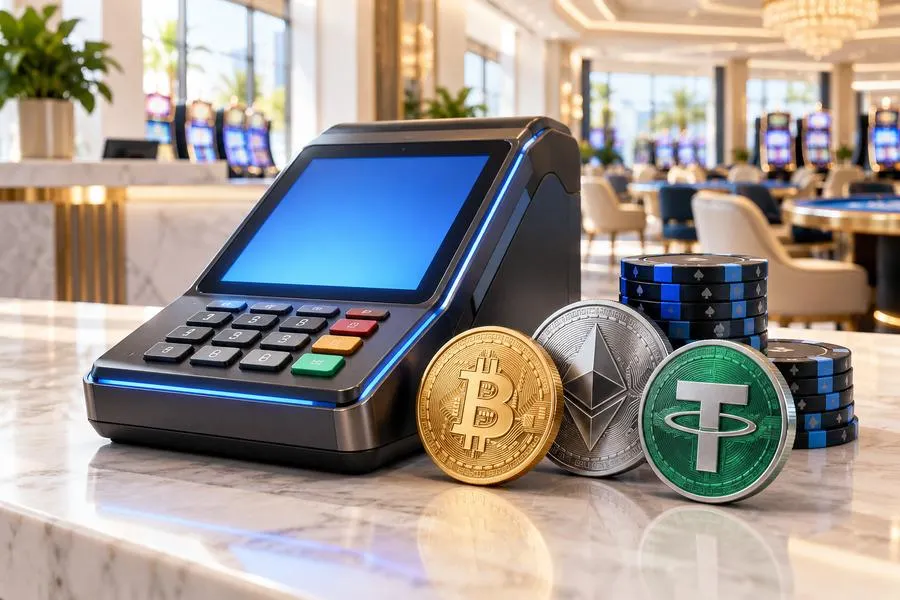
Crypto payments are the reason many players choose a crypto casino in the first place. Deposits land in minutes, withdrawals do not wait for a bank, and players can move between brands without handing over card details each time.
For the operator, the picture is less tidy. Accepting crypto means picking networks, choosing a gateway, deciding when a deposit is final, managing hot wallets and explaining all of it to a compliance officer. Get it right and payments become a selling point. Get it wrong and your support inbox fills with “where is my deposit?” tickets.
This checklist covers the decisions an operator should make before switching on crypto payments.
1. Decide which coins and networks you actually need
“We accept crypto” is not a specification. Each asset lives on one or more networks, and every network you add means more monitoring, more edge cases and more support questions.
A common starting set looks like this:
- Bitcoin (BTC) for brand recognition. Many players still think of crypto casinos as bitcoin casinos.
- USDT for players who want a stable balance. It circulates on several networks, so you need to choose which ones. TRC-20 (TRON) is popular for low fees, while ERC-20 (Ethereum) is widely supported by wallets.
- ETH and EVM networks such as Ethereum, Polygon, Arbitrum or BNB Chain, which also open the door to other tokens.
Start narrow. It is easier to add a network after launch than to remove one that a few hundred players already use.
2. Choose a gateway, and check what happens if you need a second one
Most operators connect a crypto payment gateway instead of running their own nodes. The gateway generates deposit addresses, detects incoming transactions and, if you want, converts funds into a settlement currency.
When comparing gateways, ask about supported networks, conversion fees, settlement options, payout limits and how they handle under-payments and wrong-network deposits. Ask too whether they accept gambling merchants in your target countries, because not all of them do.
Then ask your platform vendor a question that is easy to forget: can the casino run more than one payment provider at the same time? Different markets often need different providers, and a single-gateway setup becomes a bottleneck the first time a provider changes its risk policy.
3. Set confirmation rules per network
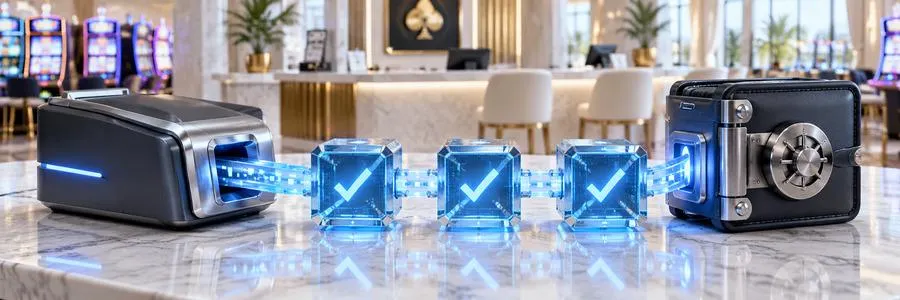
A blockchain transaction is not final the moment it appears. Each network needs a number of confirmations before you treat a deposit as settled, and the right number depends on the network and the deposit size.
Waiting too long frustrates players. Crediting too early exposes you to reversed transactions. Many casinos credit small deposits quickly and hold larger ones for more confirmations. Whatever you choose, show the status to the player. A deposit that says “2 of 6 confirmations” generates far fewer tickets than one that simply hasn’t arrived.
4. Plan for the mistakes players will make
Players will send the wrong token, use the wrong network or forget a memo or tag. They will deposit below your minimum. They will paste an old deposit address.
Write the recovery process before launch. Decide which mistakes you can fix, how long it takes, whether you charge for it and who approves it. Put the most common warnings directly on the deposit screen, next to the address, where people actually look.
5. Separate hot and cold funds
Withdrawals need liquidity in a hot wallet, but anything sitting in a hot wallet is exposed. Keep only what you need for expected payouts, move the rest to cold storage, and set alerts for when the hot balance gets low or moves unexpectedly.
If your gateway holds funds for you, read the custody terms carefully. You need to know how quickly you can access your money and what happens if the provider freezes an account.
6. Connect payments to KYC, AML and anti-fraud
Crypto does not remove compliance obligations. Depending on your licence, you may need to verify players before their first withdrawal or once they pass a threshold, and to monitor transactions for suspicious patterns.
Payments data is one of the best fraud signals you have. Rapid deposit-and-withdraw cycles with little play, many accounts funded from one wallet, and bonus claims that always end in an immediate cash-out are all patterns your platform should flag automatically.
7. Think about fiat from day one, even if you launch crypto-only
Many crypto casinos eventually add fiat options: cards, e-wallets or on-ramp services that let a player buy crypto inside the cashier. Fiat brings different providers, different fees and stricter risk reviews, and availability depends heavily on the target market.
You do not need fiat at launch. You do need a platform that can add it without rebuilding the cashier.
8. Make the cashier part of the product
The cashier is where players decide whether they trust you. Clear limits, visible fees, realistic processing times and a withdrawal history that is easy to read all reduce support load. If the casino runs as a mobile web app, test the deposit flow on a phone, because that is where most players will copy an address or scan a QR code.
What a ready-made setup covers, and what it doesn’t
If you are launching on packaged bitcoin casino software rather than building your own cashier, much of this checklist becomes a set of questions for your vendor. OmiSoft’s white-label crypto casino platform, for example, supports BTC, USDT on TRC-20 and ERC-20, and EVM-compatible networks, with multi-currency player wallets. NowPayments is its default gateway, and another provider can be integrated depending on the target GEO. Fiat payments are available depending on the target market and payment provider agreements, and support for additional payment providers is listed only in its Custom package, not in Standard or Premium.
That last point is typical of the market, and it is exactly the kind of detail to confirm before you sign. Ask every vendor which networks are live out of the box, which gateway is the default, what it costs to add another provider and how long that takes.
If your payment model is unusual, for example a non-EVM chain, your own token or a hybrid fiat and crypto wallet, you may be better served by custom iGaming software development than by an off-the-shelf cashier.
Quick checklist
Before launch, you should be able to answer yes to each of these:
- We know exactly which coins and networks we support, and why.
- We have a primary gateway and a plan for a second one.
- Confirmation rules are set per network and shown to players.
- There is a written process for wrong-network and under-minimum deposits.
- Hot wallet limits and alerts are in place.
- Payment events feed our KYC, AML and anti-fraud rules.
- The cashier works smoothly on mobile.
Crypto payments are one of the few areas where a crypto casino can be clearly better than a traditional one. It is worth treating them as a product, not as a plugin.
