
 English
 Français
 BTC
BTC
 ETH
ETH
 LTC
LTC
 BCH
BCH
 USDT
USDT
 DOGE
DOGE
 DASH
DASH
 USDC
USDC
 XRP
XRP
 XMR
XMR
 TRX
TRX
 BNB
BNB
 SHIB
SHIB
 SOL
SOL
 DAI
DAI
 ZEC
ZEC
 ETC
ETC
 POL
POL
 ADA
ADA
 XLM
XLM

Crypto rules are moving from policy debate to payment infrastructure, shaping how stablecoins, wallets, exchanges and merchants can support trusted digital transactions.
Regulation Is Moving Closer to Real Payment Use
Crypto regulation is no longer only about whether digital assets should exist. The more important question in 2026 is how crypto can operate inside normal financial behavior: payments, settlement, merchant services, wallets, exchange access, custody and cross-border transfers. Recent country-level developments show a market that is slowly moving from uncertainty toward defined rules.
For users, this matters because unclear rules create friction. A buyer may want to pay with digital assets, but the experience depends on whether the wallet is supported, whether the payment provider can process the transaction, whether the merchant can account for it and whether the service is allowed to operate in that region. Regulation can slow innovation when it is vague, but it can also make adoption easier when it defines the path.
For merchants, rules are even more practical. A business that wants to accept crypto payments as a merchant needs more than a payment button. It needs a reliable provider, clear settlement options, reporting, risk controls and confidence that the chosen payment method will not create legal or accounting problems later.
This is why regulation should be seen as part of payment infrastructure. Licensing, reserve requirements, AML checks and tax clarity are not separate from adoption. They decide which services can scale, which payment assets can be trusted and which regions become easier for crypto commerce.
Stablecoin Rules Are Becoming the Center of the Debate
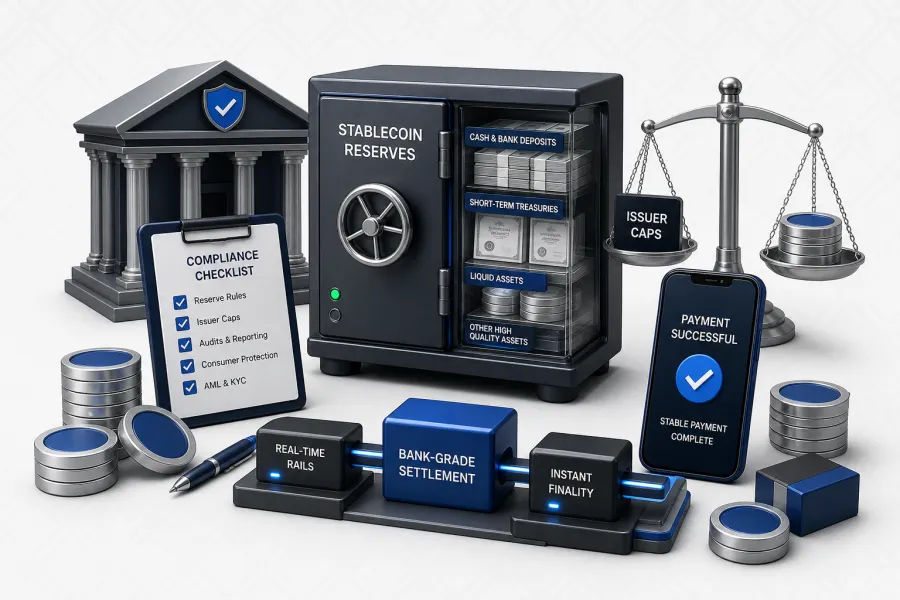
Stablecoins are now one of the clearest places where regulation and payment adoption meet. They are useful because they reduce volatility and can move across digital rails quickly, but they also raise questions about reserves, issuer risk, redemption, consumer protection and the connection between crypto markets and banking systems.
The recent focus on regulated stablecoins in Japan, the United Kingdom, Hong Kong and other markets shows that governments are not treating stablecoins as a small crypto niche. They are being examined as payment instruments, settlement assets and bank-adjacent financial products. That is a meaningful shift. If a stablecoin is used for foreign exchange settlement, merchant payments or consumer transfers, it needs rules that users and businesses can understand.
Japan is especially important because stablecoin activity there is increasingly linked to regulated institutions, bank-backed structures and corporate settlement use cases. A yen stablecoin or a dollar stablecoin launched through a regulated Japanese platform is not just another token listing. It points to a model where stablecoins are distributed through financial services that already have compliance, reporting and customer controls.
The United Kingdom is moving from the question of whether stablecoins should be allowed toward how systemic issuers should be supervised. Issuer-level limits, backing requirements and draft rules may sound technical, but they directly affect payment adoption. Businesses care about whether a payment asset can be redeemed, whether reserves are credible and whether the rules will remain stable enough to build on.
For everyday crypto users, the practical result is simple: regulated stablecoins may become easier to use in payment flows. A customer choosing USDC or USDT is not only choosing a ticker. They are choosing a payment experience that depends on liquidity, wallet support, network fees, redemption confidence and local rules.
Licenses Are Deciding Where Crypto Services Can Scale
Licensing has become one of the strongest signals in crypto adoption. Exchanges, wallets, stablecoin issuers, custody providers and payment companies can grow faster in markets where they understand the rules. When a company receives authorization under a framework such as MiCA in Europe or a local stablecoin license in Asia, it gains more than a legal badge. It gains a path to serve users and businesses with fewer operational surprises.
Europe remains a key example. MiCA is pushing crypto companies to choose regulated hubs, organize compliance teams and operate with clearer obligations. This does not remove every risk, but it changes the market from informal access to licensed service provision. For Cryptwerk readers, that matters because regulated exchanges and payment providers can become more reliable partners for users who want to spend, convert or manage crypto.
Hong Kong and other Asian markets are also important because they are testing how banks, stablecoin issuers and payment companies fit into the same framework. When a bank or regulated financial firm moves into stablecoin services, the story is not only institutional adoption. It also affects future checkout, remittance and treasury products that could eventually connect to crypto payment gateways.
The licensing trend also affects merchants indirectly. A merchant usually does not want to study every blockchain network or custody model. It wants a provider that can handle onboarding, payment acceptance, settlement, reports and support. If regulation helps separate serious providers from unlicensed operators, merchants can choose crypto payment tools with more confidence.
Tax, AML and Consumer Protection Are Becoming Product Features

Crypto adoption often sounds exciting when the focus is on fast payments or global access. But real-world usage also depends on less glamorous details: tax treatment, identity checks, transaction monitoring, sanctions screening, fraud controls and record keeping. These requirements can feel heavy, but they are the reason crypto services can be used by larger businesses and mainstream users.
Country-level tax decisions matter because they determine whether crypto spending feels predictable or risky. If users are uncertain about reporting obligations, small payments become harder to justify. If businesses are uncertain about tax documentation, they may avoid accepting crypto even when customers ask for it. Clear tax rules can make crypto spending more practical by reducing fear around ordinary transactions.
AML rules are equally important for payment services and wallets. A platform that supports crypto wallets, exchange accounts or merchant settlement must be able to detect suspicious activity without making normal payments impossible. The best systems will not simply block everything. They will create risk controls that protect users while keeping legitimate commerce moving.
Consumer protection is becoming part of the product experience too. Users need to know whether a service is licensed, what happens if a transaction fails, how disputes are handled and whether funds are protected. This is especially important as crypto moves closer to familiar spending categories such as shops accepting cryptocurrency, travel, gaming, subscriptions and digital services.

What This Means for Merchants and Payment Providers
For merchants, the new regulation cycle is not only a compliance burden. It can make crypto payments easier to evaluate. A merchant can compare providers by licensing status, supported assets, settlement methods, reporting tools and risk controls. That is much more useful than simply asking whether a provider supports a popular coin.
For payment providers, regulation creates pressure to become more complete. A serious provider must connect wallets, stablecoins, fiat settlement, compliance checks, customer support and accounting workflows. The more crypto payments enter regulated commerce, the more payment providers need to look like operational infrastructure rather than experimental plugins.
This is where pay with Bitcoin and other cryptocurrencies becomes more practical for normal users. Adoption does not happen only because a new asset exists. It happens when users can find places to spend it, merchants can accept it safely and payment services can turn the transaction into a clear business record.
Regulation will not make crypto payments perfect overnight. Some rules will be too cautious, some markets will move slowly and some providers will struggle with new requirements. But the direction is clear: crypto payments are becoming part of a regulated financial environment for people and businesses that need trust, stability and support.
