
 English
 Français
 Español
 Português
 BTC
BTC
 ETH
ETH
 LTC
LTC
 BCH
BCH
 USDT
USDT
 DOGE
DOGE
 DASH
DASH
 USDC
USDC
 XRP
XRP
 XMR
XMR
 TRX
TRX
 BNB
BNB
 SHIB
SHIB
 SOL
SOL
 DAI
DAI
 ZEC
ZEC
 ETC
ETC
 POL
POL
 ADA
ADA
 XLM
XLM

Crypto payment adoption is shifting from isolated checkout tools toward AI-assisted wallets, stablecoin rails and merchant cost savings.
Merchant Adoption Is Becoming More Than a Checkout Option
Crypto payment adoption is no longer only about adding one more button at checkout. The newer direction is more practical: payments have to work inside merchant systems, wallet apps, bank settlement flows and automated commerce tools. The strongest recent signals point in the same direction. Stablecoin payment protocols are being designed for machines and software agents. Wallets are becoming distribution channels for everyday users. Cross-border settlement is moving closer to regulated financial infrastructure. Merchants are also watching whether crypto can reduce card fees and payment friction in real operations.
For Cryptwerk users, this matters because the practical value of crypto payments depends on where people can spend them and how easy it is for businesses to accept them. A store that wants to accept crypto payments as a merchant needs more than a crypto address. It needs settlement confidence, reporting, user-friendly checkout and a payment flow that can fit into existing accounting and customer service processes.
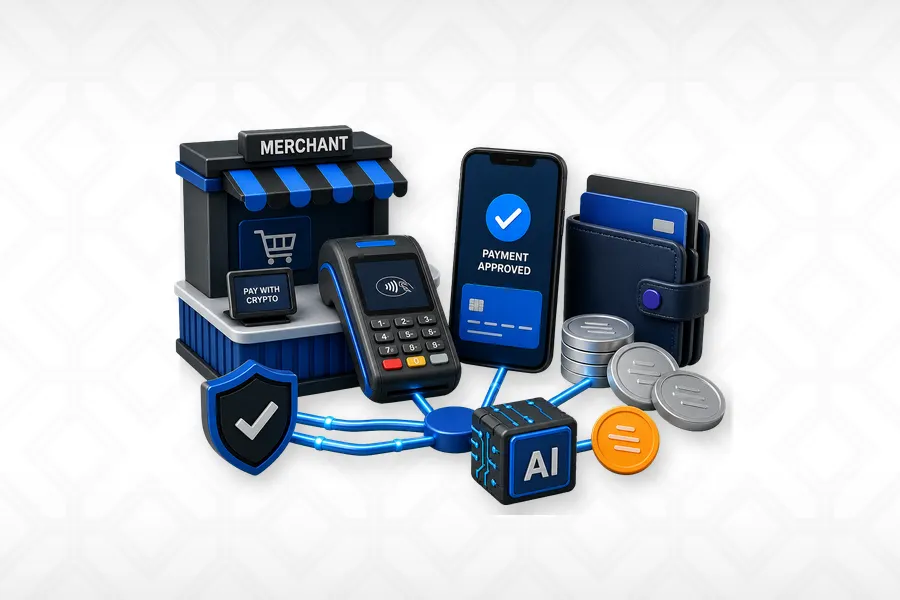
This is why the market is moving from simple acceptance toward payment infrastructure. Merchant adoption now depends on wallets, stablecoins, AI agents, payment terminals, bank rails and compliance tools working together. The end goal is still simple for the user: pay with Bitcoin and other cryptocurrencies without turning every purchase into a technical task.
AI Agents Need Stable Payment Rails
One of the clearest shifts is the rise of AI-agent commerce. If AI software can search, compare, book, subscribe, reorder or manage services for a user, it eventually needs a payment method that can operate safely within user-defined rules. That creates a new type of payment user: not only a person tapping a phone, but a software agent executing an approved transaction.
For that to work, the payment layer has to be programmable. It must support limits, permissions, receipts, identity checks, refunds and business reporting. Stablecoin payment protocols are a natural fit for this environment because they can move value quickly while staying close to familiar account-unit behavior. The important question is not whether an AI agent can technically send a transaction. The harder question is whether a merchant, wallet provider and user can trust that transaction inside a real commercial workflow.
This is where AI crypto services and payment infrastructure begin to overlap. AI may help users choose what to buy, but wallets and payment rails must decide what can be paid, how much can be spent, which merchant is approved and how the transaction is recorded. If this layer matures, crypto payments could become more useful for subscriptions, software purchases, travel bookings, supply orders and other repeatable online spending.

Stablecoins Are Becoming Business Settlement Infrastructure
Stablecoins continue to move beyond trading balances and into payment settlement. The most important use case is not speculation. It is predictable value transfer across wallets, platforms, companies and countries. For businesses, this can reduce the uncertainty that comes with volatile assets while preserving some of crypto's speed and global accessibility.
USDC and similar assets are increasingly being positioned as settlement tools for software, payment processors and financial institutions. For merchants, that can make USDC more than a coin users hold in a wallet. It can become part of the operational layer behind checkout, payout, supplier settlement and cross-border treasury.
The Japan-focused stablecoin FX settlement story shows why this is important. Cross-border payments often involve slow bank processes, multiple intermediaries and FX costs that are difficult for smaller businesses to manage. If regulated stablecoin rails can connect local financial institutions with digital settlement, crypto payment infrastructure becomes easier to justify for business users. It is not only about accepting a crypto payment from a customer; it is also about moving value between markets with clearer timing and lower operational friction.
Stablecoins also make AI payments more realistic. A machine-to-machine payment flow needs a unit of value that software can price, authorize and reconcile. Volatile coins can still be useful for users who prefer them, but business automation often needs a stable unit. That is why stablecoin rails are becoming central to the next stage of crypto commerce.
Wallet Distribution Turns Payment Options Into User Behavior
Crypto payments become more powerful when wallet distribution meets real spending opportunities. Retail wallet integrations, such as the recent Japan-focused wallet activity around consumer access, show how adoption can move from infrastructure announcements to user behavior. A payment rail is only useful when users can reach it easily from an app they already understand.
This is the role of crypto wallets in adoption. Wallets are not just storage tools. They are becoming payment interfaces, identity layers, permission managers and discovery points for services. When a retail wallet adds better access to tokens, payment features or merchant flows, it can change how users think about spending crypto in daily life.
For merchants, wallet distribution matters because it reduces the education burden. A customer is more likely to pay with crypto when the wallet experience clearly shows balance, asset choice, payment confirmation and transaction status. For users browsing shops accepting cryptocurrency, the bridge between discovery and payment is often the wallet.
This is also where crypto payment gateways become important. Gateways can connect the merchant side with wallets, stablecoins, conversion tools and reporting. The smoother that connection becomes, the less crypto feels like a separate payment universe and the more it resembles another usable payment rail.

Merchant Cost Savings Make Crypto Payments Easier to Defend
The merchant argument becomes much stronger when crypto payments can reduce costs. The example of a restaurant chain discussing potential annual savings from Bitcoin payments highlights a practical adoption driver: payment fees. Merchants already understand card fees, chargebacks and settlement delays. If Bitcoin payments can lower part of that burden, crypto becomes easier to discuss in boardrooms and finance teams.
Cost savings alone will not drive adoption everywhere. Merchants still need stable demand, accounting clarity, compliance, staff training and a reliable customer experience. But fee reduction is a simple business argument. It gives payment teams a reason to test crypto beyond branding or novelty.
The same logic applies to stablecoins and payment rails. If a merchant can receive stable settlement, reduce cross-border costs or automate payouts, the adoption case becomes measurable. That is a different conversation from "crypto is innovative." It becomes "crypto can solve a payment problem."
What This Means for Crypto Users and Merchants
The latest adoption signals point to a more mature payment stack. Users will still care about simple checkout, low fees and asset choice. Merchants will care about settlement, reporting, fraud risk, refunds and integration. Payment providers will care about compliance, liquidity and support across wallets, cards, stablecoins and bank rails.
For Cryptwerk, the important trend is that crypto payment adoption is spreading across several layers at once. AI agents may create new transaction patterns. Stablecoins may become the settlement layer for programmable commerce. Wallets may turn payment access into consumer behavior. Merchant savings may give businesses a practical reason to experiment.
The next phase of adoption will likely be won by services that make crypto payments feel normal. That means visible merchant acceptance, reliable wallet flows, useful payment gateways, stable settlement options and enough compliance structure for businesses to trust the process. Crypto payments are becoming less about whether a transaction can happen and more about whether the whole payment workflow can support real commerce.
