English
 Français
 Español
 Português
 BTC
BTC
 ETH
ETH
 LTC
LTC
 BCH
BCH
 USDT
USDT
 DOGE
DOGE
 DASH
DASH
 USDC
USDC
 XRP
XRP
 XMR
XMR
 TRX
TRX
 BNB
BNB
 SHIB
SHIB
 SOL
SOL
 DAI
DAI
 ZEC
ZEC
 ETC
ETC
 POL
POL
 ADA
ADA
 XLM
XLM

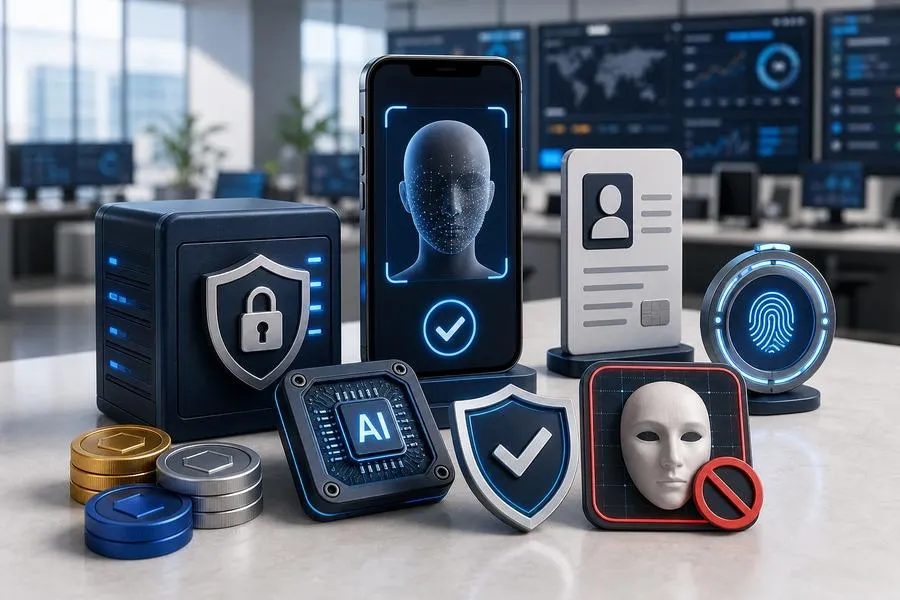
Crypto exchanges are facing a growing wave of deepfake identity attacks during account opening. Attackers now use synthetic identities, deepfake media, and spoofed biometric inputs to create fraudulent accounts that can be exploited for money movement, account abuse, and other high-risk activity.
At the same time, exchanges need to verify legitimate users quickly without introducing unnecessary friction. This article compares four AI fraud prevention platforms for crypto exchanges in 2026, focusing on how they address fraud prevention in digital onboarding.
How Do Deepfake Identity Attacks Target Crypto Exchange Onboarding?
Deepfake identity attacks target crypto exchange onboarding by using AI-generated or manipulated media to impersonate real users, create synthetic identities, or bypass biometric verification. Because exchanges process global users, valuable financial accounts, and regulated onboarding requirements, they have become attractive targets for identity fraud.
Several attack methods are becoming more common:
Deepfake video or image spoofing,
Synthetic identity creation,
Biometric spoofing during selfie verification,
Injection attacks that feed manipulated media into verification systems,
Reused or altered identity documents.
Traditional liveness checks can detect some presentation attacks, but AI-generated media and injected video streams introduce different challenges. Crypto exchanges need a platform that offers injection attack identity verification while detecting synthetic identities and preventing biometric spoofing.
Incode
Incode is a deepfake-resistant, AI-powered identity verification platform designed for crypto exchanges and other organizations operating high-risk digital onboarding environments.
Incode is an enterprise-grade identity verification platform designed for high-assurance and privacy-sensitive environments. It combines advanced biometric liveness and deepfake-resistant verification with a privacy-first architecture to help organizations verify users with confidence while minimizing data exposure. Incode is trusted by banks, regulated businesses, and government-level projects where accuracy, security, and long-term trust matter more than speed alone. Its technology has been independently validated through academic and industry benchmarks.
Incode's DeepSight is the world's most accurate deepfake detection system, built to catch AI-generated fake identities and manipulated media during verification flows. Purdue University research validated its performance on real-world deepfakes, finding it was 10x better than expert human reviewers. Because Incode develops its technology entirely in-house, its models for AI identity fraud detection can be retrained in days to respond to emerging fraud techniques. Trusted by 9 of the 10 largest US banks, the platform has been recognized as a Gartner Magic Quadrant Leader.
Key deepfake detection capabilities include:
Dedicated deepfake detection system,
Active and passive liveness detection,
Injection attack detection,
Proprietary technology, with custom model retraining.
Incode is suited to crypto exchanges, fintech companies, iGaming operators, and other high-risk platforms requiring deepfake-resistant identity verification, including biometric fraud prevention, within a privacy-first identity architecture.
Jumio
Jumio is an established identity verification and KYC platform used by regulated businesses to support document verification and digital onboarding.
The platform is well known for its document verification capabilities, structured KYC workflows, and traditional liveness checks. Its long market presence has made it a familiar choice for organizations managing regulated onboarding across financial services and related industries.
For crypto exchanges, the main consideration is whether traditional liveness detection provides enough protection against AI-generated identity attacks and injection-based threats. Exchanges facing more sophisticated onboarding fraud may need to evaluate whether those capabilities align with their evolving threat model.
Jumio is a practical fit for crypto and fintech teams with established KYC processes where deepfake-specific threats are a lower operational priority. Its established verification workflows make it suited to organizations with mature compliance programs seeking consistency across document verification, identity checks, and regulated customer onboarding.
Onfido
Onfido is an identity verification provider used for document verification and biometric checks during digital onboarding.
The platform is widely recognized for document authentication, standard biometric verification, and fintech onboarding workflows. Its established presence makes it a common option for organizations looking to streamline customer verification while maintaining reliable onboarding processes.
As AI-generated identity fraud becomes more sophisticated, organizations are increasingly evaluating whether traditional document-centric verification approaches provide sufficient protection against emerging biometric threats. Its positioning is more closely associated with document fraud detection than with dedicated deepfake identity defense. Crypto exchanges dealing with AI-generated faces, manipulated videos, or synthetic identities should assess whether its biometric fraud capabilities are specialized enough for those risks.
Onfido is well-suited for teams whose primary need is document verification supported by standard biometric onboarding checks.
Persona
Persona is an identity verification platform known for configurable workflows and flexible onboarding experiences across different business environments. That emphasis on configurable workflows makes Persona particularly adaptable for businesses with varied onboarding requirements across different markets or user segments.
The platform allows organizations to design identity verification processes that match their operational requirements, making it attractive for teams prioritizing workflow flexibility and customer experience. Its configurable approach works well across a variety of onboarding journeys.
For crypto exchanges focused on detecting deepfake identity attacks, the key consideration is that Persona is less specialized in proprietary biometric fraud detection and dedicated deepfake defense. Organizations facing sophisticated AI-generated identity attacks may require more specialized liveness and biometric detection capabilities.
Persona is a good fit for teams that prioritize configurable onboarding workflows over specialized deepfake-resistant biometric verification.
Which AI Fraud Prevention Platform Is Right for Your Crypto Exchange?
Finding the right platform to establish identity verification against deepfakes depends on how exposed your exchange is to deepfake identity attacks, synthetic identities, biometric spoofing, and injection attacks during onboarding. Evaluating those risks when assessing AI fraud prevention platforms helps ensure verification processes match the organization's fraud profile.
If your priority is dedicated deepfake detection supported by independently validated performance and custom model retraining, Incode’s Deepsight gives enterprises a dedicated defense against synthetic identity attacks for high-assurance identity verification.
If your exchange relies on established enterprise KYC workflows where deepfake-specific threats are a lower priority, Jumio offers robust document verification supported by traditional liveness detection. If document fraud detection and standard biometric verification are the primary requirements, Onfido provides identity verification capabilities suited to predictable onboarding environments. If configurable onboarding workflows are more important than specialized biometric deepfake defense, Persona offers flexible identity verification processes.
Regardless of which AI fraud prevention platform an exchange chooses, testing it against real crypto onboarding data, spoofing attempts, and injection attack scenarios will determine long-term results.
Why Is Deepfake-Resistant Identity Verification Now a Core Security Requirement in Crypto?
Deepfake-resistant identity verification has become a core security requirement in crypto because standard identity checks and basic liveness detection may no longer be sufficient to stop AI-generated impersonation attacks during onboarding. Crypto exchanges need to verify that a genuine, physically present person is creating the account before granting access to financial services.
Crypto exchanges remain attractive targets because fraudulent accounts can support money laundering, bonus abuse, mule activity, and account takeover. Strong financial incentives continue to drive attempts to bypass onboarding controls.
General liveness checks confirm that a live person is present. Deepfake-resistant verification also analyzes biometric signals for manipulated or AI-generated media, while injection attack identity verification helps detect synthetic biometric content that is fed directly into the verification system rather than captured through a legitimate camera session.
Before deployment, crypto exchanges should evaluate whether a platform can detect deepfakes, biometric spoofing, and injected media alongside standard identity verification checks.
Frequently Asked Questions
What Makes High-Assurance Identity Verification Different From Basic KYC Checks?
High-assurance identity verification goes beyond basic KYC by combining document verification, biometric verification, liveness detection, fraud analysis, and risk-based review. While basic KYC primarily confirms identity information, high-assurance verification also evaluates whether the person is genuine, present during onboarding, and not relying on synthetic or manipulated media. For crypto exchanges, this helps reduce account-opening fraud while supporting regulatory compliance.
How Do Injection Attacks Affect Identity Verification Against Deepfakes?
Injection attacks affect identity verification by feeding manipulated or AI-generated media directly into the verification process instead of presenting it through a live camera. Unlike traditional presentation attacks that attempt to fool the camera itself, injection attacks bypass the camera input entirely. Crypto exchanges should evaluate whether identity verification systems can detect both attack methods before deployment.
Why Do Crypto Exchanges Need Biometric Liveness Detection During Digital Onboarding?
During digital onboarding, crypto exchanges need biometric liveness detection tools to confirm that a real person is present while an account is being created. Liveness detection focuses on detecting synthetic identities before users gain access to crypto exchange services. Stronger biometric verification supports fraud prevention in digital onboarding without relying solely on manual review.