
 BTC
BTC
 ETH
ETH
 LTC
LTC
 BCH
BCH
 DOGE
DOGE
 USDT
USDT
 DASH
DASH
 USDC
USDC
 XRP
XRP
 XMR
XMR
 TRX
TRX
 BNB
BNB
 SHIB
SHIB
 SOL
SOL
 DAI
DAI
 ZEC
ZEC
 ETC
ETC
 POL
POL
 ADA
ADA
 XLM
XLM
Crypto services often assume one thing: a phone number is required. That creates tension. Crypto users want privacy. SMS systems want identity. Every number connects to a carrier, a region, and often a real person.
Crypto services often assume one thing: a phone number is required.
That creates tension. Crypto users want privacy. SMS systems want identity. Every number connects to a carrier, a region, and often a real person.
This article explains how to reduce that link. The goal is simple: limit personal exposure while still passing SMS verification on crypto platforms.
We focus on practical methods. No theory. No fluff. Only real patterns used to reduce traceability.
Why SMS Verification Breaks Crypto Privacy
SMS verification was built for banking, not crypto.
It ties three layers together:
Identity layer (who you are)
Device layer (your phone)
Network layer (your SIM and carrier)
Once linked, these layers form a stable profile. That profile is easy to track across services.
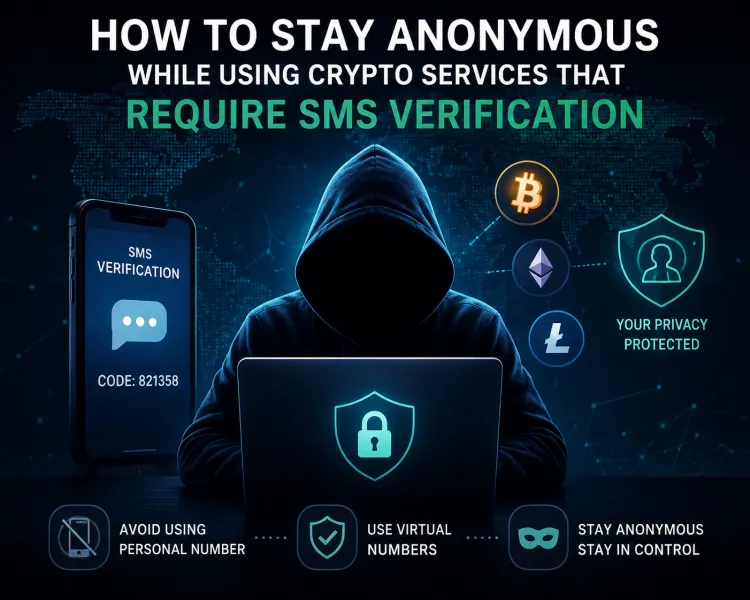
The Core Problem
Even if a crypto account uses a wallet address instead of a name, the phone number still acts like a bridge ID.
One number can connect:
Simple Analogy
Think of crypto privacy like walking through a city in different clothes.
Your wallet address is your clothing.
Your phone number is your face.
SMS verification forces you to show your face at every door.
Practical Access Layer
In many cases users rely on external tools to receive sms codes when platforms require phone verification, instead of exposing a personal number directly. This creates an additional separation layer between identity and account activity.
What True Anonymity Means In Crypto Usage
Anonymity is not invisibility. That is unrealistic.
In crypto systems, anonymity means:
No direct link between real identity and accounts
No repeated identifiers across platforms
No single point that connects all activity
A phone number breaks this structure because it is stable and reusable.
So the goal is not total concealment. The goal is separation.
How Crypto Platforms Collect Phone Identity
Most users underestimate how often SMS is used.
Account Registration
Nearly every exchange requires SMS at signup.
Two-Factor Authentication
SMS is still used as backup 2FA in many systems.
Recovery Systems
Password resets often depend on the original number.
Anti-Fraud Systems
Platforms track number reuse to detect multiple accounts.
This means one number can silently connect different identities over time.
Why Personal Numbers Create Long-Term Risk
A personal SIM is tied to real-world identity through carriers.
Mobile providers may store:
Identity documents
Location data
Usage patterns
Even if crypto platforms do not access this directly, the number still acts as a strong identity anchor.
Once reused across services, it becomes easier to:
cluster accounts
correlate behavior
reconstruct activity patterns
Virtual SMS Numbers As A Privacy Layer
Virtual numbers reduce direct exposure.
They replace:
real phone ® crypto platform
with:
user ® virtual number ® crypto platform
Key Function
They receive OTP codes without exposing a personal SIM.
Important Reality
Not all virtual numbers behave the same:
some are shared and reused
some are semi-private
some are temporary and single-use
The level of privacy depends on how the number is issued and recycled.
Tools Used For SMS Verification Privacy
Users typically combine three tools:
1. Virtual Number Services
They provide numbers for SMS verification across platforms.
2. Disposable Email Systems
They separate identity at the email layer.
3. Device Isolation
Different accounts run in different browsers or devices to avoid correlation.
This is not about hiding activity. It is about preventing linkage.
How SMS Verification Systems Work
The flow is simple:
User selects a country and service
System assigns a temporary number
Crypto platform sends OTP SMS
Service forwards SMS to user dashboard
User completes verification
The crypto platform only sees a number.
It does not see SIM ownership or carrier identity behind it.
Choosing A Reliable SMS Method
Not all methods are equal.
Look For:
stable SMS delivery
low number reuse
clear expiration rules
consistent availability
Avoid:
overloaded public inbox numbers
unknown free services
aggressively recycled numbers
Control matters more than convenience.
Common Mistakes That Break Privacy
Mistake 1: Reusing The Same Number
This links multiple accounts together.
Mistake 2: Mixing Personal And Virtual Numbers
One connection can break full separation.
Mistake 3: Ignoring Device Tracking
Even with different numbers, the same device can link identities.
Mistake 4: Long-Term Number Attachment
Keeping one number across many platforms increases correlation risk.
Where SMS Verification Fits In Privacy Strategy
SMS is only one layer in a larger system:
identity separation
device separation
payment separation
communication separation
Each layer reduces correlation between actions.
SMS tools sit at the entry point. That makes them important, but not sufficient on their own.