
 BTC
BTC
 ETH
ETH
 LTC
LTC
 BCH
BCH
 DOGE
DOGE
 USDT
USDT
 DASH
DASH
 XRP
XRP
 USDC
USDC
 XMR
XMR
 BNB
BNB
 TRX
TRX
 SHIB
SHIB
 DAI
DAI
 ZEC
ZEC
 SOL
SOL
 ETC
ETC
 POL
POL
 XLM
XLM
 ADA
ADA

Crypto investment has moved far beyond simply buying a coin and waiting for the market to rise. As digital assets become more widely used, investors are paying closer attention to strategy, risk control, portfolio structure, market data, and the tools they use to manage decisions.

For beginners, crypto can look exciting but confusing. For experienced users, the challenge is different: how to manage volatility, identify opportunities, and avoid making emotional decisions in a fast-moving market.
This is why crypto investment should not be treated as a one-time action. It should be approached as a structured digital asset strategy.
What Crypto Investment Really Means
Crypto investment refers to the process of allocating capital to digital assets such as Bitcoin, Ethereum, stablecoins, or other blockchain-based assets with the goal of long-term growth, income generation, or portfolio diversification.
However, crypto investment is not the same as guaranteed profit. Prices can change quickly, projects can fail, and market sentiment can shift within hours. A responsible crypto investment strategy should include 1
research, risk management, position sizing, and regular review.
In simple terms, crypto investment is about answering a few key questions: What assets should I hold?
How much capital should I allocate?
What level of risk can I accept?
Should I use active trading, long-term holding, or automated tools?
How often should I review my portfolio?
The better these questions are answered, the more disciplined the investment process becomes.
Why Investors Are Rethinking Crypto Investment
In the early days of crypto, many users focused mainly on price speculation. Today, the market is more mature. Investors now look at crypto through multiple angles, including digital asset allocation, passive income opportunities, AI-powered trading tools, and risk-adjusted returns.
Several trends are shaping this shift.
First, crypto investors want better access to data. Market movements are influenced by liquidity, macro conditions, news events, on-chain activity, and investor sentiment. Relying only on social media or short-term hype can lead to poor decisions.
Second, users are looking for more efficient tools. Instead of manually monitoring the market all day, many investors now use platforms that combine market data, trading tools, portfolio features, and automation.
Third, risk awareness has increased. After several market cycles, more investors understand that high returns often come with high uncertainty. A smarter crypto investment strategy should focus not only on potential upside, but also on downside protection.
Core Elements of a Smarter Crypto Investment Strategy
A good crypto investment strategy does not need to be overly complicated. In most cases, it should be clear, repeatable, and easy to review.
1. Define Your Investment Goal
Before choosing assets or platforms, investors should define their goal. Some users invest in crypto for long-term growth. Others want short-term trading opportunities. Some are interested in earning yield from idle assets, while others want exposure to blockchain innovation.
Different goals require different strategies. A long-term investor may focus on major assets and portfolio allocation. A more active user may need trading tools, risk alerts, and strategy automation.
2. Understand Your Risk Level
Crypto is a high-volatility market. Even strong assets can experience sharp price drops. Investors should decide in advance how much risk they are willing to take.
This includes setting a maximum allocation, avoiding over-leverage, and not investing money that is needed for short-term expenses. Risk control is often more important than chasing the highest return.
3. Diversify Your Digital Asset Portfolio
Diversification can help reduce the impact of a single asset underperforming. A crypto portfolio may include major assets, selected altcoins, stablecoins, or other digital asset products.
That said, diversification does not mean buying many random tokens. Each asset should have a clear reason for being included in the portfolio.
4. Use Data Instead of Emotion
Crypto markets often move quickly because of hype, fear, and social sentiment. Emotional decisions can lead to buying too late or selling too early.
A better approach is to use data, market indicators, and predefined rules. This is one reason why AI-powered crypto investment tools have become more relevant. They can help users analyze market conditions, monitor trends, and support more structured decision-making.
5. Review and Adjust Regularly
Crypto investment is not a “set and forget” activity. Market conditions change, asset performance changes, and investor goals may also change.
A regular review helps investors decide whether to rebalance, reduce risk, adjust strategies, or explore new opportunities.
The Role of AI in Crypto Investment
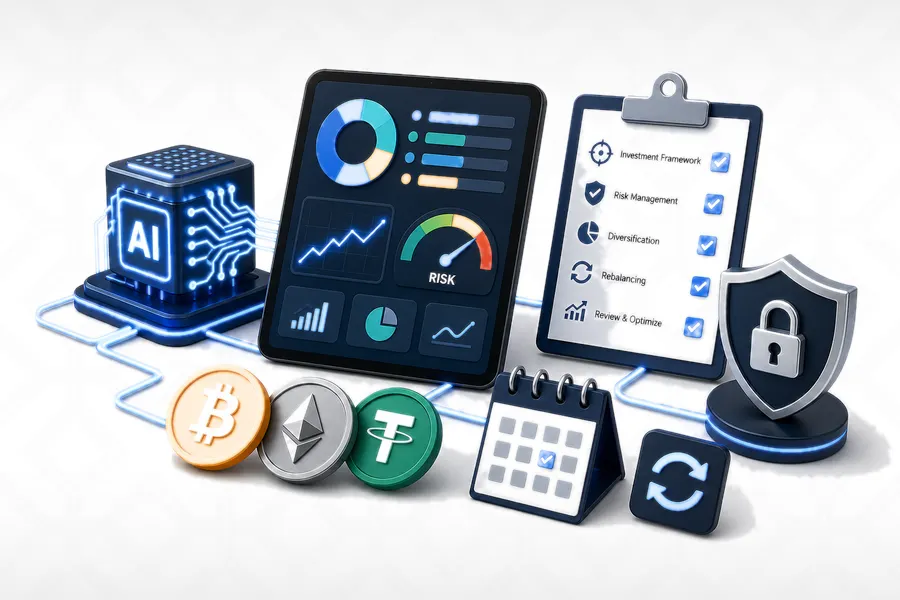
AI is becoming an important part of modern crypto investment. It does not remove risk, and it should not be seen as a guarantee of profit. However, AI can help investors process information more efficiently.
AI-powered tools can support crypto investors by helping with market analysis, trend monitoring, automated strategy execution, and portfolio review. This can be especially useful in a market that operates 24/7.
Platforms such as BitradeX are part of this broader shift. By combining crypto trading access, AI-driven tools, and digital asset management features, BitradeX aims to help users approach crypto investment with more structure and efficiency.
For users who do not want to rely only on manual trading, platforms with AI-supported workflows may provide a more organized way to participate in the crypto market.
Choosing a Crypto Investment Platform
Selecting the right crypto investment platform is an important part of the process. A platform should not only provide access to digital assets, but also support better decision-making and risk management.
When evaluating a crypto investment platform, users may consider:
Asset availability
Trading tools and automation features
Security practices
User experience
Market data and analytics
Transparency of product features
Risk management options
Mobile access
A platform like BitradeX can be relevant for users looking for a more integrated crypto investment experience, especially those interested in AI-powered trading tools and digital asset strategies. Still, every investor should review platform features carefully and make decisions based on personal goals and risk tolerance.
Common Mistakes in Crypto Investment
Many crypto investors lose money not because the market lacks opportunities, but because they lack a clear process.
One common mistake is chasing short-term hype. When an asset becomes popular online, many users buy without understanding the risks.
Another mistake is overusing leverage. Leverage can increase potential returns, but it can also magnify losses quickly.
A third mistake is ignoring portfolio review. Crypto markets change rapidly, and a portfolio that made sense six months ago may no longer match the investor’s risk profile.
Finally, some users rely too much on predictions. No platform, analyst, or AI tool can predict the market with certainty. The goal should be to improve decision quality, not to search for perfect predictions.
A Practical Crypto Investment Framework
A simple framework can help investors make better decisions:
Start with a clear investment goal.
Decide how much capital to allocate.
Choose assets based on research, not hype.
Use tools that support data-driven decisions.
Set rules for risk control.
Review the portfolio regularly.
Adjust the strategy when market conditions change.
This framework does not guarantee success, but it can help investors avoid random decisions and build a more disciplined approach.
Final Thoughts
Crypto investment offers opportunities, but it also comes with real risks. The most successful investors are usually not the ones who chase every trend. They are the ones who build a strategy, manage risk, use reliable tools, and review their decisions over time.
As the market continues to evolve, crypto investment is likely to become more data-driven, more automated, and more integrated with AI-powered platforms. For users who want a structured way to explore digital assets, platforms such as BitradeX may play a useful role in supporting smarter crypto investment workflows.
The key is not to treat crypto as a shortcut to quick returns. The better approach is to view crypto investment as part of a long-term digital asset strategy built on research, discipline, and risk awareness.
