
 English
 Français
 Español
 Português
 BTC
BTC
 ETH
ETH
 LTC
LTC
 BCH
BCH
 USDT
USDT
 DOGE
DOGE
 DASH
DASH
 USDC
USDC
 XRP
XRP
 XMR
XMR
 TRX
TRX
 BNB
BNB
 SHIB
SHIB
 SOL
SOL
 DAI
DAI
 ZEC
ZEC
 ETC
ETC
 POL
POL
 ADA
ADA
 XLM
XLM
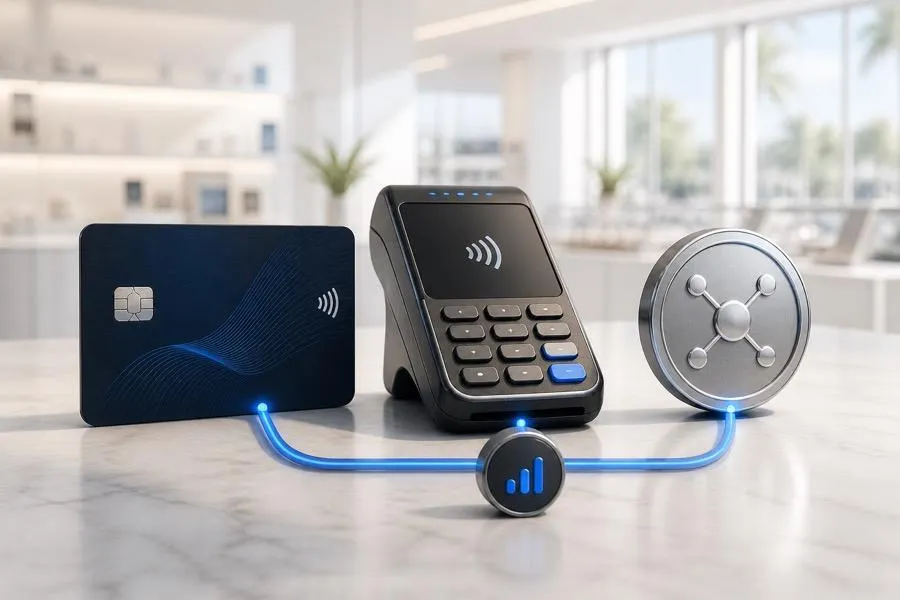
There are two ways to spend cryptocurrency on something real. You can hand the coins to a merchant who accepts them, or you can load a card that converts your balance to fiat at the till. Both work. They cost very different amounts, and the difference is not always where people expect it.
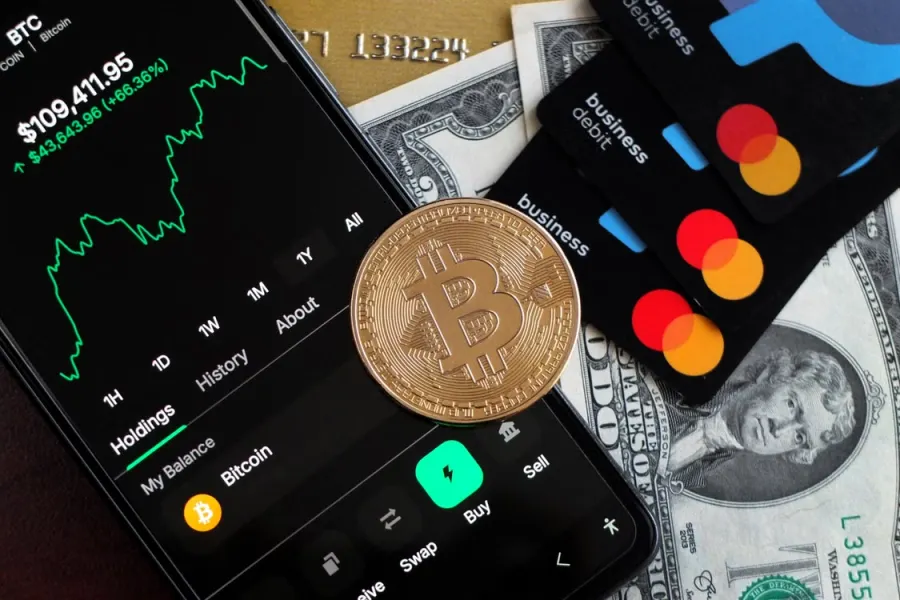
Image Link: https://www.pexels.com/photo/bitcoin-and-financial-transactions-concept-image-34067358/
Most comparisons of the two stop at convenience. Cards work everywhere, direct payment works in fewer places, therefore cards win. That skips the part that matters, which is what each route actually takes out of your balance by the time the transaction settles.
Here is how the costs break down.
Where the Money Goes on a Card Transaction
A crypto debit card is a fiat card with a conversion step bolted onto the front. When you tap it, your crypto is sold, and the resulting fiat pays the merchant. The merchant never touches cryptocurrency and usually has no idea you used any.
That conversion is where most of the cost sits. Card issuers typically apply a spread to the exchange rate rather than charging an obvious fee, which makes it easy to miss. You see a clean number on the receipt and assume that was the whole price. The spread was applied before the number appeared.
On top of that, there are the fees you can actually see. Most cards carry some combination of the following:
- A conversion or transaction fee, often between 0.5 and 2 percent
- Foreign exchange charges when spending outside the card's base currency
- ATM withdrawal fees, which are usually the steepest of the lot
- Monthly or tier fees on cards that offer cashback or higher limits
None of these are unreasonable on their own. Together, on a card used daily, they add up faster than most users track. If you are comparing options, it is worth reading the fee schedule properly rather than the marketing page, and directories like Cryptwerk's crypto cards category are a reasonable place to see what is actually available before you commit to one issuer.
The Cost Everyone Forgets
There is a second cost to card spending that has nothing to do with fees, and in many countries it is larger than all of them combined.
Selling crypto is usually a taxable event. Every card transaction is a sale. Buy a coffee with a crypto debit card and, depending on where you live, you have technically disposed of an asset and may owe tax on any gain since you acquired it. Do that forty times a month and you have generated forty small disposals, each of which needs a cost basis if anyone ever asks.
This is not a reason to avoid cards. It is a reason to understand that the convenience has an administrative tail. People who spend regularly this way tend to end up using portfolio tracking software, which is its own small cost in money or time.
Rules vary considerably by country, and some jurisdictions have de minimis thresholds that make small transactions irrelevant. Check your own before assuming either way.
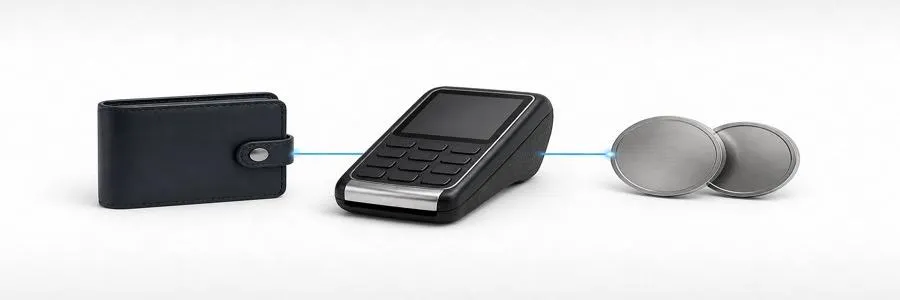
What Direct Payment Actually Costs
Paying a merchant in crypto directly looks cheaper because there is no conversion spread and no card issuer taking a cut. Often it genuinely is. But it is not free, and the costs land in different places.
The obvious one is network fees. Sending Bitcoin during a congested period can cost more than the card fee you were avoiding. Sending Litecoin, Tron, or a stablecoin on a cheap network usually costs a fraction of a cent. The coin you choose matters far more than the payment method here, which is why merchants who accept crypto tend to list several.
The less obvious cost is price movement. If a merchant quotes you an amount in crypto and the rate moves before the transaction confirms, someone absorbs that difference. Payment gateways handle this with short quote windows, typically ten to fifteen minutes, after which the quote expires and you start again.
Then there is the practical cost of limited acceptance. Direct payment only works where it is offered. That is a genuinely large number of merchants now, particularly in hosting, VPN, eSIM, travel, and digital services, but it is not the supermarket down the road.
Comparing the Two Honestly
For a normal purchase from a merchant who accepts crypto, direct payment is almost always cheaper. You skip the conversion spread entirely, and on a low-fee network the transaction cost is negligible. In many jurisdictions it is still a disposal for tax purposes, so that cost does not disappear, but the fee side is clearly better.
For everyday spending in places that do not accept crypto, a card is the only realistic option, and the question becomes which card rather than whether to use one. At that point the things worth comparing are the conversion spread, the foreign exchange treatment if you travel, the withdrawal fees if you use ATMs, and whether any cashback actually offsets the monthly cost at your spending level.
The mistake is treating this as a permanent choice. Most people who spend crypto regularly end up doing both, using direct payment where it is accepted and keeping a card for everywhere else.
A Few Practical Rules
If you take nothing else from this, these are the habits that reduce the cost most reliably.
Check whether the merchant accepts crypto before reaching for the card. The saving is real and it takes ten seconds to find out.
Pay attention to which coin you send. Network fees vary by orders of magnitude, and paying a two dollar fee on a fifteen dollar purchase is a bad trade regardless of how convenient the wallet is.
Read the conversion terms on any card before you load it. The advertised fee and the effective cost are frequently different numbers.
Keep a record of card transactions if you live somewhere that taxes disposals. Reconstructing a year of small purchases later is genuinely unpleasant.
ConClusion
Direct payment costs less when it is available. Cards cost more but work everywhere, and the gap is smaller than the fee schedules suggest once you account for network costs on the direct side.
What actually determines your total cost is not the method. It is whether you pay attention to the conversion spread on one side and the network fee on the other, and whether you happen to live somewhere that taxes every disposal. Get those three things right and either route is reasonable. Ignore them and both get expensive quietly.
