
 English
 Français
 Español
 BTC
BTC
 ETH
ETH
 LTC
LTC
 BCH
BCH
 USDT
USDT
 DOGE
DOGE
 DASH
DASH
 USDC
USDC
 XRP
XRP
 XMR
XMR
 TRX
TRX
 BNB
BNB
 SHIB
SHIB
 SOL
SOL
 DAI
DAI
 ZEC
ZEC
 ETC
ETC
 POL
POL
 ADA
ADA
 XLM
XLM
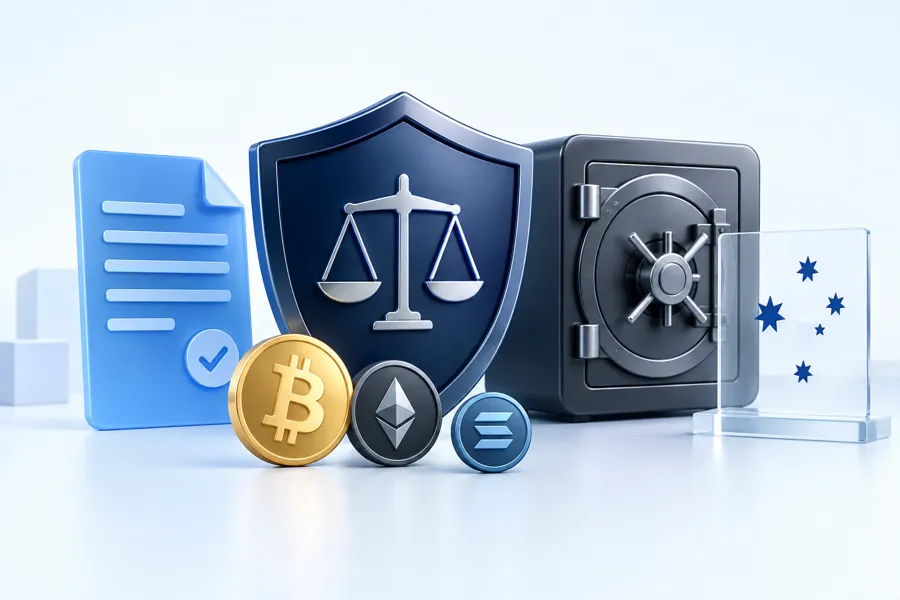
Australia’s crypto market is moving into a more regulated phase. For investors, the change is less about banning digital assets and more about lifting standards for platforms that hold customer funds, provide trading access, or offer crypto-related financial services.

The practical result is a stronger focus on licensing, custody, disclosure and consumer protection. Crypto remains volatile and speculative, but clearer obligations can help Australians judge which services deserve their trust.
What the new rules mean for crypto platforms
ASIC’s updated guidance treats many crypto-related arrangements according to their economic function, rather than the technology behind them. If a platform provides a financial product or financial service, it may need to hold an Australian Financial Services Licence (AFSL) or operate under an appropriate authorised arrangement.
The transition is still underway.
For consumers, the key lesson is simple: do not assume every crypto app operates under the same standards. Before depositing money, assess its licensing position, custody model, withdrawal process and risk disclosures.
The same expectation applies wherever speed and access to funds are important. For example, a best australian online casino instant withdrawal should clearly explain its payment terms, just as a crypto platform should be transparent about withdrawal limits, processing times and identity checks.
Why an AFSL matters
An AFSL is not a guarantee that an investment will perform well or that an investor cannot lose money. It does, however, mean the licence holder must meet Australian requirements relevant to the financial services it provides.
ASIC extended its sector-wide no-action position to 30 September 2026, giving eligible digital-asset businesses additional time to apply for or vary an AFSL. The extension does not remove legal obligations; it is designed to support an orderly move towards licensing while protecting market integrity. ASIC’s official update explains the scope and conditions.
Depending on the service, this can include obligations around:
Acting efficiently, honestly and fairly
Managing conflicts of interest
Maintaining adequate risk-management systems
Providing suitable disclosures
Handling complaints through approved processes
Holding sufficient financial and operational resources
For investors, that makes licensing a useful starting point when comparing providers. It should never replace independent research, but it is more meaningful than relying on social-media promotion, celebrity endorsements or promises of easy returns.
Custody is a major investor issue
Many Australians use centralised exchanges because they make buying and selling crypto relatively simple. In these arrangements, the provider may control the private keys linked to the customer’s assets. This is known as custodial storage.
That convenience creates a trade-off. If an exchange experiences a cyberattack, insolvency, operational failure or withdrawal freeze, customers may face difficulty accessing their holdings. The phrase “not your keys, not your coins” is often repeated in crypto circles, but self-custody also comes with serious responsibility. Losing a recovery phrase can mean losing access permanently.

Questions to ask before using a platform
A careful investor should look beyond the headline trading fee. Consider the following checks:
Does the business explain its Australian licensing or transition status?
Is customer crypto held separately from company assets?
Does it state where assets are stored and how wallets are secured?
Are withdrawals subject to daily limits, fees or manual review?
Does it publish a clear process for complaints and account recovery?
Does it explain its approach to scams, unauthorised access and identity verification?
Are token listings assessed, or does the platform add highly speculative assets without meaningful information?
These questions matter because crypto transactions are usually irreversible. A mistaken wallet address, a phishing attack or a transfer to a scammer cannot normally be undone by a bank chargeback.
AUSTRAC rules and scam prevention
Crypto businesses that operate as digital currency exchanges in Australia must register with AUSTRAC and comply with anti-money-laundering and counter-terrorism-financing obligations. These requirements can include customer identification, transaction monitoring and reporting suspicious activity.
For some users, identity verification can feel inconvenient. In reality, stronger verification is part of the broader effort to reduce illicit activity and make it harder for criminals to move money through digital-asset platforms. Investors should treat platforms that ask for no verification, promise anonymous access, or pressure users to transfer quickly as a potential warning sign.
AUSTRAC also provides practical guidance on identifying cryptocurrency scams, including fake investment opportunities, impersonation fraud and romance scams that lead victims to fraudulent trading platforms. Its scam awareness resources are worth reviewing before sending funds to any unfamiliar service.
Regulation doesn’t remove investment risk
Australia’s new rules can improve conduct standards, but they cannot eliminate market risk. Bitcoin, Ethereum, stablecoins and smaller tokens each carry different risks. Prices can move sharply, liquidity can disappear, projects can fail, and stablecoins may face issuer, reserve or redemption risks.
Investors should also be wary of a common misunderstanding: a regulated platform is not the same as a government-backed investment. Licensing relates to how a service is run. It does not make crypto prices stable, validate a token’s long-term value or compensate losses caused by poor investment decisions.
How to invest more carefully in 2026
The strongest approach is disciplined rather than reactive. Set a clear amount you can afford to lose, avoid borrowing to buy crypto, and treat high-yield offers with caution. Research the asset as well as the platform: understand what the token does, who issues it, how it is stored, and whether there is a realistic reason for demand beyond speculation.
Australia’s regulatory direction should make the market easier to navigate, but responsibility still sits with the investor. Choose transparent providers, protect your accounts, slow down before transferring funds, and never let hype make decisions for you.
Better rules will not make crypto risk-free. They can, however, help create a market where Australians have clearer information, stronger safeguards and a better chance to make decisions with their eyes open.
