
 English
 Français
 Español
 Português
 BTC
 ETH
 LTC
 BCH
 USDT
 DOGE
 DASH
 USDC
 XRP
 XMR
 TRX
 BNB
 SHIB
 SOL
 DAI
 ZEC
 ETC
 POL
 ADA
 XLM
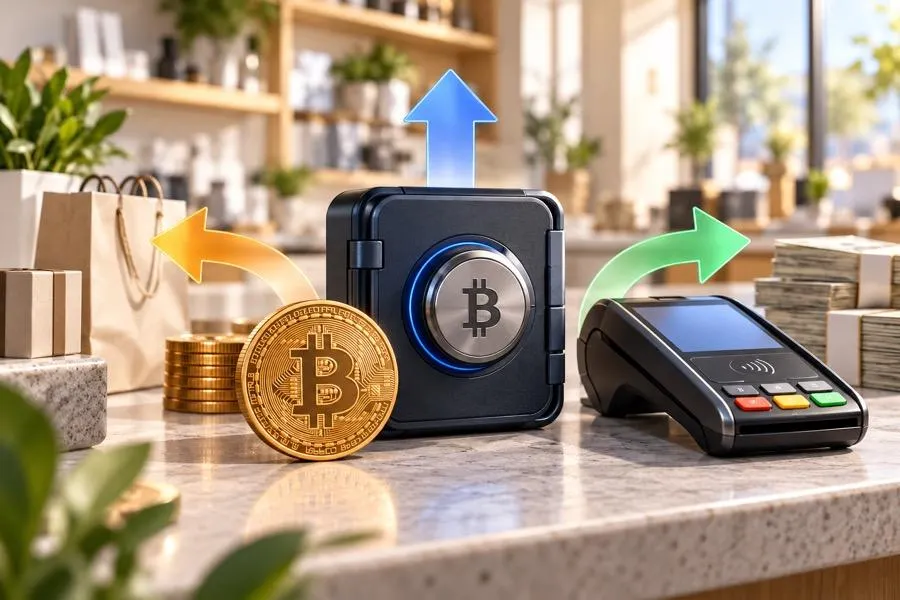
Bitcoin is trading around $81,700 on October 22, 2026. A year ago it was roughly $25,900 higher. That gap changes how every holder thinks about the next purchase.
By Jake M. | Crypto payments analyst, 8 years covering merchant adoption. Tested October 2026.
If you bought lower, you're still up, and the instinct is to sit tight. If you bought near the top, every coffee paid in BTC feels like selling at a discount. Both reactions are reasonable. Neither is a strategy.
So here's a plainer way to frame it. Coins you plan to hold for years, coins you'll spend on things you'd buy anyway, and coins you may need to turn back into ordinary money. Sort your stack into those three piles first, and the price headline matters a lot less.
Why the price drop changes behaviour, not logic
The tax angle is the part people skip. The IRS treats digital assets as property, so every time you spend BTC, you trigger a gain or a loss measured against what you paid. Spending a coin you bought at $60,000 at today's $81,700 price is a taxable gain. Spending one you bought at $105,000 is a loss you may be able to use. The IRS guidance on short-term versus long-term treatment is worth ten minutes before you decide anything.
That means the smartest spenders are quietly choosing which coins to spend. High-basis coins (the ones you bought expensive) are the better candidates for spending. Low-basis coins, the ones deep in profit, are the ones to hold. Most wallets let you pick lots, and most holders never check.
Nothing about this is exciting. It saves real money, though.
What the market is actually telling you
Market commentary right now is cautious. Bitcoin has been clinging to $81K as ETF outflows and nervous sellers test support, which is why anyone calling a clean bottom is guessing. Maybe $81K holds. Maybe it doesn't.
You don't need to predict it. You need a rule you can follow when the next red candle shows up. A simple one: never spend coins you'd be forced to rebuy in a panic. Spend what you'd happily let go of.
Where spending BTC still makes sense
This is where a merchant directory earns its keep. Cryptwerk lists more than 8,000 businesses that take crypto, and the categories that hold up best are the ones where crypto's strengths are real: borderless payment, no card required, and light identity friction.
VPNs and proxies. Subscriptions are small, recurring, and privacy-minded by nature. Paying in BTC fits the product. Reliable providers are easy to compare in the VPN and proxy listings.
eSIMs. A travel eSIM is a $10 to $30 purchase you want instantly, usually while standing in an airport. Crypto settles without a foreign card fee. This is probably the most underrated use case on the list.
Hosting and domains. Developers and small site owners have taken crypto for years. A year of VPS hosting is a predictable expense, and plenty of providers, like Inception Hosting, accept coins directly.
Travel. Hotel bookings and flight tickets are the big-ticket category. These are the purchases where a high-basis coin does the most good, since a $900 trip paid in BTC at a loss can offset gains elsewhere.
If you want the full lay of the land, the page on where to spend Bitcoin breaks merchants down by type and region.
The honest case for holding
Spending isn't always right. Fees, tax records, and the small mental tax of tracking every transaction add up. If a purchase is under about $50, the paperwork can cost more than the convenience saves.
Holding also has a cost. Idle coins don't pay your rent. A volatile asset that's down 24% year on year isn't a savings account, and treating it like one is how people end up selling at the worst possible moment.
The middle path is boring but effective. Keep a core stack you won't touch. Keep a smaller spending stack, sized to what you'd use in six months. Revisit both quarterly.
Turning crypto back into cash without selling at a bad time
Sometimes you need fiat. Rent, a tax bill, a deposit. The mistake is assuming there's only one way to get there.
Selling on an exchange is the obvious route, and it works. It also creates a reportable event: brokers now send Form 1099-DA, and the IRS broker reporting rules mean your cash-out lands in the tax system with a paper trail attached. That's fine if you've planned for it, painful if you haven't.
For moving value, the practical question is speed and cost. Crypto rails can settle in minutes, and stablecoins like USDT and USDC keep your value steady while you decide what to do. Ordinary bank transfers are slower, often one to three business days, but they come with consumer protections and no wallet addresses to fat-finger.
The same trade-off shows up across the payments world, including online gaming. Players who'd rather skip crypto volatility entirely can check the BetaNews guide to bank transfer casinos to see how those payouts compare on timing and fees. Gambling involves risk, so only wager what you can afford to lose, and visit BeGambleAware.org if it stops being fun.
The broader lesson holds regardless of where the money goes. Fast isn't always better. Fast plus irreversible is exactly how people lose coins to a mistyped address. Slow plus reversible is sometimes the smarter default for large amounts.
If you do convert, a few habits help. Split big conversions across several days instead of one lump sale. Use a fast exchange for small, urgent swaps, and compare quoted rates first, since the spread varies more than people expect. Directions like ETH to BTC show live rates across exchangers, which makes the comparison quick.
A simple decision rule for $81K
Forget forecasting. Run this checklist before any move:
- Is this coin high-basis or low-basis? Spend the former, hold the latter.
- Will I need this money inside twelve months? If yes, it shouldn't be in volatile assets at all.
- Is the purchase under $50? Probably not worth the record-keeping in BTC.
- Am I moving more than a few thousand dollars? Slow down and use a reversible rail.
Adoption keeps growing underneath the noise. About one in five U.S. Adults has now used crypto, according to recent Pew survey data, which is why the merchant list keeps getting longer even when prices sag.
FAQ
Should I spend Bitcoin when the price is down? It depends on your cost basis. Spending coins you bought above today's price realizes a loss, which can offset gains. Spending low-basis coins triggers a gain. Pick which lots to spend, and keep your best-performing coins for holding.
Is paying with Bitcoin taxable? Yes. In the U.S., digital assets are treated as property, so each payment is a disposal measured against your purchase price. Keep records of what you paid and when. The IRS FAQ on digital assets covers short-term versus long-term treatment.
What can I realistically buy with BTC today? The strongest categories are VPNs, eSIMs, hosting, domains, and travel bookings. These are digital or global purchases where card payments add friction. Directories like Cryptwerk list thousands of merchants sorted by category and by the coin they accept.
Is a stablecoin a safer way to park value? It removes price swings, not every risk. Stablecoins like USDT and USDC track the dollar, so they suit short waiting periods before a purchase or cash-out. Check the issuer's reserve disclosures, and don't treat any stablecoin as a bank deposit.
How long does it take to cash out crypto to a bank? Exchange sales settle quickly, but the bank leg usually takes one to three business days depending on region and method. Large withdrawals may trigger extra verification. Plan ahead so you're never forced to sell on a bad day.
The takeaway
Bitcoin at $81K isn't a verdict, just a price. Hold what you can leave alone, spend what you'd happily part with, and cash out on your terms. Do that, and the next headline will matter a lot less.
