
 BTC
BTC
 ETH
ETH
 LTC
LTC
 BCH
BCH
 DOGE
DOGE
 USDT
USDT
 DASH
DASH
 XRP
XRP
 USDC
USDC
 XMR
XMR
 TRX
TRX
 BNB
BNB
 SHIB
SHIB
 DAI
DAI
 ZEC
ZEC
 SOL
SOL
 ETC
ETC
 POL
POL
 XLM
XLM
 ADA
ADA

Crypto solutions are becoming more popular across a wide range of industries, but it’s worth checking whether the new system actually fixes the problems your customers are having. A company announces a crypto payment rollout, a processor adds a new asset, or a merchant says support is coming. None of those events confirms that customers can complete a purchase, find participating sellers, or return to pay again.
Crypto payment adoption begins with a public commitment, but it becomes established only through technical activation, live checkout access, merchant coverage, and repeated use. Each step needs different evidence to confirm that it is working properly, and a rollout can be undermined by poor implementation at any of these points.
First of all, there’s no question that crypto is becoming more mainstream and is more frequently being used for transactions. A July 2025 McKinsey analysis estimated that stablecoins were facilitating about $30 billion in daily transactions after circulation doubled over the previous 18 months. Still, the same analysis put that activity below 1% of global money flows, so there is definitely room for that stat to grow further. McKinsey also separates merchant payments from uses such as remittances and business transfers. Circulation and on-chain volume may include trading, transfers, and treasury activity, so neither figure establishes how often people buy goods or services from merchants.
Start With the Claim, Then Follow the Rollout
A crypto payment rollout produces several forms of evidence, each at a different point in time. The initial claim records what is planned, who is involved, and when availability is expected. Technical documentation may later confirm that the payment rail works, while a live checkout shows that a customer can select it. Transaction records belong later still because they describe completed activity, rather than capability. Dates and stated scope keep those records in order when launch language changes or merchant participation narrows.
An announcement should be recorded in its original terms before later coverage shortens it. A statement that a company “plans to support” payments confirms intention; “has integrated” confirms technical work; “customers can pay” asserts live access and needs checkout evidence. Record the speaker, date, promised launch window, supported user group, and claimed sales channel.
You might want to check out a site like AlphaWire crypto news to confirm that the claims the site is making are credible. Using specialist crypto news sites to verify information is a good way to filter out the important details from the marketing language on a site and ensure you have up-to-date information.
When looking into a site’s announcements about crypto, make sure the evidence you are considering matches the claims that they have made. A processor document can confirm that the payment rail is active, but it cannot prove that a merchant has exposed the option to customers. Claims about continuing adoption require later figures with a defined period, transaction type, and merchant population. Screenshots can become stale after a checkout change, while undated pages make the sequence of events difficult to establish. Without those details, the report remains a record of what was announced, rather than a measure of what has actually changed.
Five Stages of Crypto Payment Adoption
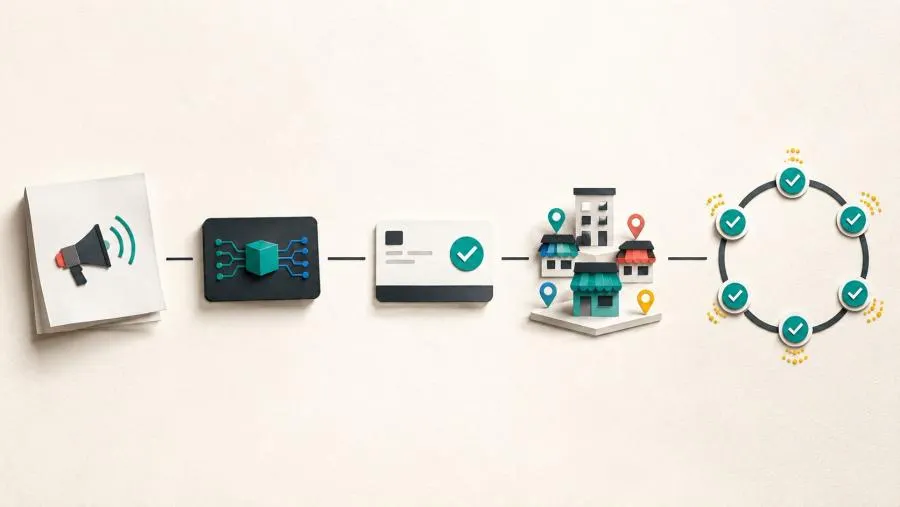
Crypto payment adoption can be recorded at five stages:
Announced. A company, merchant, or processor states an intention to launch. The statement needs a date, named parties, defined scope, and, where available, a launch window. No payment capability has yet been confirmed.
Technically enabled. The required rail, wallet connection, application programming interface, or settlement process is live. Test transactions or implementation documentation can confirm capability, although customers may still have no way to select it.
Available at checkout. A buyer can choose the asset, receive an address or QR code, see the amount, and complete confirmation.
Discoverable across participating merchants. Current merchant lists, store locators, or direct checks show where a payment is actually offered. A processor’s potential reach is not the same as the number of merchants that have enabled the option.
Used repeatedly with measurable activity. Records show completed merchant payments over time. Useful reporting identifies the period, merchant set, payment count or value, refunds, and the treatment of test transfers. One launch-day transaction establishes use, not repetition.
Stages can diverge across one network. A processor may be ready while only a subset of merchants has activated checkout. One merchant may accept a token online but not in stores. Any adoption claim should name the highest verified stage and the population it covers.

Test a Rollout Against the Next Missing Fact
Suppose a provider says that stablecoin checkout will reach thousands of merchants. That is stage one. A later release documenting settlement, supported networks, and confirmation handling advances the provider to stage two.
A live checkout at one participating store establishes stage three for that store and channel. A current directory or merchant list may support stage four, provided that entries are checked and the total is described as participating merchants, rather than the provider’s theoretical reach. Stage five arrives only with measured payment activity across a stated period. If the provider publishes volume without separating merchant purchases from transfers, the usage claim remains unresolved. If it reports transactions but not repeat behavior, the evidence supports completed payments, not returning customers.
Measure Use, Not Availability
Operational details determine whether a technically valid rail produces a usable checkout. Stripe’s October 2025 blockchain payment overview describes decisions about accepted assets, conversion, customer instructions, QR codes, payment time limits, and confirmation prompts. A rollout can fail between enablement and purchase when the asset or network is unclear, the quoted amount expires, the transfer arrives on the wrong network, or the merchant’s system does not match the payment to the order.
Merchant reporting should separate attempted, completed, expired, refunded, and unmatched payments. It should also distinguish unique buyers from transactions and identify the time period and participating merchant set. A defensible update may read: checkout is live at verified merchants, but repeat-use data have not been published. The next evidence needed is then specific: completed payments over several periods, measured among the same participating merchants, with test transfers and refunds excluded.
