
 BTC
BTC
 ETH
ETH
 LTC
LTC
 BCH
BCH
 DOGE
DOGE
 USDT
USDT
 DASH
DASH
 XRP
XRP
 USDC
USDC
 XMR
XMR
 TRX
TRX
 BNB
BNB
 SHIB
SHIB
 DAI
DAI
 ZEC
ZEC
 SOL
SOL
 ETC
ETC
 POL
POL
 XLM
XLM
 ADA
ADA

Look, if you spend any time scrolling through crypto Twitter or browsing trading forums, you've probably stumbled across Magic Trader. This Telegram channel has exploded in popularity over the past couple of years, pulling in hundreds of thousands of subscribers who reckon they've found the golden ticket to trading success. But before you smash that join button and start following signals blindly, there's a fair bit you need to understand about how these channels actually operate.
The reality is that Telegram trading communities have become massive business, and Magic Trader sits right in the thick of it. Whether you're a seasoned trader or just starting out, understanding what you're getting into can mean the difference between protecting your capital and watching it evaporate faster than a puddle in the Auckland summer.
The Appeal of Trading Signal Channels
Trading signals channels promise something every trader dreams about: shortcuts to profitability. Instead of spending years learning chart patterns, risk management, and market psychology, you simply follow the signals posted by someone who claims they've already cracked the code. Magic Trader positions itself as exactly this type of service, offering what appears to be a straightforward path to trading profits.
The channel operates across multiple daily sessions, posting signals that tell members exactly when to enter trades, where to set stop losses, and what profit targets to aim for. On the surface, it looks professional enough. But here's where things get interesting, and where any Magic Trader signals review worth its salt needs to dig deeper into the actual mechanics behind these operations.
How the Business Model Actually Works
Here's something most subscribers don't realise when they first join: the primary income for channels like Magic Trader doesn't come from accurate trading signals. It comes from affiliate commissions paid by brokers every time someone signs up and deposits funds through their referral links. This isn't necessarily sinister on its own, but it does create a fundamental conflict of interest that traders need to be aware of.
According to available data on affiliate programs, some broker partnerships pay commissions as high as 80% of deposited funds. Do the maths on that: even if only a small fraction of Magic Trader's subscriber base deposits the minimum required amount, we're talking about potentially massive earnings. The focus shifts from providing accurate signals to driving as many sign-ups as possible.
Understanding the Signal Focus
One aspect that deserves particular attention is what type of trading Magic Trader actually focuses on. While many assume they're getting Forex or cryptocurrency signals, the channel primarily deals with binary options trading. This distinction matters enormously because binary options have been banned or heavily restricted in major markets including the United States, Canada, the European Union, and Australia.
Regulators in these jurisdictions view binary options less as legitimate trading and more as gambling. The all-or-nothing nature of binary options means you either win a fixed payout or lose your entire stake, with no middle ground. That's fundamentally different from traditional trading where you can exit positions at various points and manage risk more flexibly.

Platform and Regulation Concerns
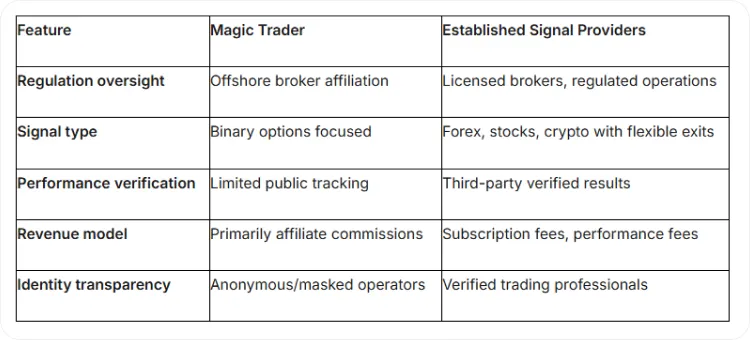
The broker typically promoted alongside Magic Trader signals is Quotex, which operates under offshore regulation from St. Vincent and the Grenadines. Now, I'm not saying offshore regulation automatically means trouble, but it's worth noting that major financial regulators wouldn't license brokers operating primarily in binary options. This raises legitimate questions about trader protection and recourse if something goes wrong.
Comparing this to established trading signal providers shows stark differences in transparency and accountability:
Red Flags Worth Considering
Several warning signs emerge when you dig into Magic Trader's operations. The channel operators don't reveal their real identities, often appearing in promotional content with faces obscured. The website quality looks rushed and follows patterns common among questionable signal services. There's also a notable absence of independent performance reviews on established platforms like Trustpilot.
The channel promotes bonuses that sound enticing, sometimes advertising $10,000 offers for new accounts. The catch? These are typically demo balances, not actual tradeable funds. It's marketing designed to create urgency and excitement rather than providing genuine value.
What Experienced Traders Recommend
Traders who've navigated these waters successfully generally suggest a different approach entirely. Rather than relying on signal services with opaque operations, they recommend either learning to trade independently through proper education or choosing signal providers with verifiable track records and proper regulatory oversight.
The most successful trading communities tend to focus on education first, signals second. They teach members how to analyse markets, manage risk, and develop their own trading psychology. This creates sustainable trading skills rather than dependency on someone else's calls.
Making Informed Decisions
If you're determined to explore trading signal channels, approach them with healthy scepticism. Look for providers who operate transparently, show verified performance history, partner with properly regulated brokers, and focus on education alongside signals. Check whether they're recommending instruments that are legal and regulated in your jurisdiction.
The lifestyle marketing that surrounds channels like Magic Trader, showcasing luxury cars, yachts, and exotic locations, serves one purpose: to attract deposits through affiliate relationships. Real trading success looks different. It's built on consistent risk management, continuous learning, and realistic expectations rather than promises of overnight wealth.
The bottom line is this: no legitimate trading professional with a genuine edge would need to rely primarily on broker commissions. They'd be making their money from trading itself. When affiliate earnings become the primary business model, you're no longer dealing with a signal provider focused on your success. You're dealing with a marketing operation dressed up as trading education.
