
 BTC
BTC
 ETH
ETH
 LTC
LTC
 BCH
BCH
 DOGE
DOGE
 USDT
USDT
 DASH
DASH
 XRP
XRP
 USDC
USDC
 XMR
XMR
 TRX
TRX
 BNB
BNB
 SHIB
SHIB
 DAI
DAI
 ZEC
ZEC
 SOL
SOL
 ETC
ETC
 POL
POL
 XLM
XLM
 ADA
ADA
When Ethereum started out in 2015, nobody thought it would become a global economy. It had promise since it was programmable, but it only handled a handful of transactions. Smart contracts were simple, and network congestion wasn’t a concern.
Fast-forward to 2017, and decentralized apps (dApps) became a thing. They’d become even more popular over the following years, leading to a complete digital economy.
The problem? Ethereum can only process about 15-30 transactions per second (TPS). Considering that Visa has a capacity of 65,000 transactions per second, this raises a clear point of concern.
During the 2021 boom led by DeFi and NFTs, the network became quite congested. Transactions were very slow, and fees even exceeded $50, with some periods recording highs of around $180 for simple transactions.
Since then, users have migrated to Layer 2 transactions, with developers like Altius Labs essentially making the performance limitless. Ethereum itself has also been upgrading the blockchain to support Layer 2 networks better. There’s still a lot of work going on in the background, but a few of the updates (like the Dencun Upgrade and the Fusaka Upgrade) have already increased the Ethereum throughput to 100,000+ transactions per second, courtesy of Layer 2 chains.
But what exactly are these Layer 1 and Layer 2 networks?
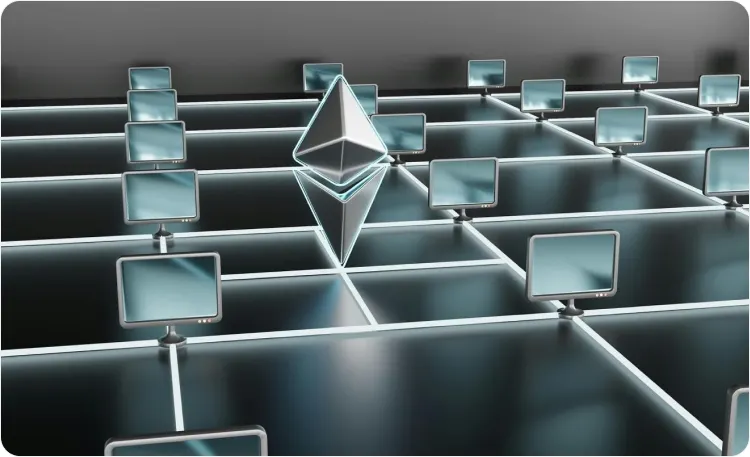
Layer 1 Ethereum: What it is and what it does
Layer 1 Ethereum is essentially the main Ethereum blockchain. But in this context, it has been freed from some functions by a Layer 2 network, so its core responsibilities are security, consensus, and finality. Not execution.
That said, everything that happens on Ethereum Layer 2s is essentially settled here, taking advantage of Ethereum’s reliability, stability, and security.
While there are modern blockchains that offer much better performance than Ethereum, it still remains the most trusted blockchain after Bitcoin. It has been tested and tried, so most developers still choose to create on the Ethereum blockchain.
The biggest strength of this base layer is in decentralization. As one of the oldest and most reliable blockchains, it has thousands of independent validators who verify blocks, making it extremely difficult for any actor to manipulate the system. And since validators usually stake some of their ETH, they can be punished for suspicious behavior by having a portion of it ‘slashed’. It’s a process that significantly increases trust.
Layer 1 itself isn’t optimized for a single type or application or transaction, it supports everything from token transfers to smart contracts. This makes the speed and throughput quite limited, leading to the need for Layer 2 solutions.
Layer 2 Ethereum: What it is and what it does
Layer 2 is what makes Ethereum’s transactions fast and cheap today.
Instead of doing everything on the main Ethereum blockchain, Layer 2 networks, often called rollups, group together (or roll up) many transactions off-chain, then only send a few details about them to the base layer.
This means that Layer 2 networks do the bulk of the work that would have been done on the Ethereum network while still relying on the latter for finality and security.
There are two main ways Layer 2 networks achieve this:
- Optimistic rollups – These networks assume that all off-chain transactions are valid, so they aggregate them and send their summaries to Layer 1 Ethereum. If no one disputes them (with proof) within a set period, they are validated and permanently recorded on the Ethereum blockchain.
- Zero-knowledge rollups – These do the verification themselves by generating cryptographic proofs for batches of transactions, so they guarantee correctness before sending the results to Layer 1. If the proof verifies, the batch is accepted and immediately recorded.
The two types of rollups work differently, but both significantly speed up transactions. Bundling transactions before submitting the summary to Ethereum also reduces costs, making small and frequent transactions viable again.
Note that the experience in Layer 2 networks, like Arbitrum or zkSync, is almost the same as using the main blockchain, just that transactions are faster and much cheaper.
