
 English
 Français
 Español
 Português
 BTC
BTC
 ETH
ETH
 LTC
LTC
 BCH
BCH
 USDT
USDT
 DOGE
DOGE
 DASH
DASH
 USDC
USDC
 XRP
XRP
 XMR
XMR
 TRX
TRX
 BNB
BNB
 SHIB
SHIB
 SOL
SOL
 DAI
DAI
 ZEC
ZEC
 ETC
ETC
 POL
POL
 ADA
ADA
 XLM
XLM
Investing in Ethereum
The second-largest cryptocurrency by market capitalization, Ethereum has attracted interest from investors and developers alike for its creative technology and bright prospects. Unlike Bitcoin, which is sometimes regarded as a store of value, Ethereum's main draw is its adaptability, which allows for the development of smart contracts, decentralized apps (dApps), and more.
As with any investment, putting money into Ethereum has both dangers and rewards. Many investors see it as a promising asset, making the decision to invest in Ethereum a strategic move for those who believe in blockchain innovation. Institutional adoption has also increased, with major financial firms integrating Ethereum into their portfolios. Its strong developer community and diverse use cases ensure its long-term potential in the blockchain ecosystem.
The Benefits of Ethereum Investment
For investors who believe in Ethereum's long-term success, its capacity to transform several sectors, from finance to gaming and healthcare, provides great benefits. Its technological breakthroughs, increasing use, and ongoing development of the Ethereum network are among the most interesting justifications for investing in Ethereum.
Smart contracts and innovation
Among Ethereum's main developments is its capacity to run smart contracts. These self-executing contracts eliminate the need for intermediaries, hence automating agreements between parties. Rapidly expanding in recent years, decentralized finance (DeFi) is supported by this function.
- Ethereum's smart contracts drive several decentralized financial apps, enabling users to lend, borrow, and earn interest without conventional banks. Demand for Ethereum rises as the DeFi sector expands.
- Smart contract use cases: Non-financial sectors including supply chain management, real estate, and even gaming also make use of Ethereum's smart contracts. The need for Ether (ETH), Ethereum's native coin, is projected to increase as more companies see the use of Ethereum's blockchain.
Scalability with Ethereum 2.0
Aiming to solve some of the network's main problems—such as high transaction fees and scalability issues—Ethereum 2.0 is undergoing a major update. Transaction speeds will accelerate, energy use will decrease, and security will be strengthened by the change from Proof of Work (PoW) to Proof of Stake (PoS).
- Lowered gas fees: The possibility of lower gas prices is among the most important benefits of Ethereum 2.0. Lower transaction fees will make Ethereum more accessible and attractive for users and developers alike.
- Ethereum 2.0 is meant to handle thousands of transactions per second, therefore significantly enhancing the user experience and enabling more efficient usage of Ethereum for large-scale applications.
Adoption by institutions
With more major companies and financial institutions looking at its blockchain technology, Ethereum has been attracting institutional interest. Institutional investors' adoption of Ethereum is a major driver of ETH demand.
Ethereum exchange-traded funds (ETFs), which let institutional investors have exposure to Ethereum without actually buying and controlling Ether, have drawn more and more interest.
Major businesses in several industries, including finance and technology, are looking at Ethereum's blockchain for items including cross-border payments, supply chain tracking, and decentralized apps.
Diversification in cryptocurrency portfolios
For crypto investors who currently own Bitcoin or other altcoins, investing in Ethereum offers diversification. Ethereum distinguishes itself from other cryptocurrencies and provides a buffer against the volatility of Bitcoin alone with its utility-driven blockchain and large ecosystem.
Investing in Ethereum lets you see the fast-increasing DeFi industry, which is projected to keep expanding. Ethereum's growing use in many sectors and move to Ethereum 2.0 place it as a good long-term investment.
Investing in Ethereum Carries Certain Risks
Although Ethereum has significant benefits, it also has certain hazards of its own. Like any other investment, it is crucial to know these dangers before deciding to use Ethereum. Among the main hazards listed below are
Market sentiment and volatility
Known for their price volatility, cryptocurrencies include Ethereum. In a short time, this can cause notable price fluctuations, which makes it difficult for investors to forecast the direction of the market.
Driven by elements including market mood, regulatory developments, and overall market trends, Ethereum's price has historically been quite volatile. News about Ethereum, including governmental decisions or technological developments, can greatly influence the price of Ether and complicate long-term projections.
Uncertainty in regulation
The regulatory framework around digital currencies is still changing. Digital assets are being defined clearly by governments and regulatory authorities worldwide, hence influencing the future of Ethereum.
- Different nations have various attitudes toward cryptocurrency regulation, from rigorous restrictions to broad adoption. Any changes in regulation could affect Ethereum's price and its broad use.
- Investors and businesses engaged in Ethereum can incur extra expenses and legal obstacles if governments tighten laws on cryptocurrency tax reporting.
Dangers to security
Although Ethereum's blockchain is usually regarded as safe, the ecosystem surrounding it—including smart contracts and decentralized apps (dApps)—can be susceptible to hacking or flaws.
- Smart contract flaws or dApp weaknesses could cause major financial losses. Several high-profile Ethereum-based breaches have already shown these dangers.
- Failures of the platform. Other Ethereum-based platforms and decentralized exchanges (DEXs) are equally vulnerable to security breaches that could compromise Ethereum's reputation or cause loss of money.
Problems with scalability and network congestion
Although Ethereum 2.0 promises scalability gains, especially during times of heavy demand the network continues to experience congestion and sluggish transaction speeds.
For users in times of heavy demand, gas fees might still be quite high even with the Ethereum 2.0 update. This can discourage developers and new users from using applications built on Ethereum. Though Ethereum 2.0 hopes to solve these problems, especially as the Ethereum ecosystem expands, there is no assurance it will completely remove network congestion.
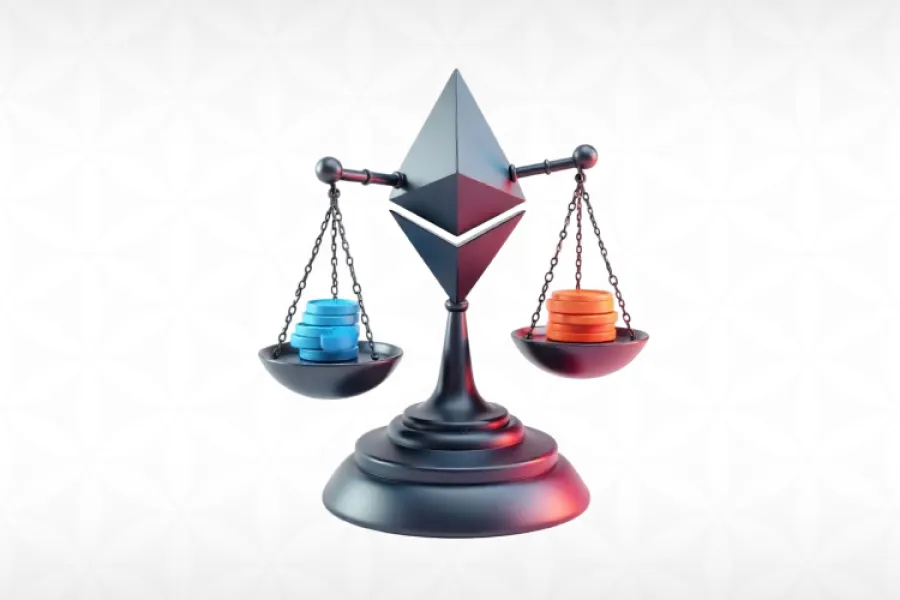
Weighing the Risks and Benefits
Investing in Ethereum calls for careful consideration of both possible benefits and hazards. A well-informed investing plan should include risk control strategies including:
- Diversification: Don't invest all your money into one asset. Think about diversifying your investments among several asset types, including stocks and bonds, as well as several cryptocurrencies.
- Risk tolerance: Investing in Ethereum calls for a careful evaluation of your risk tolerance given its volatility. Invest just what you can afford to lose.
- Keep an eye on new dApp initiatives, and legal changes among other things, inside the Ethereum ecosystem to stay informed. Being knowledgeable will enable you to make more intelligent choices.
Investors will find both great benefits and possible hazards in Ethereum. Its creativity, rising institutional acceptance, and the move to Ethereum 2.0 offer notable long-term expansion prospects. Investors, therefore, should be aware of the market's volatility, legal questions, and security concerns. Ethereum can be a fulfilling addition to a varied investing portfolio provided one knows these elements and applies a well-rounded investment approach. Ethereum offers potential for anyone ready to negotiate its hazards, whether they want long-term gain or exposure to the DeFi sector.
