
 BTC
BTC
 ETH
ETH
 LTC
LTC
 BCH
BCH
 DOGE
DOGE
 USDT
USDT
 DASH
DASH
 XRP
XRP
 USDC
USDC
 XMR
XMR
 TRX
TRX
 BNB
BNB
 SHIB
SHIB
 DAI
DAI
 ZEC
ZEC
 SOL
SOL
 ETC
ETC
 POL
POL
 XLM
XLM
 ADA
ADA

Selecting the correct order type is a fundamental step in developing a consistent trading strategy. Every market participant must decide whether they prioritize the speed of execution or the precision of the price. This decision impacts the total cost of the trade and the likelihood of entering a position during volatile market conditions.
Efficiency in trade execution often depends on the specific tools provided by an exchange. For example, participating in Dual Investment on CoinEx allows users to subscribe to a product using one cryptocurrency, with the final settlement currency determined by comparing the settlement price and the target price at maturity.
Market Orders
Market orders are instructions to buy or sell a digital asset immediately at the best available current price. This order type removes liquidity from the order book and is typically executed within milliseconds if the market is active. It is the most straightforward method for entering or exiting a position without waiting for a specific price target.
Execution Speed
Immediate execution is the primary advantage of a market order in any liquid market. This speed is essential when a trader needs to exit a failing position or enter a rapidly rising trend before the price moves higher. Because the order focuses on the "now," it ensures the participant does not miss a time-sensitive opportunity.
Guaranteed Completion
A market order guarantees that the trade will be filled as long as there is a counterparty available. Unlike other order types, a market order does not sit in the order book waiting for a trigger. It moves through the existing bids or asks until the total requested volume is completely satisfied.
Price Slippage
Slippage occurs when the final execution price differs from the price seen on the screen at the time of the click. In a thin market or during high volatility, a large market order can "walk" up or down the order book. This results in the trader paying more or receiving less than they initially anticipated.
Lack of Control
The primary trade-off for speed is a total lack of control over the final transaction price. Market orders are highly vulnerable to sudden price spikes, or "flash crashes," that can occur in the cryptocurrency space. Using this order type in low-liquidity pairs is often risky due to the wide gap between the bid and the ask prices.
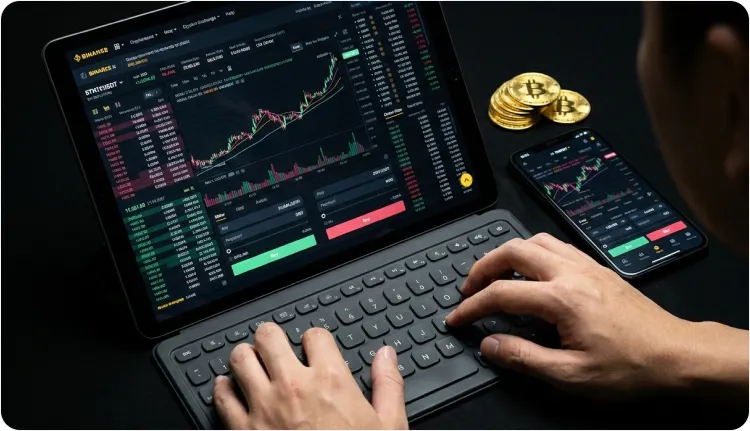
Limit Orders
Limit orders provide the opposite experience by allowing a trader to specify the exact price they are willing to accept. This order type adds liquidity to the exchange and remains open until the market reaches the designated price level. It is the preferred tool for patient investors who refuse to pay more than their calculated fair value.
Price Precision
Setting a limit price ensures that you never pay more for a buy order or receive less for a sell order than your specified amount. This precision is vital for maintaining a strict risk-to-reward ratio in a professional trading plan. It eliminates the emotional impulse to chase a price that has already moved beyond your entry zone.
Maker Fees
Many exchanges offer lower trading fees for participants who add liquidity to the order book. A trader acts as a "maker" rather than a "taker" by placing a limit order, which can significantly reduce long-term overhead. These savings become substantial for high-frequency traders or those managing large portfolios.
Partial Fills
A limit order may only be partially filled if the market price touches your target but does not stay there long enough. If you wish to buy ten units but only five are available at your price before the market moves away, you are left with a split position. This requires the trader to decide whether to cancel the remainder or wait for a return to the target.
Risk of Non-Execution
The most significant disadvantage of a limit order is the possibility that the trade never happens. If the market price comes within a few cents of your limit but fails to hit it, you may miss a major move entirely. This "opportunity cost" is the price paid for attempting to get the perfect entry in a fast-moving market.

Selecting a Professional Style
Choosing between these two tools depends on the current state of the market and your personal level of urgency. Market orders are most effective for small trades in highly liquid pairs where the bid-ask spread is extremely narrow. They serve as a vital emergency tool when immediate action is required to protect capital or secure a fast breakout. Limit orders are more suitable for most entry and exit points, especially when trading in volatile assets.
Combining both order types allows a trader to be flexible while maintaining a disciplined approach to cost management. A common strategy involves using limit orders for planned entries and market orders for quick exits if a stop-loss is triggered. Balancing these techniques ensures that you remain in control of your financial outcomes regardless of market noise.
