
 BTC
BTC
 ETH
ETH
 LTC
LTC
 BCH
BCH
 DOGE
DOGE
 USDT
USDT
 DASH
DASH
 XRP
XRP
 USDC
USDC
 XMR
XMR
 BNB
BNB
 TRX
TRX
 SHIB
SHIB
 DAI
DAI
 ZEC
ZEC
 SOL
SOL
 ETC
ETC
 POL
POL
 XLM
XLM
 ADA
ADA

Crypto licensing in 2026 is shaped by three regulatory shifts happening at once: California's DFAL takes effect July 1, the FCA opens its crypto authorization gateway on September 30 with no automatic rollover from existing registrations, and MiCA has been fully enforceable across the EU since late 2024. The frameworks are clear. The question is which jurisdiction, how fast, and whether to apply from scratch or acquire a company that's already licensed.
Crypto license types by jurisdiction
The type of authorization depends entirely on where you operate. An MSB registration with FINTRAC in Canada, a CASP under MiCA in the EU, a FinCEN MSB plus state MTLs in the US, a DASP in El Salvador. Each comes with different capital requirements, different compliance expectations, and wildly different timelines.
The distinction that matters most: some jurisdictions run a registration model (lower bar, faster, limited scope), while others require full authorization (higher capital, fit-and-proper testing, compliance manuals submitted before launch). Registration gets you running faster. Authorization gives you passporting rights and stronger credibility with banking partners. In practice, this often matters more than the license itself.
Costs and timelines by country
The numbers below are all-in: legal setup, compliance documentation, AML program development, and local substance where required. Not just the government fee.
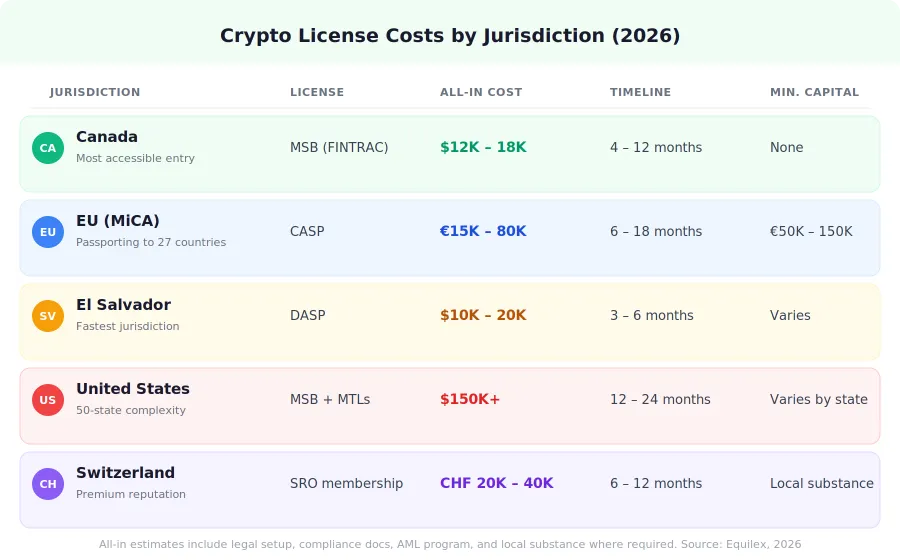
Canada (MSB, FINTRAC): $12,000–18,000. Four to nine months. No minimum capital. The scope covers currency exchange, money transfers, and dealing in virtual currencies, broad enough for most exchange models. No physical office required in Canada, which keeps ongoing costs low. Worth noting: FINTRAC has been increasingly aggressive with enforcement since 2024, so the compliance piece isn't optional. A Canadian MSB license remains one of the most practical entry points for exchanges targeting North American and cross-border markets.
EU under MiCA (VASP->CASP): €15,000–80,000 depending on the member state. Lithuania and Czech Republic on the lower end, Germany and France at the top. Six to eighteen months. Capital requirements range from €50,000 to €150,000 by service category. The advantage is passporting across all 27 member states. The reality right now: regulators across Europe are processing a backlog of applications, and published timelines are optimistic.
El Salvador (DASP): $10,000–20,000. Three to six months. The fastest path in this list, designed around a regulatory framework that was built for crypto from day one. Practical for LATAM-focused operations, but limited in credibility with European or North American banking partners.
United States (MSB + MTLs): FinCEN registration is straightforward. The real cost is state-level Money Transmitter Licenses: full 50-state coverage pushes past $150,000 with timelines of 12–24 months. Most operators start with FinCEN plus three to five key states and expand from there. California's DFAL adds another layer as of July 1.
Switzerland (SRO membership): CHF 20,000–40,000. Requires genuine local substance: a Swiss office, a local MLRO, real operational ties. The regulatory environment is stable and well-understood, which is why it attracts firms that are building for the long term, not just checking a compliance box.
Buying a ready-made licensed company
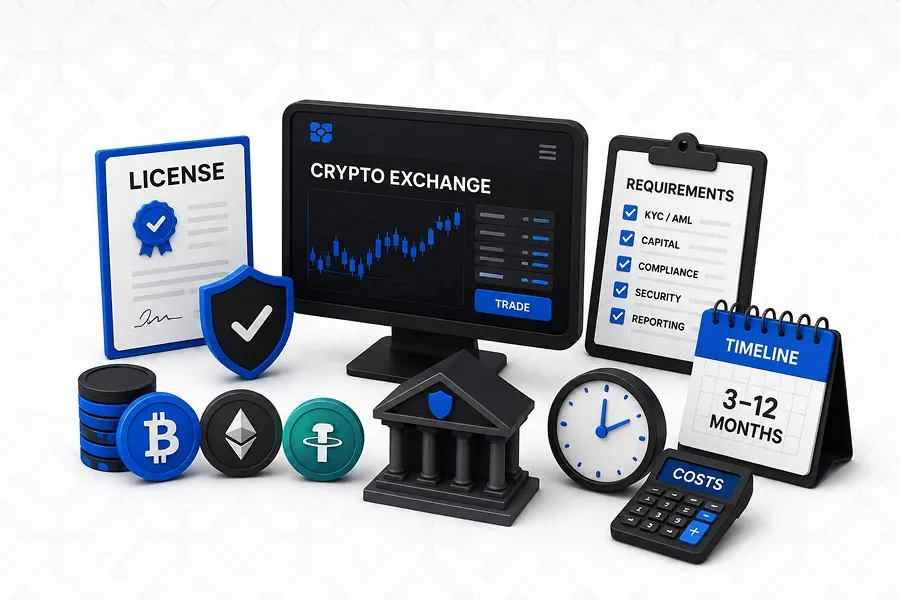
For operators who need to be live in weeks rather than months, acquiring a company that already holds the license is a well-established path. This is standard M&A in regulated finance. The buyer undergoes a change-of-control review and must satisfy the regulator on compliance, but the license itself is already in place, eliminating the application timeline.
Ready-made entities are available across most jurisdictions: Canadian MSBs, EU CASPs in Lithuania and Czech Republic, El Salvador DASPs, US MSBs in specific states. Pricing ranges from $25,000 for simpler structures to $100,000+ for entities with established banking relationships. For many operators, this is the actual asset being purchased.
B2B marketplaces like Dealable24 list licensed fintech companies available for acquisition (MSBs, EMIs, VASPs, PSPs) with jurisdiction, license type, and infrastructure visible upfront.
From scratch vs. ready-made
The decision comes down to three variables: timeline, control, and banking access.
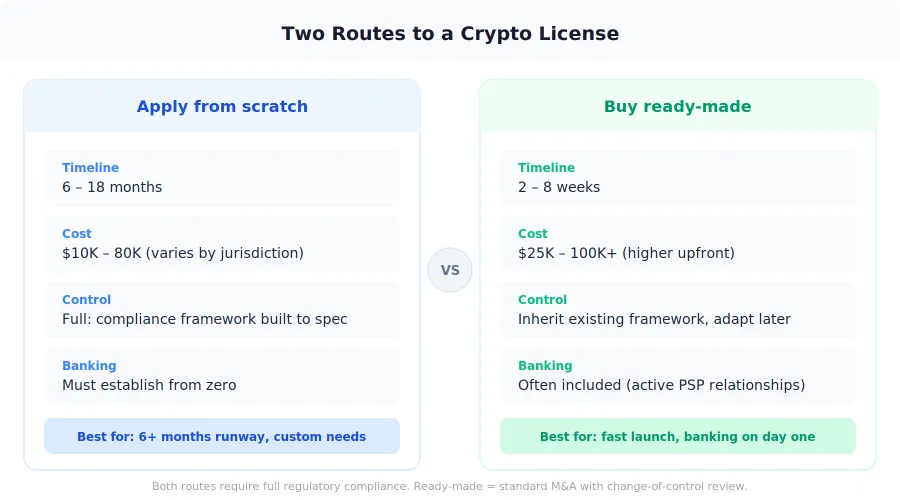
Apply from scratch if you have six months or more before launch, want the compliance framework built to your exact specifications, or target a jurisdiction with few ready-made options available (Switzerland, for instance, rarely has turnkey entities on the market). You control every detail of the setup, from AML policies to operational structure. The trade-off is time: six months is realistic, twelve is common, eighteen happens.
Acquire a ready-made entity if your timeline is under three months, you need active banking or PSP relationships from day one, or you're entering a jurisdiction where the application backlog is long. The EU under MiCA is the obvious example: regulators across multiple member states are overwhelmed with CASP applications, and wait times are stretching well beyond published estimates. You pay more upfront, but you skip the queue and start operating immediately.
The hybrid approach works well in practice: acquire a ready-made entity to start generating revenue now, then apply from scratch in your next target market while the first entity is already live. This way you're not choosing between speed and control. You get both, sequenced.
Whichever route you take, pick the jurisdiction based on where your customers are, not where licensing is cheapest. A Canadian MSB won't help if your users are in Germany. And budget for compliance as an ongoing cost. AML programs, transaction monitoring, regulatory reporting: none of it stops after the license is granted.
Equilex: fintech licensing across 15+ jurisdictions, fresh applications and M&A of licensed entities. equilex.co
