
 BTC
BTC
 ETH
ETH
 LTC
LTC
 BCH
BCH
 DOGE
DOGE
 USDT
USDT
 DASH
DASH
 USDC
USDC
 XRP
XRP
 XMR
XMR
 TRX
TRX
 BNB
BNB
 SHIB
SHIB
 DAI
DAI
 SOL
SOL
 ZEC
ZEC
 ETC
ETC
 POL
POL
 XLM
XLM
 ADA
ADA

The cryptocurrency market operates continuously, creating challenges for manual traders. Platforms leveraging crypto ai trading bot technology deploy artificial intelligence systems that analyze market data and execute trades automatically. Traditional approaches demand constant attention and emotional discipline that few individuals can sustain. This shift toward automated intelligence transforms how investors manage digital assets.
Modern AI eliminates emotional responses like fear-driven selling. The technology processes price movements, volumes, and sentiment indicators faster than human analysis. Systems replace subjective judgment with objective decisions based on comprehensive data evaluation. Investors gain access to institutional-grade capabilities previously unavailable to individual traders.
Understanding AI-Powered Automation in Cryptocurrency Trading
AI trading bots represent specialized software that leverages machine learning algorithms to automate cryptocurrency transactions. Unlike basic scripts following rigid rules, modern AI adapts to changing conditions. These platforms connect to exchanges through secure API integrations. They monitor multiple trading pairs simultaneously while executing strategies. Machine learning enables continuous improvement through pattern recognition.
Automated systems function without breaks or fatigue. They capture opportunities during overnight sessions when traders sleep. Algorithms execute strategies consistently without psychological biases. Processing capacity allows simultaneous analysis of technical indicators, volume patterns, and order book depth. Speed advantages prove crucial in volatile markets where milliseconds matter.

Algorithmic trading uses pre-programmed instructions based on timing, price, and volume variables. It executes trades at speeds beyond human capabilities. Research shows automated trading accounts for substantial market volume portions. The technology democratizes access to sophisticated approaches previously limited to institutions. Individual investors now compete effectively with professional traders.
Key advantages include:
- Continuous operation monitoring markets during all sessions without downtime
- Emotion elimination through consistent strategy execution regardless of volatility
- Superior processing of complex data streams and pattern recognition
- Adaptive optimization adjusting parameters based on performance metrics
- Risk consistency maintaining predetermined exposure levels across conditions
These benefits explain why automated systems gained widespread adoption. Traders leverage AI to maintain discipline while maximizing market participation opportunities. The technology removes human limitations from trading execution processes.
Core Trading Strategies Employed by AI Systems
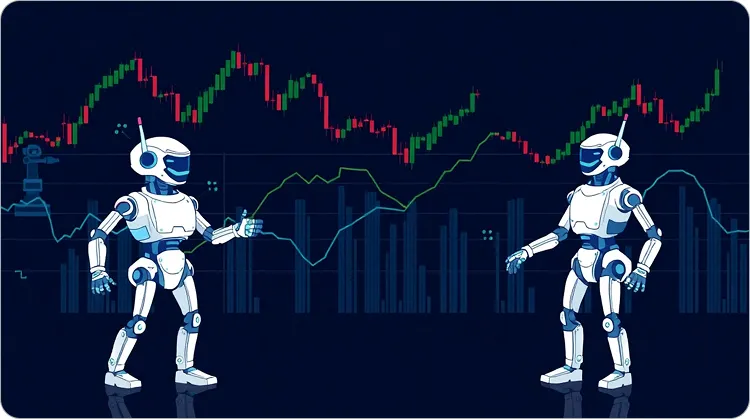
AI platforms offer multiple strategy frameworks for different market environments. Grid trading places orders at regular price intervals. It profits from natural oscillation in sideways markets with defined ranges. Dollar-cost averaging accumulates positions gradually through repeated purchases. This reduces short-term volatility impact on entry cost while building exposure systematically.
Long-only strategies focus on assets showing upward momentum. They hold positions in strong cryptocurrencies while avoiding shorts. Market-neutral systems deploy multiple sub-strategies simultaneously. These generate returns independent of overall direction. They combine hedge mechanisms performing across various conditions. Portfolio diversification across strategies reduces overall risk exposure.
Primary strategy categories:
- Grid trading captures profits from price oscillations within defined ranges
- Dollar-cost averaging builds exposure systematically while reducing volatility impact
- Long-only approaches capitalize on sustained upward trends in bull markets
- Market-neutral frameworks generate returns independent of market direction
Successful automation requires matching strategies to market characteristics. Volatile periods favor grid approaches capturing repeated oscillations. Trending markets reward long-only systems maintaining exposure to appreciating assets. Choppy conditions perform better with market-neutral frameworks reducing directional risk. Strategy selection significantly impacts performance outcomes.
Essential Considerations for Automated Trading Implementation
Implementing AI systems requires attention to technical infrastructure and security protocols. Platforms connect to exchanges through Application Programming Interfaces. These enable software to access account data and execute trades automatically. Proper configuration protects capital while enabling automated functionality. Technical setup determines system reliability and performance.
Multi-exchange compatibility expands opportunity access but requires managing multiple connections securely. Leading platforms support Binance, Coinbase, KuCoin, and Crypto.com simultaneously. According to market data from Statista, global cryptocurrency revenue reaches $85.7 billion in 2025 as institutional and retail adoption accelerates. Market growth creates expanding opportunities for automated trading systems.
Critical security practices:
- Permission limitation configuring API keys with trading-only access
- IP restriction limiting API access to specific network addresses
- Regular rotation updating API keys periodically after support interactions
- Multi-factor authentication enabling additional verification layers on accounts
- Separate allocation maintaining only intended trading capital in connected accounts
Exchange selection impacts available trading pairs, fee structures, and compliance requirements. Investors should verify platform support for preferred exchanges before committing to solutions. Security configuration remains paramount for protecting trading capital from unauthorized access. Proper implementation prevents common vulnerabilities.
Risk Factors and Performance Expectations
Realistic expectations about performance and limitations remain essential for success. Cryptocurrency markets exhibit extreme volatility compared to traditional assets. This creates both opportunities and risks affecting automated system performance. No approach guarantees profits across all market conditions. Understanding limitations prevents unrealistic expectations.
Strategy performance varies significantly across different market conditions. Systems effective during trending periods may struggle in choppy markets. Technology dependencies pose risks as platforms rely on exchange APIs and internet connectivity. Market regime changes may reduce effectiveness of strategies optimized for previous conditions. Continuous monitoring remains necessary despite automation benefits.
Key risk management considerations:
- Performance variability requiring strategy adjustments across market conditions
- Technical dependencies on infrastructure stability and exchange uptime
- Market regime changes reducing effectiveness of optimized strategies
- Regulatory uncertainty potentially impacting platform operations
- Capital preservation necessitating conservative positioning and diversification
Research emphasizes continuous strategy evaluation and adaptation over time. Markets evolve as participants adjust behavior and new technologies emerge. Investors should assess system performance against current conditions rather than relying solely on historical backtests. Regular review ensures strategies remain effective.
Conclusion
AI-powered trading automation represents significant advancement in cryptocurrency portfolio management capabilities. The technology eliminates emotional decision-making while operating continuously without human limitations. Systems process complex data at scale, providing practical solutions for managing digital asset exposure. Automation democratizes access to sophisticated trading approaches.
Success depends on appropriate strategy selection, proper risk configuration, and ongoing oversight. The technology excels at executing predefined approaches consistently without emotional interference. However, strategic decisions about market exposure and risk tolerance remain investor responsibilities. Automated trading serves as a powerful tool for disciplined portfolio management rather than a guaranteed profit mechanism.