
 BTC
BTC
 ETH
ETH
 LTC
LTC
 BCH
BCH
 DOGE
DOGE
 USDT
USDT
 DASH
DASH
 XRP
XRP
 USDC
USDC
 XMR
XMR
 TRX
TRX
 BNB
BNB
 SHIB
SHIB
 DAI
DAI
 ZEC
ZEC
 SOL
SOL
 ETC
ETC
 POL
POL
 XLM
XLM
 ADA
ADA
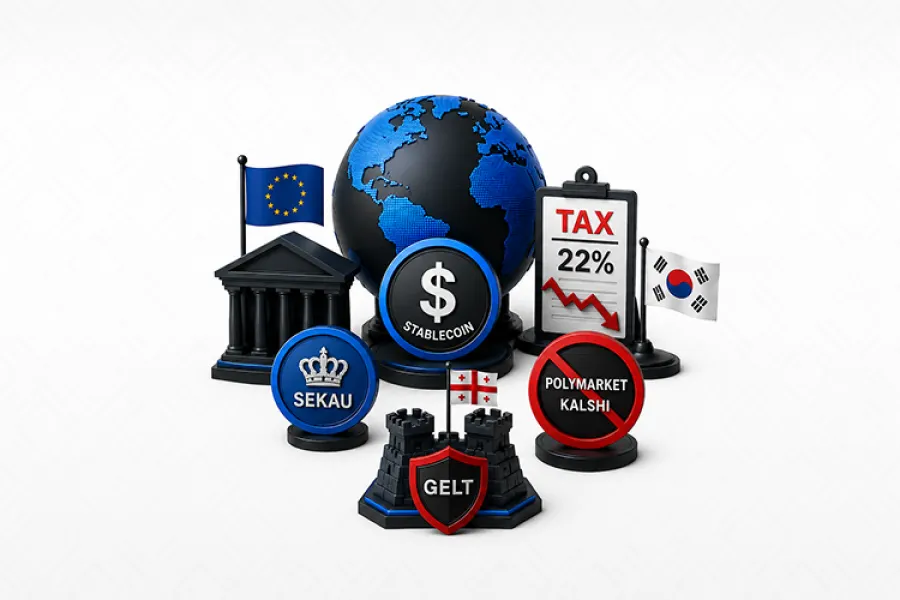
The global crypto market continues splitting into two very different directions.
Some countries are becoming increasingly open to stablecoins, blockchain infrastructure, and crypto finance. Others are tightening restrictions and trying to keep tighter control over digital assets as adoption accelerates.
But regardless of the approach, one thing is becoming impossible to ignore: governments are no longer treating crypto as a temporary trend.
This week alone brought new developments from Europe, South Korea, India, and Georgia — each showing how differently countries are preparing for the next phase of digital finance.
We continue seeing this shift reflected in real-world crypto payments and merchant adoption. Stablecoins, in particular, are rapidly evolving from trading tools into national financial infrastructure.
Europe pushes for alternatives to dollar stablecoins
German company AllUnity is preparing to launch SEKAU, a stablecoin backed by the Swedish krona, with a planned debut in June.
The project is backed by major players including DWS and Galaxy.
The timing is important.
Europe has become increasingly aware of how heavily the stablecoin market is dominated by US dollar-backed assets like USDT and USDC. Projects like SEKAU reflect a growing effort to create regulated European alternatives tied to local currencies rather than relying entirely on digital dollars.
If this trend continues, the stablecoin economy could gradually become more regionalized — with countries and economic blocs promoting their own digital fiat ecosystems.
South Korea may cancel its planned crypto tax
South Korea is once again reconsidering how aggressively it wants to tax the crypto industry.
Lawmakers are now reviewing a proposal to cancel the planned 22% cryptocurrency tax that was expected to take effect in 2027. The discussion was triggered by a national petition that collected the required 50,000 signatures in just eight days.
The argument from petition supporters is straightforward: the government previously removed income taxes on traditional financial investments like stocks and bonds, making heavy crypto taxation appear inconsistent and unfair.
This reflects a broader global issue regulators are now facing.
Crypto users are no longer a small niche community. In many countries, they represent a politically active and economically significant group that governments increasingly need to consider carefully.
India moves against prediction markets
While some countries soften their approach, India is moving in the opposite direction.
The country’s Ministry of Electronics and Information Technology reportedly ordered the blocking of prediction market platform Polymarket, with similar action against Kalshi expected soon.
Indian authorities classify prediction markets as online gambling under the country’s 2025 online gaming regulations, effectively placing them into a prohibited category.
The situation highlights how fragmented global crypto regulation still remains.
A platform considered financial innovation in one jurisdiction can easily be classified as illegal gambling in another.
Georgia and Tether are discussing a national stablecoin
Another major stablecoin initiative may soon emerge from Eastern Europe.
Tether and the government of Georgia are reportedly planning the launch of a state-backed stablecoin called GELT.
If implemented, the project would become another example of governments working directly with private crypto companies to build blockchain-based financial infrastructure.
This trend is accelerating globally:
- governments want more control over digital finance
- stablecoin issuers want regulatory legitimacy
- and both sides increasingly see cooperation as more practical than confrontation
Stablecoins are becoming geopolitical
What makes all these developments interesting is that stablecoins are no longer just about crypto markets.
They are increasingly becoming:
- financial infrastructure
- monetary policy tools
- geopolitical instruments
- strategic economic assets
Some governments want to attract blockchain innovation. Others want to restrict it. But nearly every major economy is now being forced to define a position.
And as the global stablecoin market continues growing, the competition between national digital currency ecosystems may become one of the defining financial stories of the next decade.
