
 BTC
BTC
 ETH
ETH
 LTC
LTC
 BCH
BCH
 DOGE
DOGE
 USDT
USDT
 DASH
DASH
 XRP
XRP
 USDC
USDC
 XMR
XMR
 BNB
BNB
 TRX
TRX
 SHIB
SHIB
 DAI
DAI
 ZEC
ZEC
 SOL
SOL
 ETC
ETC
 POL
POL
 XLM
XLM
 ADA
ADA
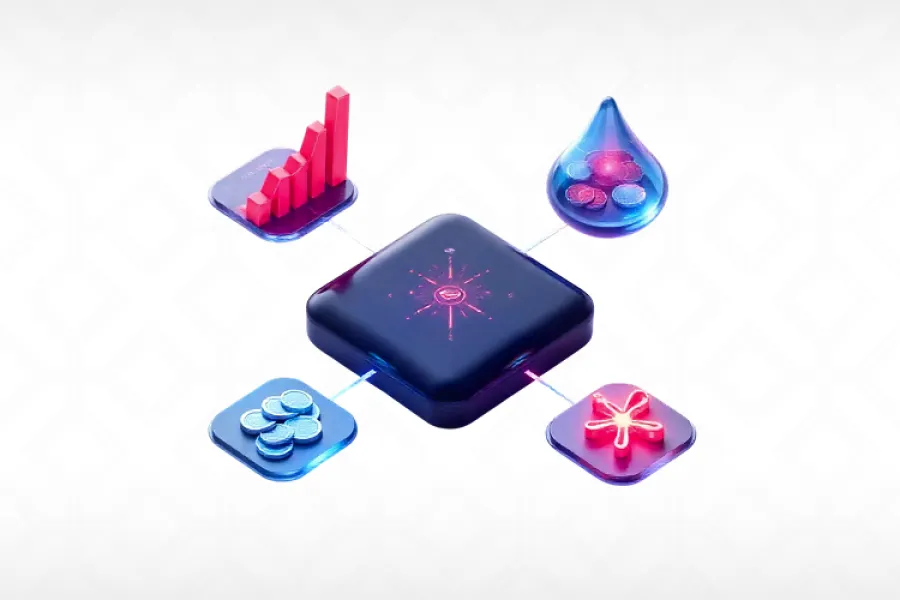
DeFi on Hedera is best understood as a set of practical tools rather than a trend label. Users can swap tokens, add assets to liquidity pools, and interact with smart-contract features directly from a connected wallet. That structure is possible because Hedera supports Solidity smart contracts through its Smart Contract Service while also allowing contracts to work with native token functionality through the Hedera Token Service.

Within the Hedera DeFi ecosystem, tools like swapping and liquidity provision become easier to grasp when viewed through a live example. And SaucerSwap, for instance, clearly shows how a Hedera-based DEX can combine trading, liquidity, farming, and staking in one on-chain workflow.
How DeFi Tools Work on Hedera
At the infrastructure level, Hedera gives developers two building blocks that matter for DeFi. First, its Smart Contract Service runs Solidity contracts using the EVM component of Besu. Second, the network exposes system smart contracts that let applications access Hedera-native functions from within smart contracts. As a result, DeFi interfaces on Hedera can offer familiar contract-based interactions while still relying on native token operations where appropriate.
That design helps explain why HBAR decentralized applications are not limited to simple transfers. They can support asset exchange, liquidity management, staking flows, and other wallet-based actions without requiring users to leave the network’s native environment. In practice, this makes DeFi on Hedera feel less like a disconnected set of features and more like a continuous user journey.
The Main DeFi Actions Users Encounter
Most users exploring Hedera DEX platforms will run into the same core activities first. Each one serves a different purpose, yet they are closely connected.
- Hedera token swaps let users exchange one supported token for another directly from a wallet
- Liquidity provision allows users to deposit paired assets into pools that facilitate trades
- Farming can add rewards to eligible asset-pair positions, depending on how a protocol structures incentives
- Staking usually gives users another way to participate without making a trade every time.
Trading through Liquidity Pools
On a DEX, trades are executed against pooled assets rather than through a traditional order book. That means the availability of swaps depends on deposited assets being present in the relevant pool. For that reason, crypto liquidity providers are a functional part of the trading process, not a side feature. Their deposits help keep swaps available for other users while creating the basis for fee generation and, in some cases, additional incentives.
Liquidity, Farming, and Staking in Context
The terms often overlap in casual discussion, so it helps to separate them clearly:
Tool What it involves Why it matters
Token swaps Exchanging one token for another Gives users direct market access through a wallet
Liquidity provision Depositing paired assets into a pool Supports pool-based trading activity
Farming Using eligible LP positions in reward programs Can create additional DeFi yield opportunities
Staking Locking or depositing a token in a staking mechanism Offers participation beyond active trading
What Users Should Evaluate before Interacting with DeFi Tools
Because DeFi tools are composable, one action can expose a user to several layers of decision-making at once. A swap may be simple, but a liquidity position introduces pool mechanics, and farming adds another contract-based layer on top. Accordingly, it is worth checking the setup before approving any transaction.
- Confirm that the token and wallet setup are supported for the intended action
- Distinguish between swapping, providing liquidity, farming, and staking, since they do not behave the same way
- Keep enough HBAR in the wallet to cover network fees for the transactions involved
- Review how the protocol describes liquidity positions, rewards, and unstaking or withdrawal steps.
Where New Opportunities May Emerge
The interesting part of the Hedera DeFi ecosystem is not simply that these tools exist, but that they can connect smoothly through shared wallet-based access and smart-contract logic. Hedera’s combination of Solidity support and native token services gives builders room to create applications that go beyond single-purpose transfers. Consequently, users exploring HBAR decentralized applications are increasingly evaluating how trading, liquidity, and staking fit together as part of one broader on-chain experience.
Seen this way, Hedera DEX platforms are less about speculation alone and more about access to infrastructure. Trading is one entry point, liquidity is another, and reward mechanisms may extend that participation when they align with a user’s goals and risk tolerance. Framed carefully, that is where the real DeFi yield opportunities on Hedera begin: not in hype, but in understanding how each tool works and when it is actually useful.
