
 English
 Français
 BTC
BTC
 ETH
ETH
 LTC
LTC
 BCH
BCH
 DOGE
DOGE
 USDT
USDT
 DASH
DASH
 USDC
USDC
 XRP
XRP
 XMR
XMR
 TRX
TRX
 BNB
BNB
 SHIB
SHIB
 SOL
SOL
 DAI
DAI
 ZEC
ZEC
 ETC
ETC
 POL
POL
 ADA
ADA
 XLM
XLM
A bitcoin casino balance can look deceptively simple: a player deposits BTC, plays, wins or loses, and eventually withdraws. The complication is that the BTC itself has a market price that keeps moving.
That creates two separate calculations. The first is what happened inside the game. The second is what happened to Bitcoin's value while the BTC was sitting in the account. That distinction matters more than it first appears.
A player could hold exactly 0.01 BTC throughout a session while its dollar value changes significantly. The casino did not remove the difference, and the player did not necessarily win or lose it through gameplay. The underlying asset simply changed market value.
This is the part of using a bitcoin casino that is often overlooked: BTC quantity and fiat value are not the same thing.
The Bitcoin Balance Problem Players Often Miss
Consider a straightforward example.
| BTC Balance | BTC Price | Approx. Fiat Value |
|---|---|---|
| 0.01 BTC | $80,000 | $800 |
| 0.01 BTC | $77,000 | $770 |
| 0.01 BTC | $75,000 | $750 |
The player still owns 0.01 BTC in each scenario. Nothing about the casino balance necessarily changed. What changed was the market price used to calculate its fiat equivalent. This produces two independent layers of value:
- Gaming result: whether the player won, lost, or received a payout.
- Cryptocurrency value: what the BTC balance is worth in USD, INR, BDT or another reference currency.
A bitcoin casino therefore introduces an additional variable that does not exist in the same way when a player uses a fixed-value fiat balance.
The useful mental model
Think of the balance as:
BTC quantity × BTC market price = fiat-equivalent value
That formula is more useful than simply watching whether the BTC number in the account has increased.
What the August–September Bitcoin Move Shows
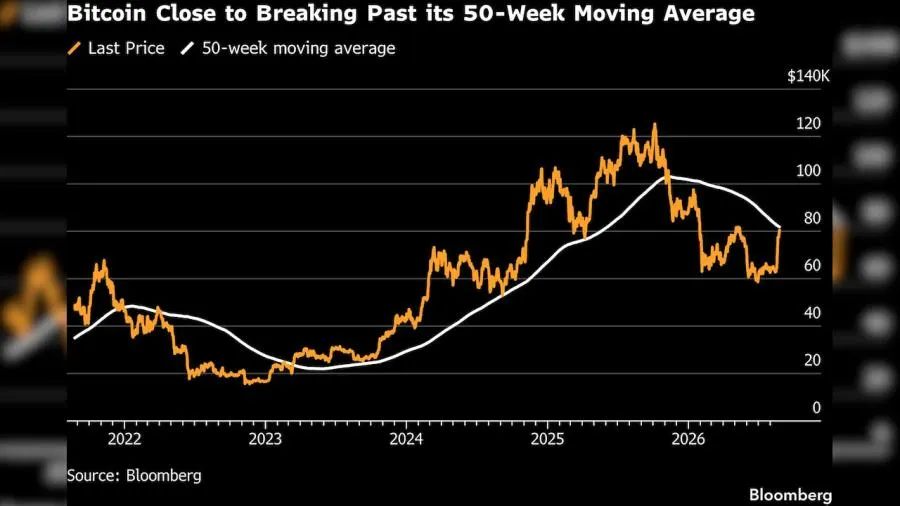
The recent Bitcoin market provides a practical example of why this distinction matters. Bitcoin had a particularly strong August. Historical price data shows BTC reached an August high above $81,000 and closed the month around $78,558, with the month gaining roughly 25%.
But the market did not simply continue upward into September. By September 2, Bitcoin was trading around the $77,000 area, with intraday data showing prices moving through the mid-to-upper $76,000s and $77,000s. So the important story is not that Bitcoin simply “crashed.”
A more accurate description is:
Bitcoin entered September after a powerful August rally and then experienced a pullback as markets reassessed interest rates, inflation and geopolitical risk.
That distinction is important for anyone holding BTC in a bitcoin casino account because the same number of coins can represent a different fiat-equivalent value from one day to the next.
The August-to-September snapshot
| Market point | Approximate BTC level | What it demonstrates |
|---|---|---|
| August 28 intraday high | $81,000+ | BTC reached a much higher valuation during the rally |
| August 31 close | ~$78,558 | August ended near the high-$70Ks |
| September 1 close | ~$77,404 | The pullback continued |
| September 2 trading | ~$77,000–$77,500 | Volatility remained significant |
The precise figure can differ slightly between exchanges and price indexes, which is another reason users should treat fiat conversions as snapshots rather than permanent values.
Why Bitcoin Is Moving So Much
Price volatility is not caused by one variable. The current market is a combination of macroeconomic expectations, geopolitical developments and crypto-specific positioning.
1. Interest-rate expectations
Higher interest-rate expectations can put pressure on assets that investors consider risk-sensitive.
At the beginning of September, U.S. Treasury yields moved sharply higher. Reuters reported the U.S. 10-year Treasury yield reaching approximately 4.812% on September 2, while markets were pricing a materially higher probability of a September Federal Reserve rate increase.
That matters because Bitcoin does not trade in isolation from global liquidity. When yields rise, investors reassess the relative attractiveness of riskier assets. Bitcoin can therefore react to the same macroeconomic information affecting equities, currencies and other markets.
2. Geopolitical pressure
The September 2 market environment was also affected by renewed U.S. and Iran hostilities. Reuters reported that the escalation pushed oil prices higher, with Brent crude moving above $95 per barrel, while rising energy prices renewed concerns about inflation. That creates a chain reaction:
Geopolitical tension → higher energy prices → inflation concerns → higher yield expectations → tighter financial conditions
Bitcoin can be caught somewhere in that chain. For a bitcoin casino user, the lesson is not to predict which direction BTC will move. It is to understand that the value of a BTC balance can change for reasons completely unrelated to the outcome of a casino game.
3. Institutional market structure
Bitcoin is also increasingly connected to conventional financial markets. Spot ETFs, futures, options, leverage and institutional positioning have created additional channels through which capital can enter or leave the market. That makes Bitcoin's price increasingly sensitive to:
- ETF flows
- Treasury yields
- Dollar strength
- Interest-rate expectations
- Derivatives positioning
- Liquidations
- Macroeconomic data
- Geopolitical events
This is why treating BTC as simply a payment token can lead to an incomplete understanding of what is happening to a bitcoin casino balance.
Why This Matters at a Bitcoin Casino
Now consider the same market movement from a player's perspective. Suppose Player A deposits:
0.01 BTC at $81,455
The approximate fiat value at the time is:
0.01 × $81,455 = $814.55
If BTC later trades around $77,000, the same balance becomes:
0.01 × $77,000 = $770
The player has not necessarily lost $44.55 through casino gameplay.
The player still has:
0.01 BTC
The difference is entirely attributable to the market value of Bitcoin. This is one of the most important distinctions when evaluating a bitcoin casino: a casino transaction and a cryptocurrency market movement are separate events.
Four numbers worth tracking
When dealing with BTC balances, separate:
- BTC amount
- BTC market price
- Fiat-equivalent value
- Actual casino result
Keeping these four numbers separate prevents a surprisingly common accounting mistake.
A Win Can Still Lose Fiat Value Later
The same principle applies to winnings.
Imagine a player receives:
0.005 BTC
At a BTC price of $81,455:
0.005 BTC ≈ $407.28
If Bitcoin later trades at $77,000:
0.005 BTC ≈ $385
The player still owns exactly 0.005 BTC. But the approximate dollar value has changed by more than $22. This does not mean the original casino payout was wrong. It means the payout was denominated in an asset whose market price continued changing after the game ended.
That is a subtle but important difference. A bitcoin casino payout does not automatically lock the fiat value of that payout at the moment the player wins.
Casino Risk and Bitcoin Risk Are Different
This is where the subject becomes more useful than simply saying “Bitcoin is volatile.” There are actually two separate risk systems.
Casino or game outcome
The result of the game can depend on:
- Bet amount
- Game rules
- Random outcome
- Payout structure
- RTP
- Bonus or feature conditions
- Whether the wager wins or loses
Bitcoin market movement
The value of the resulting BTC balance can be affected by:
- BTC market price
- Market liquidity
- Investor sentiment
- Interest-rate expectations
- ETF activity
- Dollar strength
- Geopolitical developments
- Futures and options positioning
- Leverage and liquidations
These mechanisms can move in opposite directions. A player can win BTC while the fiat value of that BTC subsequently falls.
The reverse is also possible: a player can lose some BTC through gameplay while the remaining BTC becomes more valuable in fiat terms. Those are not contradictory outcomes. They are two different calculations.
Deposits and Withdrawals Need a Different Way of Thinking

A practical way to manage a BTC balance is to record the transaction rather than relying only on the number shown in the account. For every significant transaction, record:
BTC amount → BTC price → fiat equivalent → fees → final BTC received
This creates a much clearer record of what actually happened.
Before depositing
Check:
- The exact BTC amount being sent
- The displayed fiat equivalent
- The supported Bitcoin network
- Network fees
- Minimum deposit requirements
- Whether the platform displays BTC, fiat or both
Before withdrawing
Check:
- The exact BTC withdrawal amount
- Any platform withdrawal fee
- Network fees
- Minimum withdrawal amount
- Expected processing time
- The final amount that should reach the external wallet
- The transaction ID after submission
A bitcoin casino balance should never be treated as though its BTC amount has a permanently fixed cash value.
The Transaction Has More Than One Value
One useful way to think about a crypto transaction is that it has at least three timestamps:
1. The game timestamp
This tells you when the wager or payout occurred.
2. The blockchain timestamp
This tells you when the cryptocurrency transaction was processed or confirmed.
3. The market-price timestamp
This tells you what BTC was worth when the transaction was valued in fiat terms. Those timestamps do not necessarily produce the same number. That is a useful distinction when reviewing deposits, withdrawals or large BTC-denominated wins at a bitcoin casino.
Why “Bitcoin Went Up” Doesn't Automatically Mean the Balance Went Up
Suppose a player starts with:
0.01 BTC
Bitcoin's price rises by 10%. That does not automatically mean the player's BTC balance increased by 10%. If the player still owns 0.01 BTC, the quantity is unchanged. Its fiat-equivalent value has increased.
But if the player simultaneously:
- loses 0.002 BTC through gameplay,
- withdraws 0.003 BTC, or
- pays fees,
then the BTC quantity can decrease even while Bitcoin's market price rises.
This is why the equation matters:
BTC quantity × BTC market price = fiat-equivalent value
A bitcoin casino balance can therefore change in two dimensions: the number of coins can move, and the value of each coin can move.
A Simple Scenario That Shows the Difference
Consider three hypothetical players.
| Player | BTC Quantity | BTC Price | Approx. Fiat Value |
|---|---|---|---|
| A | 0.010 BTC | $81,000 | $810 |
| B | 0.008 BTC | $90,000 | $720 |
| C | 0.012 BTC | $65,000 | $780 |
Player C has the largest BTC balance.
Player A has the highest fiat-equivalent value.
Player B has fewer coins than both but still holds more fiat value than C.
This is why looking only at the BTC number can be misleading. The same principle applies when comparing different platforms in the wider crypto casino market.
What Players Should Check Before Using a Bitcoin Casino
The quality of a platform is not determined only by whether it accepts Bitcoin. A more useful review looks at the entire transaction process.
Bitcoin payment checklist
- Does the platform clearly display BTC balances?
- Are deposits and withdrawals denominated in BTC?
- Is the supported Bitcoin network identified?
- Are network fees explained?
- Are withdrawal fees disclosed?
- Is there a minimum withdrawal?
- Are transaction limits published?
- Can users access their transaction history?
- Are blockchain transaction IDs available?
- Are account verification requirements clearly explained?
- Are game rules published?
- Are payout conditions easy to understand?
These details become particularly important when cryptocurrency prices are moving quickly.
Where Platform Evaluation Fits In
The payment method should be part of the platform review rather than an afterthought. For example, someone comparing a crypto casino should look beyond the number of games or promotional offers and examine how the platform handles deposits, balances, withdrawals and transaction information.
That is also where a platform such as Onrake can be considered as part of a broader comparison: the relevant question is not simply whether a service uses cryptocurrency, but how clearly its payment rules, supported assets and withdrawal conditions are presented. The same principle applies across the wider crypto-gaming market.
What the August–September Move Actually Teaches Players
The most useful lesson from the recent Bitcoin move is not “Bitcoin is risky.” That is too broad to be useful. The better lesson is: A cryptocurrency balance has both a quantity and a market value.
During August 2026, Bitcoin climbed roughly 25% for the month, reaching above $81,000 before pulling back toward the high-$70,000s as September began.
On September 2, the market was also dealing with rising Treasury yields, renewed Middle East tensions and increased expectations of a Federal Reserve rate hike.
For someone holding BTC at a bitcoin casino, those developments can change the fiat-equivalent value of the balance even when the player has not placed another wager. That is the key distinction.
A Better Way to Think About a Bitcoin Casino Balance
Instead of asking only:
“How much BTC do I have?”
ask four questions:
- How much BTC do I have?
- What is BTC worth right now?
- What was BTC worth when I deposited or won it?
- How much BTC will actually arrive when I withdraw?
That framework separates the casino activity from the cryptocurrency exposure. It also makes it easier to identify where a change in value actually came from.
The full value chain
Game result → BTC balance → BTC market price → fiat-equivalent value → withdrawal amount
Each stage can produce a different number. That is the real issue players need to understand before treating a BTC-denominated balance as though it were equivalent to a fixed fiat balance.
Understanding the Real Value of a Bitcoin Casino Balance
A bitcoin casino does not only involve the risk and reward of the game itself. It also involves holding an asset whose market value changes independently of the game. The August-to-September 2026 Bitcoin move makes that visible in real numbers.
A balance of 0.01 BTC remains 0.01 BTC whether Bitcoin trades at $81,000 or $77,000. What changes is the amount of fiat that balance represents. For players, the practical solution is simple: track the BTC amount separately from its market value, record transaction prices and fees, and read the deposit and withdrawal rules before assuming a cryptocurrency balance has a fixed cash value.
That distinction turns a vague idea about “crypto volatility” into something much more practical: knowing exactly which part of your balance changed, and why.