
 BTC
BTC
 ETH
ETH
 LTC
LTC
 BCH
BCH
 DOGE
DOGE
 USDT
USDT
 DASH
DASH
 XRP
XRP
 USDC
USDC
 XMR
XMR
 BNB
BNB
 TRX
TRX
 SHIB
SHIB
 DAI
DAI
 ZEC
ZEC
 SOL
SOL
 ETC
ETC
 POL
POL
 XLM
XLM
 ADA
ADA
With the emergence of blockchain technology, transformative digital changes have come, with Non-Fungible Tokens (NFTs) and digital assets at the helm. This revolution is underpinned by token standards — the rules and frameworks that facilitate interoperability, scalability, and security within the blockchain ecosystem. This playbook is essential to understanding how NFTs and digital assets achieved massive popularity and utility. In this article, we explore what token standards are, why they matter, and how they might shape the future of digital assets.
What Are Token Standards?
Token standards are reusable sets of rules to define how a token interacts on a blockchain. They also determine the overall utility of the token - how it is created, transferred, and interacted with. Token standards provide a degree of consistency that makes these assets readily integrated with wallets, marketplaces, and dApps.
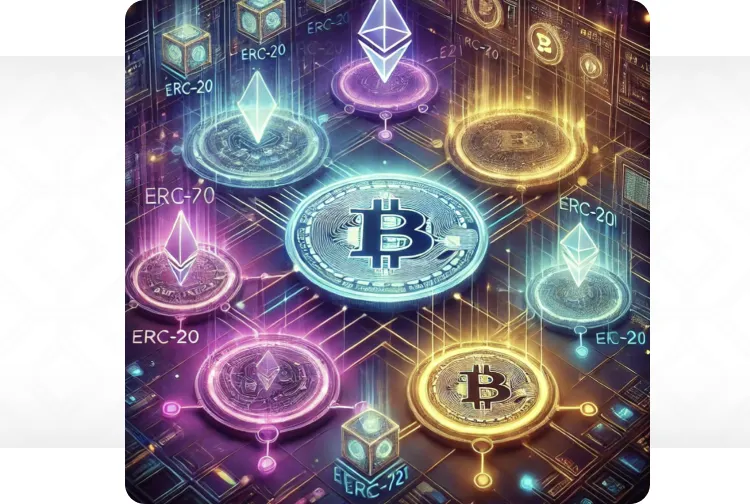
In the NFT and digital asset space, token standards form a shared vernacular upon which developers, creators, and users depend to build, trade, and dream. Without such standards, the ecosystem would balkanize and interoperability between platforms and blockchains would be virtually impossible.
Important Token Standards for NFTs and Digital Assets
Over the years, various token standards have developed, each serving its use cases. Some of the most powerful include the following:
ERC-20
The ERC-20 standard is a paving stone for fungible tokens on the Ethereum blockchain. Although not focused on NFTs specifically, it set the stage for the concept of tokenizing digital assets by providing a standard for the creation and management of easily interchangeable assets, such as cryptocurrencies.
ERC-721
It was the first token standard developed specifically for non-fungible tokens. ERC-721 tokens are unique indivisible and verifiable on the blockchain, which makes them perfect for digital art and collectibles or other unique assets.
ERC-1155
Multi-Token Standard ERC-1155 introduced a multi-token standard where fungible and non-fungible tokens could coexist in a single smart contract. It also scaled down the gas fees and proved to be maximally efficient, especially for gaming and virtual world purposes.
BEP-721 and BEP-1155
Like their Ethereum counterparts, these Binance Smart Chain standards enable the creation and trading of NFTs on a cheaper blockchain. Due to lower transaction fees and quicker processing times, they have gained momentum.
Solana SPL Tokens
NFTs and digital assets on a high-performance blockchain are encoded with Solana’s SPL token standard. It offers low latency with high throughput, making it a desirable choice for developers.
Token Standards: The Driving Factor That Fueled The Rise Of NFTs
The meteoric rise of NFTs is due in large part to token standards. Here’s how they’ve made a difference:
Interoperability
Token standards enable interoperability, allowing NFTs to be transferred and used across different platforms and wallets easily. An ERC-721 NFT minted on Ethereum is compatible with multiple marketplaces and can be traded anywhere without any compatibility problems.
Trust and Security
Token standards reduce the opportunity for fraud by following best practices. They allow users to easily verify the legitimacy and ownership of digital assets.
Innovation
Token standards such as ERC-1155 have driven innovation by allowing developers to easily build sophisticated applications. For example, gaming ecosystems can now implement NFTs for their in-game items and assets.
Ecosystem Growth
The uniformity afforded by token standards has led developers to create ecosystem infrastructure such as marketplaces, wallets, and dApps. This growth of the ecosystem attracts more users and creators, in turn.
Token Standards and Non-NFT Digital Assets
While NFTs tend to grab the headlines, it’s token standards that push the bigger digital asset market. Here’s how:
DeFi Integration
The existence of token standards makes it easy for digital assets to be integrated into DeFi protocols. For example, ERC-20 fungible tokens can be staked, borrowed, or used as collateral.
Tokenized Real-World Assets
From real estate to commodities to intangible assets such as intellectual property, tokenization is opening doors for fractional ownership and liquidity that previously had no chance. Token standards help to allow these assets to be managed securely and efficiently on the blockchain.
Cross-Chain Interoperability
New token standards are being designed around cross-chain interoperability, allowing assets to move seamlessly between networks. Such evolution is critical in creating a genuine decentralized and interconnected ecosystem.
Challenges and Future Directions
Furthermore, although token standards have been successful, the following challenges persist:
Scalability Issues
Transaction delays and high fees are two major hurdles that hamper blockchain adoption. These can only evolve as new token standards adapt to the growing scalability needs.
No Standardization Between Blockchains
Though ERC-721 and ERC-1155 are well-used within their specific chains, there is no common standard across the entire blockchain space. Cross-chain token standards show promise, for one.
Regulatory Uncertainty
Token standards need to evolve to meet regulation. Finding the right balance between decentralization and compliance will be the key challenge.
Enhanced Functionality
Future token standards will likely include more advanced features, such as dynamic NFTs that change over time, or even incorporate A.I. These innovations could create new use cases and make digital assets even more appealing.
Conclusion
From NFTs to other digital assets, token standards are the unsung heroes holding together the growth of the blockchain revolution: Through maintaining security and innovation, they have created an interoperable, thriving ecosystem as the evolution of the connection between crypto and gaming continues. Be Curious, Be Wise, Be There–the world of digital assets is knocking at your door!