
 BTC
BTC
 ETH
ETH
 LTC
LTC
 BCH
BCH
 DOGE
DOGE
 USDT
USDT
 DASH
DASH
 XRP
XRP
 USDC
USDC
 XMR
XMR
 BNB
BNB
 TRX
TRX
 SHIB
SHIB
 DAI
DAI
 ZEC
ZEC
 SOL
SOL
 ETC
ETC
 POL
POL
 XLM
XLM
 ADA
ADA
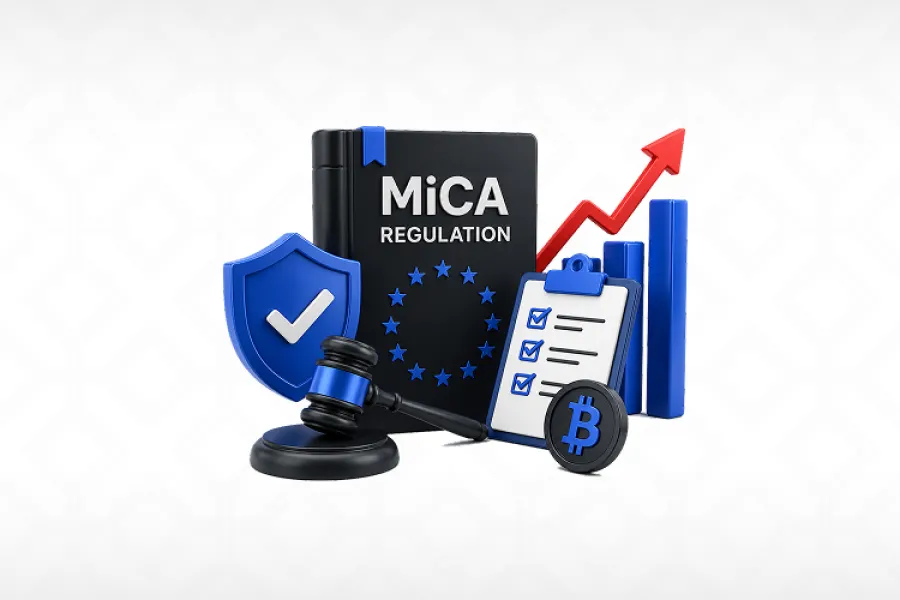
The European digital asset market is rapidly moving toward a more structured regulatory framework. With the introduction of MiCA (Markets in Crypto-Assets Regulation), the European Union is establishing unified rules for companies working with crypto assets, including exchanges, wallet providers, and other crypto services. For businesses, this means that launching or scaling a crypto project in the EU now requires more thorough legal and operational preparation.
As a result, many companies begin preparing in advance and seek professional support to get MiCa compliance before entering the European market. Specialists at Key2Law help crypto companies navigate MiCA requirements, assess regulatory risks, and structure their businesses to operate in line with EU crypto regulation.
What MiCA regulation means for the crypto industry
The MiCA regulation (Markets in Crypto-Assets Regulation) represents the European Union’s first comprehensive effort to establish unified rules for the crypto industry. Before its adoption, crypto regulation in Europe was fragmented: each country introduced its own requirements, creating legal uncertainty for businesses. MiCA aims to address this issue by building a clearer and more consistent regulatory environment for companies working with digital assets.
The regulation covers a wide range of market participants, including crypto exchanges, wallet providers, crypto trading platforms, and token issuers. Companies offering these services must obtain authorization from a regulator and comply with requirements related to risk management, client protection, and operational transparency.
For crypto companies, this marks a shift toward a more structured regulatory framework. Businesses must not only obtain the appropriate license but also implement compliance systems, internal controls, and risk management procedures. The Key2Law helps companies adapt their business models to MiCA requirements and prepare to operate within the new regulatory environment.
Which companies fall under MiCA requirements
The MiCA regulation applies to a wide range of participants in the crypto industry. The main category of companies covered by the framework is crypto-asset service providers (CASP). These include organizations that offer services related to the custody, trading, or management of users’ crypto assets.
Under MiCA, the regulation typically applies to companies that:
- Manage crypto assets on behalf of clients or provide custodial services
- Operate crypto exchanges or trading platforms
- Offer crypto-asset exchange services
- Execute transactions with crypto assets for users
Another category includes token issuers that create and distribute digital assets. For these projects, MiCA introduces requirements for information disclosure, whitepaper preparation, and transparent communication with investors.
Importantly, regulators focus on the actual role of the business, not the name of the service. Even technology platforms may fall under regulation if they participate in managing user assets or executing trading operations.
As part of preparing for the new rules, many crypto projects conduct a legal assessment of their business models. Specialists at Key2Law help companies determine whether their activities fall under MiCA and what legal steps are required to comply with European regulation.
Key requirements crypto companies must meet in 2026
By 2026, most of the provisions of MiCA regulation are already fully applicable to cryptocurrency companies operating in the EU market. This means that companies must not only obtain a license, but also implement a set of internal processes that comply with the requirements of European regulation.
Regulators assess not only the business model of a project, but also its operational readiness: management structure, risk management systems and customer protection.
Preparing for these requirements usually begins long before a license application is submitted. Key2Law advisors help cryptocurrency companies structure their business, prepare compliance processes and adapt their platforms to European regulatory requirements.
Common challenges businesses face under MiCA
Although MiCA establishes unified rules for the crypto industry in the EU, many companies face practical challenges when adapting to the new requirements. For many crypto projects, moving to a regulated operating model requires significant changes to internal processes and governance structures.
Misunderstanding the scope of regulation
One common issue is the incorrect assessment of whether a business falls under MiCA. Some companies view themselves as technology platforms or software providers, while regulators may classify their activities as the provision of crypto services.
Compliance readiness
Another challenge is building the necessary compliance infrastructure. Implementing AML and KYC procedures, transaction monitoring systems, and internal policies requires time and resources, especially for startups that previously operated with minimal regulatory oversight.
Operational and governance requirements
MiCA also strengthens requirements related to corporate governance and operational structure. Regulators evaluate the qualifications of management, the transparency of ownership structures, and the company’s ability to manage risks effectively.
For this reason, many crypto projects begin preparing for MiCA requirements long before applying for a license. Experts at Key2Law help companies identify potential regulatory risks, develop internal policies, and structure their businesses in line with European regulatory standards.
Conclusion
MiCA is becoming a central element of crypto regulation in Europe and is gradually establishing unified rules for companies working with digital assets. For crypto projects, this means preparing in advance for new requirements related to licensing, compliance, and corporate governance. Companies that begin adapting to MiCA early gain a significant advantage when entering the EU market and can scale their services more efficiently within the European jurisdiction.
Key2Law supports crypto companies and fintech projects entering the European market, helping them adapt to MiCA requirements and broader EU crypto regulation. The team advises on licensing, business structuring, compliance policies, and regulatory interaction. This approach enables crypto projects to build a solid legal framework and launch their products in the EU in full compliance with regulatory requirements.
