
 BTC
BTC
 ETH
ETH
 LTC
LTC
 BCH
BCH
 DOGE
DOGE
 USDT
USDT
 DASH
DASH
 XRP
XRP
 USDC
USDC
 XMR
XMR
 BNB
BNB
 TRX
TRX
 SHIB
SHIB
 DAI
DAI
 ZEC
ZEC
 SOL
SOL
 ETC
ETC
 POL
POL
 XLM
XLM
 ADA
ADA

As we approach 2026, now is a good moment to review and refresh your personal insurance, for life, health, and home. Changing costs, evolving risks, and new technologies all influence what kind of protection you need. Doing a quick check-up on your policies now can save you stress later, and make sure you, your family, and your home are properly covered.
Why 2026 Is a Key Moment to Review Your Insurance
Several forces are shaping the insurance landscape for 2026, so it’s smart to be proactive:
- Rising healthcare costs and inflation are putting pressure on premiums especially for health insurance. A recent global report forecasts many insurers will raise health insurance costs by over 10% in 2026.
- Premium growth forecasts across life and non-life insurance suggest more modest increases overall, but that doesn’t mean your premium won’t change.
- Industry shifts driven by technology, insurers are increasingly adopting AI, big data, and digital tools to underwrite risk, price policies, manage claims, and personalise cover.
- New risks and rising costs for home cover, inflation, rising rebuilding costs, climate-related risks, and increased demand for protection mean that home insurance needs may have changed.
Given all that, open-heart review of your policies, ideally before renewals kick in, is wise.
What to Check for 2026: Life Insurance
Life insurance remains a cornerstone of financial protection for many families.
- Is your cover amount still adequate? If you’ve had major life changes, a new child, marriage, mortgage, or increased debts, your insurer might have to update your sum assured or term.
- Has your health status changed? Any new conditions or lifestyle changes (smoking, exercise, occupation) may affect premiums or eligibility.
- Check policy terms: Some life policies have changed terms recently, influenced by global economic shifts and interest-rate dynamics that affect insurers’ portfolios.
- Consider value of investment-linked policies: With interest rates and investment markets fluctuating, if you hold a policy with savings or investment components, review the performance and whether the return projections are still realistic.
It’s also worth considering whether additional riders, e.g. critical illness cover, income protection, make sense, especially given increasing health-care costs.
Health Insurance: What to Know As Costs Rise
Health insurance is under particular pressure going into 2026:
- Costs are rising globally for insurers, which tends to flow through to premiums.
- Treatments are more expensive, chronic conditions more prevalent, and medical inflation remains high, all contributing to rising claims.
- Insurers may respond by adjusting plan designs, raising deductibles, changing benefit limits, or tightening underwriting criteria.
What you should check now:
- Review your existing plan’s benefits, excesses, co-pays, and what’s covered (hospitalisation, outpatient, specialist care, chronic conditions, mental health, etc.)
- Confirm whether your family’s needs have changed, maybe you now need cover for children, or you expect increased medical needs in the coming year
- Compare alternative plans, as 2026 approaches, competition may intensify and new plans (or revised ones) may offer better value.
- Assess whether the increase in premiums (if applied) still delivers comparable value, extra cost doesn’t always mean better cover.
Home Insurance: Is Your Cover Still Fit for Purpose?
Homeowners often overlook their home insurance until something happens. But with changing climate risks, inflation-driven rebuild costs, and growing claims, 2026 is a good time to take a close look.
Things to review:
- Building and contents sums-insured: Are they still sufficient given rising material and labour costs? If you renovated or extended, make sure cover reflects the increased value.
- Liability cover: Ensure liability protection remains adequate, this protects you if someone is injured on your property.
- Policy exclusions and risks: Check for any new exclusions related to flood, storm, subsidence, or other climate-related damage. These risks are rising across Europe and insurers increasingly price accordingly.
- Excesses and deductible levels: Higher excesses may reduce premiums, but only if you can afford them in the event of a claim. Assess whether that trade-off still makes sense.
A home-insurance review helps guard against underinsurance or surprise shortfalls just when you need cover most.
2026 and Beyond: The Impact of Digital Insurance & AI
One of the big stories for 2026, and years after, is the rise of digital insurance, AI and data-driven underwriting. These developments promise both better value and new challenges.
What’s Changing
- AI and advanced analytics: Insurers are increasingly using AI to assess risk, underwrite policies, detect fraud, and price more dynamically based on real-world data (house structure, health indicators, lifestyle, even IoT data from smart home devices).
- Usage-based and parametric insurance models: Instead of fixed premiums, some policies may use real-time data or trigger-based cover (e.g., for flood, wildfire, or other climate events) to offer more tailored, responsive cover.
- Faster claims processing and digital customer service: Chatbots, automation, and streamlined claims will reduce paperwork, speed payouts, and improve transparency, a potential benefit if you value convenience.
What This Means for You
- As insurers become more data-savvy, there may be discounts for low-risk behaviour (e.g. healthy lifestyle, home-protection measures, good maintenance), more reason to review your personal profile and property features.
- New product types may emerge that better suit modern needs, perhaps flexible, short-term cover, or modular policies tailored to your life stage.
- Competition among insurers may intensify, giving consumers more choice, but also increasing complexity. You’ll want to read the fine print carefully.
Are Premiums Expected to Rise or Fall, And Should You Review Now?
The outlook is somewhat mixed:
- On a global scale, life-insurance premiums are forecast to continue growing, roughly 2.6% average premium growth in 2025–2026, with life policies especially driving demand.
- Non-life segments (home, property, general insurance) may see more modest growth, but risks such as inflation, climate events, and rising cost of repairs/claims mean premiums could still increase or cover may be adjusted.
- For health insurance, rising healthcare costs globally suggest premiums are likely to go up.
All this signals that yes, reviewing your insurance policies for 2026 is important. Premium increases or benefit changes may affect value for money. A review ensures you’re not overpaying, underinsured, or caught out by changes.
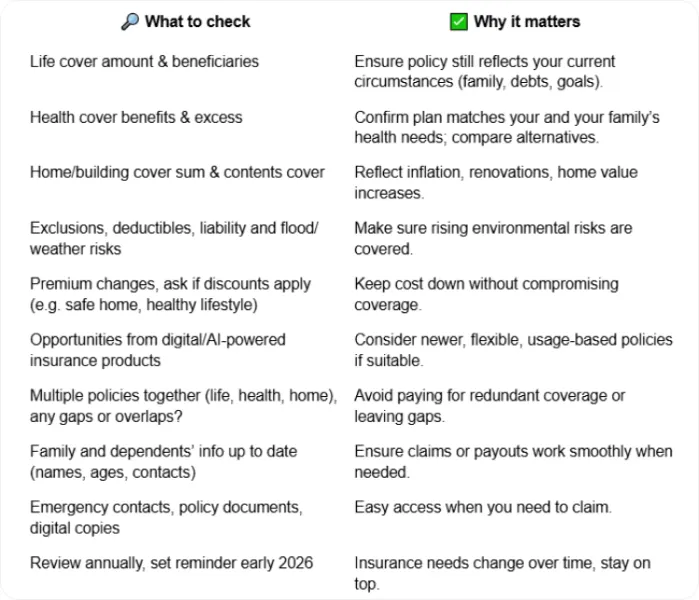
2026 Insurance-Ready Checklist
Here’s a practical checklist to run through, ideally before any policy renewals:
Final Thoughts: Think Ahead, Not Just React
Insurance often feels like a boring annual chore, renewing a policy, paying a premium, hoping nothing happens. But in today’s rapidly shifting world, with inflation, healthcare costs, climate risk, and technological transformation, insurance deserves more attention.
Getting your personal insurance in order before 2026 isn’t just about protecting what you have now: it’s about safeguarding your and your family’s future. A little time spent reviewing policies, comparing options, and thinking about likely changes can pay off big down the road, in peace of mind, financial security, and resilience against the unexpected.
If you’d like, I can help build a template “insurance review worksheet” (Excel-friendly) that you or your readers can use to assess policies easily.