
 BTC
BTC
 ETH
ETH
 LTC
LTC
 BCH
BCH
 DOGE
DOGE
 USDT
USDT
 DASH
DASH
 XRP
XRP
 USDC
USDC
 XMR
XMR
 BNB
BNB
 TRX
TRX
 SHIB
SHIB
 DAI
DAI
 ZEC
ZEC
 SOL
SOL
 ETC
ETC
 POL
POL
 XLM
XLM
 ADA
ADA

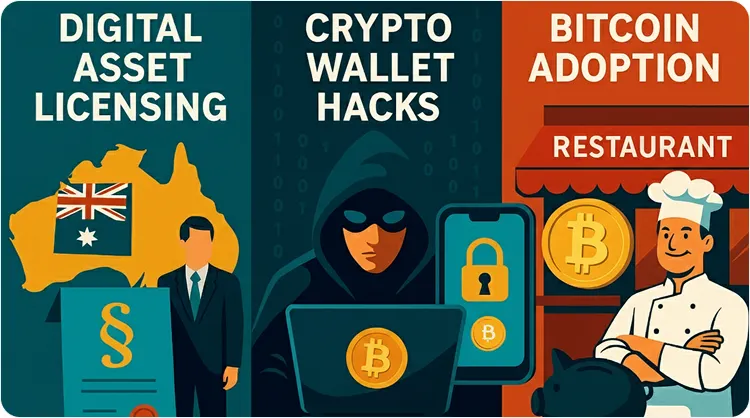
The global cryptocurrency landscape continues to evolve rapidly — from new regulatory frameworks to heightened cybersecurity challenges and corporate adoption milestones.This week brings three major developments: Australia’s final guidance for digital asset licensing, a surge in crypto wallet hacks driven by AI-powered tactics, and an American restaurant chain embracing Bitcoin as part of its treasury strategy.
Australia Introduces Mandatory Licensing for Digital Asset Firms
Australia’s Securities and Investments Commission (ASIC) has finalized its digital asset regulatory framework, marking one of the most comprehensive approaches to crypto oversight worldwide.
Under the new rules, companies offering services related to stablecoins, tokenized assets, and custody solutions will be required to obtain an Australian Financial Services (AFS) license by June 30, 2026.
What makes this regulation significant is its global reach: the mandate also applies to offshore and DeFi platforms if they serve Australian users. The move is part of Australia’s broader goal to balance innovation with consumer protection, bringing digital assets under the same compliance standards as traditional financial products.
Analysts note that this could set a precedent for similar frameworks in the EU and Asia-Pacific, where lawmakers are observing Australia’s implementation closely.
Crypto Wallet Hacks Hit Record Highs Amid AI-Driven Attacks
The year 2025 has already seen a sharp rise in crypto-related cybercrime. According to GetBlock AML Research, over $2 billion has been stolen from wallets in just six months — making it one of the most damaging periods for digital asset security.
Hackers are now using advanced AI tools to mimic voices, automate phishing, and deploy malware capable of intercepting private keys.
The report outlines how even experienced traders and investors fall victim to sophisticated social engineering tactics that blur the line between human and machine behavior.
Authorities in the U.S., Singapore, and the EU are strengthening coordination to track cross-border crypto thefts. However, GetBlock experts warn that individual wallet security remains the weakest point in the ecosystem. The study emphasizes best practices such as using hardware wallets, multi-signature authorization, and regular key rotation to protect assets from AI-driven attacks.
Steak ‘n Shake Builds a Bitcoin Reserve and Supports Open Source
In a landmark move for corporate Bitcoin adoption, U.S.-based fast-food chain Steak ‘n Shake has announced the creation of a strategic Bitcoin reserve.
All BTC payments received across its nationwide stores will now be directed into the company’s treasury instead of being converted to fiat.
Furthermore, the company pledged to donate 210 satoshis per meal paid in Bitcoin to Open Sats Initiative, Inc., supporting the open-source development of Bitcoin-related technologies.
Executives described this as both a financial and cultural statement — reflecting confidence in Bitcoin’s long-term value and its role in shaping future payment ecosystems.
Why It Matters
- Australia’s digital asset licensing marks a turning point for global regulatory alignment.
- AI-driven crypto wallet hacks highlight urgent gaps in user security and compliance infrastructure.
- Corporate adoption, such as Steak ‘n Shake’s Bitcoin reserve, signals growing mainstream confidence in decentralized finance.
- Together, these developments underscore how regulation, security, and adoption remain the three pillars shaping crypto’s next phase.
