
 BTC
BTC
 ETH
ETH
 LTC
LTC
 BCH
BCH
 DOGE
DOGE
 USDT
USDT
 DASH
DASH
 XRP
XRP
 USDC
USDC
 XMR
XMR
 BNB
BNB
 TRX
TRX
 SHIB
SHIB
 DAI
DAI
 ZEC
ZEC
 SOL
SOL
 ETC
ETC
 POL
POL
 XLM
XLM
 ADA
ADA

Crypto adoption is not only about whether a customer can pay at checkout. The more important question for many companies is whether crypto payments can be managed like normal business infrastructure.
Business Payouts Are Becoming Easier to Operate
Crypto payments become more useful when businesses can handle both sides of the flow: receiving funds and sending them out. Request Network's new cross-chain mass payout update points directly at that operational need. The product direction is not about speculation; it is about making crypto payouts easier to execute across EVM chains and Tron while giving teams more screening options.
That matters because businesses rarely manage one payment at a time. They may need to pay contractors, suppliers, affiliates, communities, creators or service providers. If every transfer requires manual chain selection, wallet checks and separate execution, the process becomes too slow for normal finance teams.
This is why crypto payment gateways and payout tools are becoming part of the same adoption story. A merchant may start with customer payments, but the next step is treasury management, vendor payouts, refunds, accounting and compliance. The more these workflows move into one controlled interface, the easier it becomes for businesses to treat crypto as payment infrastructure.
Wallet Screening Is Becoming Part of Payment Operations
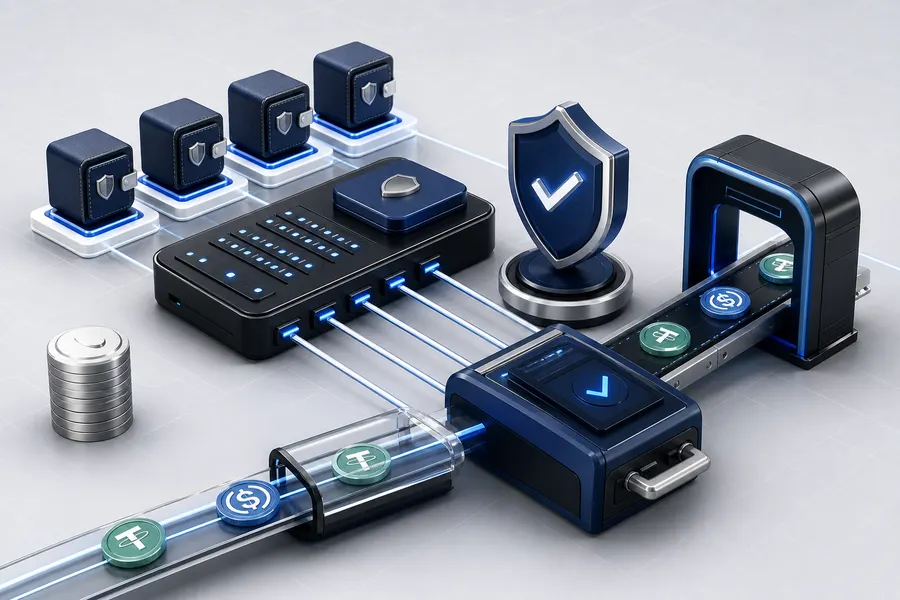
Wallet screening is moving from a specialized compliance task into a routine part of crypto payment operations. Request Network's expansion of wallet screening options with Merkle Science shows why this layer is becoming more important. Businesses need to know not only that a payment can be sent, but also whether the recipient wallet creates compliance risk.
This is especially important for companies that handle many counterparties. Crypto payments are fast, but speed can become a liability if a business cannot screen wallets, separate risky flows or document why a transaction was approved. The result is a more mature payment stack where screening, routing and execution work together.
For users, this may feel invisible. For businesses, it is central. The ability to send payments safely can determine whether crypto is practical for payroll-like flows, contractor payments, marketplace settlements and partner payouts. It also makes crypto wallets more than storage tools. In a business context, wallets become control points for permissions, approvals and risk checks.
Stablecoin Settlement Is Getting More Institutional
Stablecoins continue to be the clearest bridge between crypto rails and business finance. Circle and Nomura reportedly working on stablecoin-based foreign exchange settlement for Japanese companies shows how stablecoins can move beyond consumer transfers and into corporate treasury workflows.
Japan is becoming a useful example because several stablecoin stories are appearing at the same time. Ripple's RLUSD going live in Japan after regulatory approval and SBI Group's JPYSC yen stablecoin launch both show how regulated stablecoins can fit into local financial systems. The important point is not only that new tokens exist. It is that stablecoins are being positioned as settlement instruments for businesses and institutions.
For Cryptwerk readers, this is highly practical. Assets such as USDT and USDC already play a large role in crypto payments because they reduce volatility for users and merchants. If local-currency and institutionally supported stablecoins grow, businesses may get more options for settlement, reporting and treasury management.
Regulation Is Deciding Who Can Serve Businesses
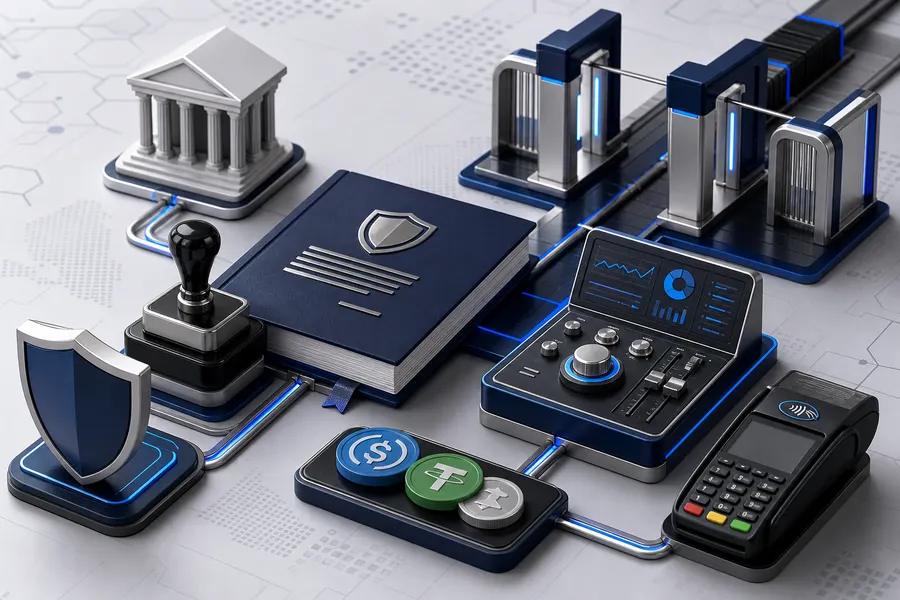
Regulation is becoming a market access issue for crypto payment providers. Europe's MiCA deadline is forcing companies to decide where and how they can operate. Binance's EU licensing changes, OpenPayd's MiCA authorization and other licensing stories show that crypto services are moving into a more formal operating environment.
For businesses, this matters more than headlines about any single exchange. A merchant or finance team needs providers that can operate legally, support the right assets, handle compliance and keep services available. If a provider loses access to a market or cannot onboard users, that affects merchants and customers directly.
Clear regulation can create friction in the short term, especially when firms are forced to restructure. But it can also make adoption easier for businesses that need predictable partners. Companies are more likely to accept crypto payments as a merchant when they know the rules around custody, settlement, reporting and customer access.
Agentic Commerce Adds Another Reason for Controls
AI commerce is adding a new layer to the payment discussion. As agentic transactions become more common, businesses will need clear rules for what happens when an automated agent initiates, prepares or influences a payment. That is why legal and arbitration layers for agentic commerce are relevant to crypto payments.
Crypto is already programmable, and AI agents may eventually help users find merchants, prepare wallet actions, compare payment methods or automate business tasks. But payment authority needs boundaries. Businesses and users will need permissions, dispute processes, identity checks, spending limits and audit trails.
This connects directly to AI crypto services and the broader payment stack. AI may become a new interface for payments, but the rails underneath still need compliance, screening and settlement controls.
What This Means for Crypto Adoption
The latest adoption signals point toward a more practical phase for crypto payments. Businesses are not only asking whether crypto can be accepted. They are asking whether it can be managed.
Mass payout tools help companies send funds at scale. Wallet screening makes transactions safer to approve. Stablecoin settlement gives businesses a more predictable unit of account. Regulation defines which providers can serve real markets. AI commerce adds new pressure for permission and dispute systems.
For users who want to pay with Bitcoin and other cryptocurrencies, these back-office improvements may not be visible at checkout. But they matter. Better business infrastructure means more merchants can support crypto payments without turning every transaction into a technical or compliance problem.
Crypto adoption is likely to grow through these practical layers: payouts, wallets, stablecoins, regulated providers and merchant tools working together. That is how crypto moves from a payment option into a usable business system.
