
 BTC
BTC
 ETH
ETH
 LTC
LTC
 BCH
BCH
 DOGE
DOGE
 USDT
USDT
 DASH
DASH
 XRP
XRP
 USDC
USDC
 XMR
XMR
 TRX
TRX
 BNB
BNB
 SHIB
SHIB
 DAI
DAI
 ZEC
ZEC
 SOL
SOL
 ETC
ETC
 POL
POL
 XLM
XLM
 ADA
ADA
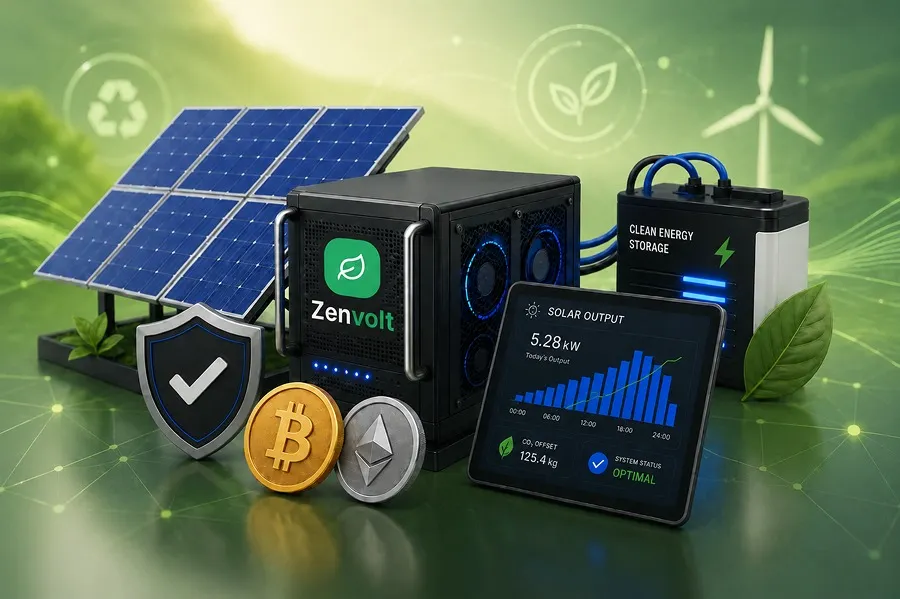
ZenVolt's solar-powered staking strategy sits at the intersection of renewable infrastructure and crypto asset exposure. This review looks at how the strategy works, what investors can monitor, and where the main risks and limits sit. Read it for a clear view of the platform experience before treating solar-backed crypto infrastructure as a long-term allocation.
An in-depth review of ZenVolt's solar-powered crypto staking strategy, covering how solar infrastructure generates crypto earnings, the platform experience, and what investors should consider.
Introduction
This ZenVolt Solar Staking Strategy Review examines how the platform's solar-powered crypto staking option works, what it offers investors, and whether it is a suitable choice for users looking for renewable-backed digital asset infrastructure exposure.
Solar energy has become one of the most cost-competitive electricity sources globally, and ZenVolt's solar strategy, detailed at https://zenvolt.net/, leverages this by linking crypto staking operations directly to photovoltaic energy infrastructure. As the intersection of clean energy and digital assets attracts growing attention in 2026, this review aims to provide a clear and balanced assessment of what the solar staking strategy delivers.
What Is the ZenVolt Solar Staking Strategy?
As part of this Zenvolt Review, understanding the economics of solar-powered crypto infrastructure is essential when evaluating the strategy's long-term potential.
The ZenVolt solar staking strategy is a structured allocation product that connects user funds to solar-powered crypto mining and staking infrastructure. Solar photovoltaic installations generate electricity that powers blockchain validation and mining operations. Earnings from these operations are distributed to users based on their allocated capital and the strategy's performance.
Solar-powered operations benefit from the declining cost of solar energy generation, which has reached or surpassed grid parity in many regions globally. This makes solar one of the most economically attractive energy sources for crypto infrastructure, as low energy costs are the primary determinant of mining and staking profitability.
How the Solar Staking Strategy Works
1. Register and verify your ZenVolt account.
2. Add funds using card, bank transfer, or cryptocurrency.
3. Select the Solar Infrastructure Strategy from the strategy menu.
4. Confirm your allocation — a 12-month lock-up period applies.
5. The platform directs your allocation toward solar-powered crypto infrastructure operations.
6. Earnings are calculated based on strategy performance and credited to your account.
7. At the end of the lock-up period, complete KYC to initiate a withdrawal.
The platform handles all operational aspects of the solar infrastructure, including energy management, hardware maintenance, and blockchain participation. Users do not need to manage any technical components directly.
Key Features
Solar Infrastructure Allocation
Funds are directed toward solar-powered crypto mining and staking operations across multiple geographic regions.
Real-Time Energy Metrics
The dashboard displays live solar energy output data, providing transparency into the infrastructure backing your allocation.
Estimated Return Range
The platform provides an estimated annual yield range for the solar strategy before funds are committed.
Sustainability Reporting
Users can view COn offset data and renewable energy output statistics linked to their allocation.
Portfolio Dashboard
A live view of allocation performance, cumulative earnings, and strategy status.
Beginner Mode
Plain-language explanations for users unfamiliar with solar energy or crypto staking concepts.
Pros and Cons

A key takeaway from this Zenvolt Review is that solar energy continues to offer some of the most competitive economics among renewable infrastructure assets.
Pros:
- Solar energy is one of the most cost-competitive electricity sources, supporting attractive infrastructure economics
- Real-time solar energy output data provides operational transparency
- Beginner-friendly interface with step-by-step guidance
- COn offset data aligns with sustainability-focused investors
- No need to manage hardware or crypto wallets directly
Cons:
- 12-month lock-up period limits capital flexibility
- Solar energy output can vary seasonally depending on infrastructure location
- KYC required before withdrawals
- Estimated returns are not guaranteed
Which Investors May Benefit Most?
Sustainability-Focused Investors
Users who want their allocation tied to clean solar energy will appreciate the transparency and environmental metrics provided.
Long-Term Investors
The 12-month structure suits investors who are comfortable with a defined commitment period.
H3: Beginners The guided interface and educational resources make the solar strategy accessible to users with no prior crypto or energy investment experience.
Crypto Infrastructure Enthusiasts
Users who want exposure to the economics of solar-powered blockchain operations without managing the technical complexity will find this strategy appealing.
Navigating the Solar Strategy Platform
Throughout this Zenvolt Review, the platform interface demonstrated a user-friendly approach, combining accessibility with infrastructure transparency.
The ZenVolt platform provides a clean, straightforward experience for users accessing the solar staking strategy. Strategy selection is guided with clear descriptions of the solar infrastructure, expected return range, and lock-up terms. The dashboard displays solar-specific metrics alongside portfolio performance data, making it easy to monitor the strategy's progress over time.
Security Standards and User Verification
All users are required to complete email verification at registration. KYC identity verification — requiring a government-issued ID and proof of address — is mandatory before withdrawals are processed. These standards are consistent with regulated investment platform practices.
Deposits, Lock-Up Periods, and Withdrawals
Solar strategy allocations can be funded via credit card (instant), bank transfer (1–3 business days), or cryptocurrency transfer (10 minutes to one hour). The 12-month lock-up period applies from the date of allocation confirmation. Withdrawals are available at the end of the lock-up period following successful KYC completion.
Renewable Infrastructure Strategies
The solar staking strategy is one of several renewable infrastructure options available on ZenVolt. Users can diversify across solar, wind, hydro, and AI compute strategies within the same account, providing multi-source renewable exposure within a single platform.
Crypto Asset Exposure
The solar strategy generates crypto infrastructure exposure through Bitcoin mining and other digital asset operations powered by solar-generated electricity. Users gain indirect exposure to crypto infrastructure performance without holding digital assets directly.
Performance Data and Analytics Tools
The solar strategy dashboard section provides real-time solar output data, strategy performance tracking, earnings history, and sustainability metrics. Users can view their allocation status, projected earnings at maturity, and infrastructure performance indicators from a single, accessible interface.
Final Verdict
The ZenVolt Solar Staking Strategy offers a structured way for users to gain exposure to solar-powered crypto infrastructure. The combination of real-time energy metrics, transparent sustainability data, and a beginner-accessible interface makes this strategy a well-presented option for sustainability-focused and long-term investors.
As with all investment strategies, the 12-month lock-up and estimated return structure should be carefully understood before committing funds. The ZenVolt solar staking strategy review concludes that it is a coherent, transparently presented product for users who are comfortable with the terms and want renewable infrastructure-backed crypto exposure.
Disclaimer
This article is provided for informational and educational purposes only and should not be considered financial, investment, legal, or tax advice. All investments involve risk and users should conduct their own research before making financial decisions.
