
 BTC
BTC
 ETH
ETH
 LTC
LTC
 BCH
BCH
 DOGE
DOGE
 USDT
USDT
 DASH
DASH
 XRP
XRP
 USDC
USDC
 XMR
XMR
 BNB
BNB
 TRX
TRX
 SHIB
SHIB
 DAI
DAI
 ZEC
ZEC
 SOL
SOL
 ETC
ETC
 POL
POL
 XLM
XLM
 ADA
ADA
For the first generation of console kids, the only “spectator mode” was leaning over a friend’s shoulder, waiting for a turn with the controller. Today, that hierarchy is reversed. A growing share of global gaming time is spent not on playing but on watching others play — live, curated, commentated, and clipped into stories that never require you to press a button.
The numbers sketch the shift. Newzoo estimates that around 3.4 billion people will play games in 2024, in a market worth roughly $187.7 bln. Yet tens of billions of hours each year are now poured into live game streams alone, with even more time spent on VODs and general streaming platforms. A single evening’s routine tells the story: a viewer might bounce from a League of Legends stream to a GTA role-play server, then to a chatty poker channel, and finally spend an hour watching creators spin online casino slots with the same mixture of suspense and detachment they once reserved for game shows.
Billions of hours on the virtual grandstand
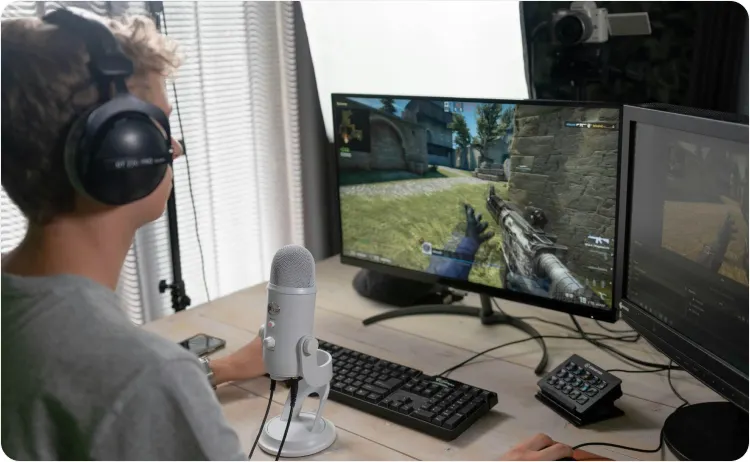
Twitch alone accounted for around 18.5 billion hours watched in 2024, according to independent analytics, only a slight dip from the year before. YouTube Gaming and regional platforms in Asia add billions more hours on top of that. For some titles, the broadcast has outgrown the game itself. Grand Theft Auto V, released back in 2013, was still the most-watched game on Twitch in 2024 with about 1.4 billion hours viewed, fuelled by elaborate role-play servers that resemble improvised theatre more than traditional missions.
Esports turns this always-on viewing into a full-scale stadium spectacle. The 2023 League of Legends World Championship final in Seoul drew a peak audience of roughly 6.4 million concurrent viewers on tracked platforms, setting a new record for an esports event and rivalling mid-tier traditional sports broadcasts. For many teenagers, following a favourite streamer or team via Twitch, YouTube, or Kick feels less like watching a niche hobby and more like keeping up with a global league.
Games built to be watched
Designers have quietly adapted. Competitive shooters, battle royales, and social deduction games are tuned as much for spectacle as for balance. Even single-player titles now arrive with built-in theatre. Streamer-mode settings toggle copyrighted music and add chat-friendly overlays. Difficulty options are adjusted so a broadcaster can keep moving rather than repeatedly hitting a wall. The player on screen becomes an unreliable narrator, guiding thousands of spectators through the same scenes while offering their own running commentary, jokes, and personal drama.
Why do some viewers stop picking up the controller
For many people, the appeal of watching begins as simple convenience. Playing Elden Ring or Counter-Strike well requires hours of practice; watching an expert do it requires only a spare half-hour and a decent connection. Streams can be treated like background radio or a group call: something to keep you company while you cook, commute, or scroll.
There is also safety in distance. A spectator can drink in the highs and lows of a ranked match, a high-stakes poker session, or a volatile loot drop without staking their own progress or money. Parasocial relationships amplify the pull. Regular viewers learn a streamer’s habits and catchphrases; they see pets, partners, small failures, tired sighs between games. The broadcast becomes a long, slow-moving story in which the game is only one of several characters.
Streaming, risk, and the second screen
Where there is tension, there is usually prediction. Sportsbooks and data firms have built integrations that place odds, scoreboards, and live video in the same frame, turning a Champions League match or an esports final into a dashboard of shifting probabilities. Some fans watch a game on one device while tracking fantasy points or in-play markets on another, tracing the ripple from a single chance into thousands of bets.
Casino content follows a similar arc. Live-dealer studios in Europe and Asia broadcast blackjack, roulette, and game-show formats with multiple cameras, chat, and on-screen statistics. Streaming platforms wrestle with how to treat this material: Twitch has tightened its rules on unlicensed gambling streams, while newer sites such as Kick grew rapidly in part by courting gambling creators before facing their own regulatory and reputational scrutiny. For regulators and responsible-gambling advocates, the concern is that a frictionless path from spectator to stakeholder can blur the lines that were once policed by physical distance.
The next chapter of watching
If the past decade turned streamers into entertainers, the next may turn the stream itself into a more intelligent companion. AI tools already clip highlights, summarise chat, and suggest titles or thumbnails; experimental systems can generate basic play-by-play for lower-tier matches or offer real-time statistics to human commentators. The result is a viewing experience that can be personalised in ways no traditional broadcast ever was: different overlays, different camera angles, different levels of explanation for veteran players and newcomers.
For platforms and betting brands, the challenge is to keep that power in proportion. Viewers want one login, one screen, one hub where games, streams, and odds live together. The melbet, a licensed operator, is increasingly positioning itself as a hub, bundling live sports, esports streams, and in-play dashboards under the same digital roof while advertising deposit limits, self-exclusion tools, and round-the-clock support. The more entertaining the watching becomes, the more critical those guardrails will be.
The line between playing and watching is unlikely to vanish completely; there will always be people who prefer the feel of the controller to the comfort of the couch. But in a world of crowded schedules and infinite feeds, the future of games may belong as much to the audience as to the millions who show up, type emotes, ride the swings of fortune, and then close the tab without ever loading into the match themselves.
