
 BTC
BTC
 ETH
ETH
 LTC
LTC
 BCH
BCH
 DOGE
DOGE
 USDT
USDT
 DASH
DASH
 XRP
XRP
 USDC
USDC
 XMR
XMR
 BNB
BNB
 TRX
TRX
 SHIB
SHIB
 DAI
DAI
 ZEC
ZEC
 SOL
SOL
 ETC
ETC
 POL
POL
 XLM
XLM
 ADA
ADA

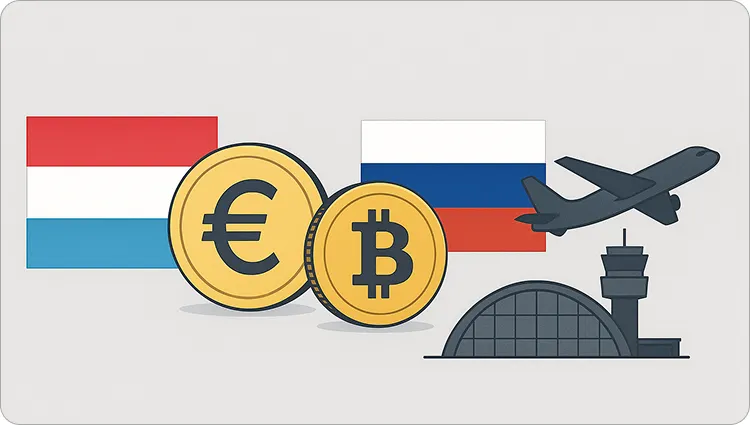
Europe put stablecoins and institutional crypto adoption back in the spotlight this week. Luxembourg became the first eurozone country to invest part of a sovereign fund in U.S. Bitcoin ETFs, while EU officials intensified calls to grow euro‑denominated stablecoins.
In the Gulf, Abu Dhabi Airports moved to pilot digital wallets with crypto‑linked payment capabilities. Separately, the Bank of Russia signaled limited bank participation in crypto under tight prudential limits.
Luxembourg allocates 1% of a sovereign fund to Bitcoin ETFs
A Luxembourg state fund has invested 1% of its portfolio into spot Bitcoin exchange‑traded funds, marking a eurozone first and a symbolic milestone for institutional exposure to digital assets.
ESM chief: Europe should back euro stablecoins
Pierre Gramegna, managing director of the European Stability Mechanism (ESM), urged Europe to foster euro‑denominated stablecoins to reduce reliance on dollar‑pegged tokens that currently dominate the market.
Abu Dhabi Airports to pilot crypto‑linked payments
Abu Dhabi Airports announced a partnership with Al Hail Holding to pilot regulated digital wallets for cashless travel experiences, exploring crypto‑linked and stablecoin payment solutions at Zayed International Airport.
Major Banks Explore Joint Stablecoin Initiative
A consortium of major international banks — including Santander, Barclays, Citi, and Goldman Sachs — announced plans to collaborate on the development of a joint stablecoin project. The initiative aims to create a regulated, bank-issued digital token that could streamline cross-border payments and enhance liquidity management within the traditional financial system.
The banks emphasize that the project remains in its early exploratory phase, with a strong focus on regulatory compliance, transparency, and interoperability. This effort highlights a growing trend among legacy financial institutions to integrate blockchain-based solutions into mainstream finance rather than compete with decentralized alternatives.
Bank of Russia opens a narrow channel for banks
Russia’s central bank is preparing to allow banks to handle limited crypto operations under strict reserve and capital constraints as lawmakers advance a digital‑asset framework.
Why it matters
- Currency competition: A euro‑stablecoin push could chip away at the dominance of dollar‑pegged tokens in Europe‑based commerce and DeFi.
- Public‑sector signals: A sovereign fund’s ETF allocation, however small, lowers reputational barriers for other public institutions.
- Real‑world payments: Airport pilots test user experience, compliance, and merchant integrations in high‑traffic environments.
- Prudential guardrails: Russia’s approach underscores a broader regulatory trend—opening controlled channels while tightening risk standards.
- Mass adoption trajectory: The continued expansion of institutional and cross-border initiatives signals growing mainstream acceptance of stablecoins.