
 BTC
BTC
 ETH
ETH
 LTC
LTC
 BCH
BCH
 DOGE
DOGE
 USDT
USDT
 DASH
DASH
 XRP
XRP
 USDC
USDC
 XMR
XMR
 TRX
TRX
 BNB
BNB
 SHIB
SHIB
 DAI
DAI
 ZEC
ZEC
 SOL
SOL
 ETC
ETC
 POL
POL
 XLM
XLM
 ADA
ADA
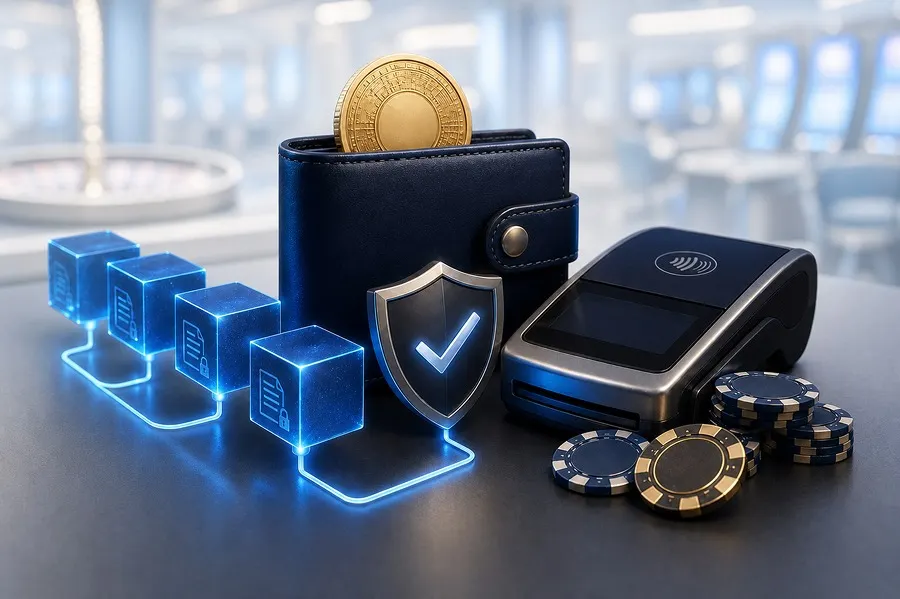
Blockchain, smart contracts, and cryptocurrency, as products of these technologies, have only recently become popular, and this has changed a lot of spheres. Online transactions were among the first to feel it. Crypto didn't push e-wallets out of the picture, but it became their main alternative.
Naturally, the iGaming market reacted to these changes: some faster, some slower, but platforms began adding BTC, LTC, ETH, and other coins for convenient, anonymous settlements. Today, we look at how crypto payments made their way into iGaming; what’s now, and why some jurisdictions and platforms still don't accept crypto.

Bringing Cryptocurrency Into iGaming
In the early 2010s, Bitcoin became a hit on the financial markets. Built on blockchain technology, it offered a decentralised approach to payments, where security was guaranteed not by outside controlling bodies but by smart contracts.
Some casinos and bookmakers reacted right away and added crypto payments. Others treated the innovation with suspicion and still aren't in a hurry to change their traditional approach.
The idea of joining games anonymously, without providing any payment data, looks appealing. While the "old-school" sites still make you go through verification, age and address confirmation, and push newcomers through the KYC (Know Your Customer) procedure, the first crypto platforms boiled everything down to a few clicks at the start – and that's it. Eventually, crypto gambling evolved alongside the coins themselves.
Why Players Choose Crypto Payments
Little by little, the ability to use cryptocurrency stopped being a niche tool and turned into a competitive advantage. Here you can find an example of a platform that embraces crypto-friendly payments, giving players access to faster transactions, enhanced privacy, and a smoother banking experience compared to many traditional payment methods. This edge is made up of a few things that users actually value.
Instant Payouts Instead of Waiting for Days
Payouts via bank transfer can take up to 5 business days to process. Cashing out to a bank card is a little bit faster, but it still takes time. Deposits and withdrawals in Bitcoin or USDT take a few minutes and, in most cases, happen immediately. Instant withdrawals removed the frustration and anxiety that used to come with long waits for prize money.
Wallet-To-Wallet Transfers, No Intermediaries
Banks or online payment platforms, like Skrill or Neteller, are intermediaries in financial transactions. They can claim fees; sometimes, funds can get stuck at a processing centre. In the case of crypto payments, funds go straight from wallet to wallet, skipping the intermediaries. Moreover, payments are accepted everywhere, from any point on the globe.
Anonymity and Privacy Protection
Crypto casinos, for the most part, still require client identification, and that's for the players' own safety. It helps block access to gambling for minors or for people who choose to self-exclude from gambling sites for a certain period. That said, it still carries a degree of privacy and anonymity on the payment-processing side. The chances of a financial data leak drop considerably.
Although users are massively searching for no ID verification casinos with free spins, such probably do not exist at all. Any jurisdiction requires minimal account verification, but when using cryptocurrency, you do not have to confirm your payment method as in the case with Visa/Mastercard or e-wallets. This simplifies access to entertainment and reduces the hassle of document checking.
Transparency Through the Public Ledger
The transparency achieved by the fact that every operation is recorded on the public ledger serves as a fraud prevention measure. A payment can't be recalled or cancelled, so manipulating payouts or deposits becomes nearly impossible.
Token-Based Rewards and NFT Ownership
The crypto casino industry created a phenomenon of token-based rewards, which can be exchanged, invested, or sold. Digital items or artefacts unlocked in the course of the game become the user’s real digital property.
Where Crypto Casinos Have Become the Norm
In a number of cases, crypto payments in gambling have moved out of the grey zone and into the category of a proven, established practice:
Curaçao and Anjouan issue licenses for crypto-first operators.
El Salvador recognised BTC as legal tender.
Estonia created convenient conditions for licensing crypto startups.
Malta allows operators to accept crypto payments, but only in compliance with broader European rules on regulating digital assets.
Where Cryptocurrency Still Hasn’t Reached
In some markets, there's still either an outright ban on using crypto or the issue remains in a grey area.
Crypto payments are currently not supported in UK casinos. Britain is considering a new regulatory framework where crypto assets could be used as a payment method, but the question remains up in the air. Even if this framework does go live, though, it won't happen before October 2027.
The US has no single unified stance, but California has had a ban on crypto gambling deposits and withdrawals since January 2026. The situation looks similar in other states.
Why Not Everyone Is Rushing to Switch to Crypto
Despite all the advantages, there are nuances worth taking into account too.
Price volatility can result in the real sums players receive being smaller than they expected.
No chargebacks. A completed crypto transaction can't be disputed or reversed.
Not every platform has caught up with proper AML (Anti-Money Laundering) and KYC controls.
Some crypto sites don't hold recognised iGaming licences. Licences like the MGA or the UKGC are hard to get because of higher requirements.
Closing Words
Crypto has changed the online gambling space more than anyone could have expected. By offering speed, transparency, transaction anonymity and ease of use, cryptocurrency has taken a leading place among available payment methods. Still, different jurisdictions regulate its use in very different ways, so for now, we're probably somewhere in the middle of it all.
