
 BTC
BTC
 ETH
ETH
 LTC
LTC
 BCH
BCH
 DOGE
DOGE
 USDT
USDT
 DASH
DASH
 XRP
XRP
 USDC
USDC
 XMR
XMR
 BNB
BNB
 TRX
TRX
 SHIB
SHIB
 DAI
DAI
 ZEC
ZEC
 SOL
SOL
 ETC
ETC
 POL
POL
 XLM
XLM
 ADA
ADA
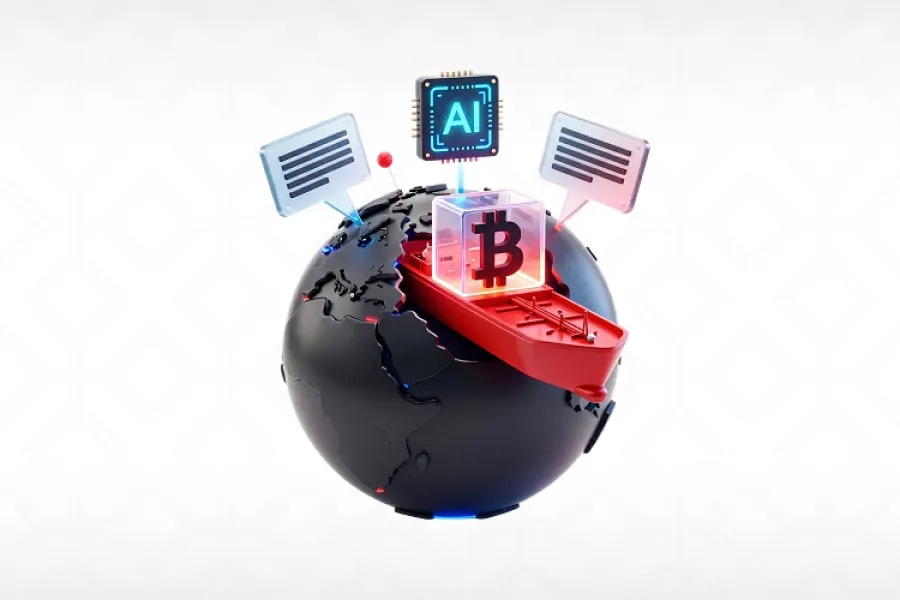
The crypto industry continues to expand across finance, infrastructure, and even geopolitical narratives. Recent developments show how digital assets are not only competing with traditional systems but also enabling new technological use cases and, at times, appearing in unexpected real-world scenarios.
Stablecoins Surpass Traditional Banking Volumes
Stablecoins are rapidly strengthening their role in global finance, reaching new milestones in transaction volume and market capitalization. In February 2026, monthly stablecoin transaction volume reached $7.2 trillion, surpassing the $6.8 trillion processed by the U.S. ACH system.
The total market capitalization of stablecoins has climbed to $317.6 billion, while total settlement volume in 2025 grew by 72% to $33 trillion. These figures highlight how stablecoins are increasingly being used as a core financial infrastructure, offering faster and more accessible alternatives to traditional banking rails.
Biconomy Introduces Smart Batching for AI-Driven DeFi
Biconomy has introduced ERC-8211 “smart batching,” a new approach that allows multiple blockchain actions to be executed within a single transaction while dynamically resolving parameters.
This innovation is particularly relevant for AI-driven systems, as it enables agents to perform complex multi-step DeFi workflows without relying on rigid predefined instructions. By reducing the need for manual coordination and improving execution efficiency, such solutions move decentralized finance closer to autonomous, machine-driven interactions.
Bitcoin Appears in Unexpected Geopolitical Context
Iran has reportedly explored the idea of charging tanker transit fees through the Strait of Hormuz in Bitcoin, according to media reports.
Given that 15–20 million barrels of oil pass through the strait daily, generating an estimated $15–20 million in revenue, such a move would represent a striking intersection between global energy markets and cryptocurrency.
While the proposal may sound unconventional, it reflects a broader trend where digital assets increasingly appear in discussions far beyond traditional crypto-native environments. In a sense, this could be seen as a unexpected shape adoption — emerging from areas where few expected crypto to play a role.
Why It Matters
These developments highlight how crypto continues to evolve across multiple dimensions:
- Stablecoins are competing directly with traditional financial infrastructure
- AI and blockchain integration is reshaping how DeFi systems operate
- Bitcoin is entering geopolitical and real-world economic discussions in unexpected ways